

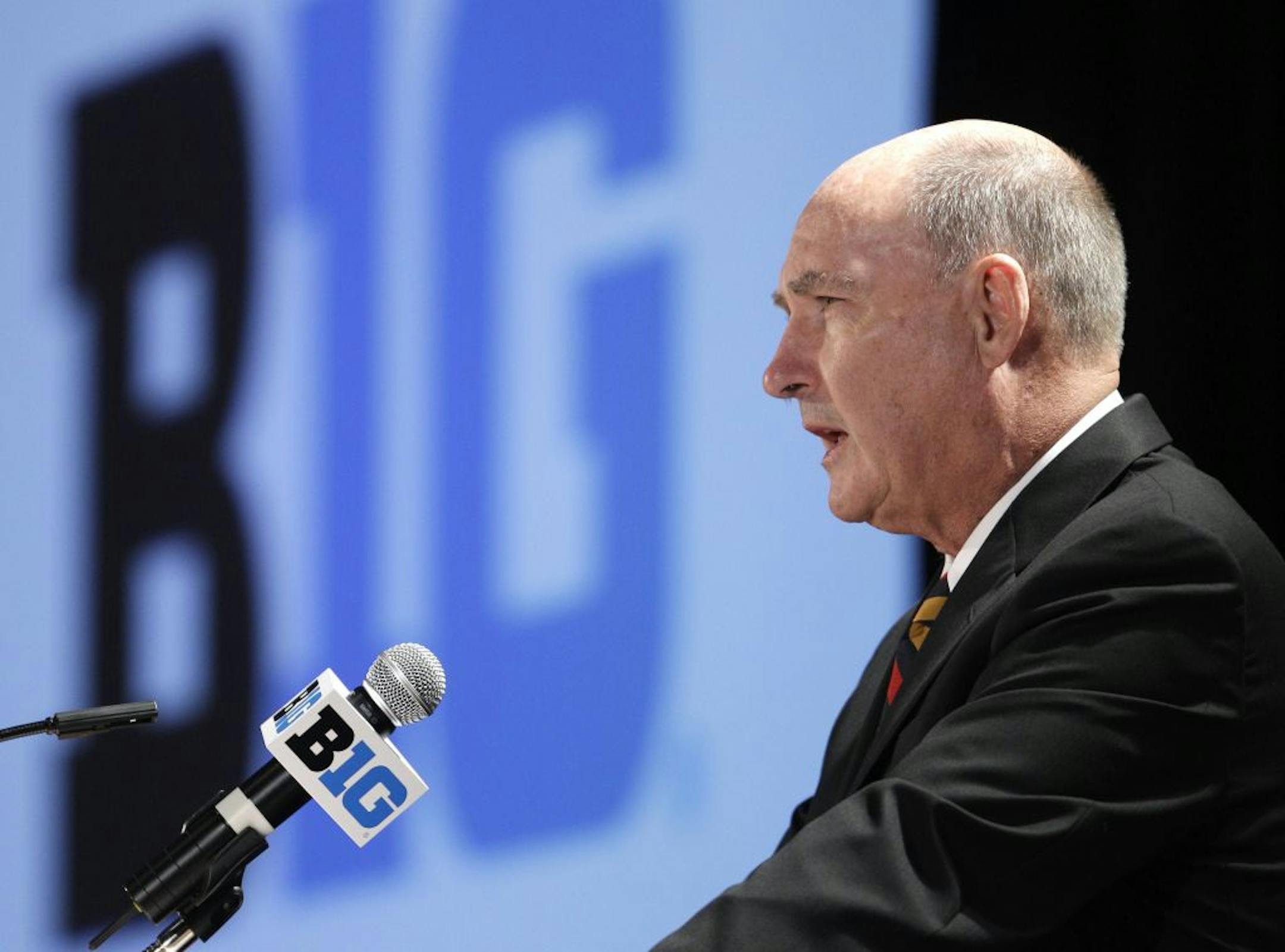
Jim Delany was the driving force behind the Big Ten's surprise expansion this week, the mastermind who determined that adding Baltimore, Washington, D.C., and New York City to the conference's reach was more important than whether Maryland and Rutgers are actually any good at football.
Now serving his 24th season as Big Ten commissioner, Delany has tied his legacy to this decision, one that shook up the most conservative, tradition-bound college conference in America. But Delany is 64 and nearing retirement. It won't be the most influential commissioner in college sports who determines whether this marriage of convenience is successful.
No, for that, Delany has put the fate of his league in the hands of a much younger man: Mark Silverman, the executive who has shepherded the Big Ten Network from a crazy broadcasting experiment into one of the biggest cash registers in sports. But Silverman will have plenty of help as he tries to turn this gamble into a victory, too, and from some unlikely sources.
People like Bill O'Reilly. And Louis C.K. And Derek Jeter.
Let's explain.
It's certainly no secret that this expansion, and the next (inevitable) one, too, is driven by money, by the Big Ten's desire to have a marketing presence in the most heavily populated corridor in America. Those potential markets certainly will raise the stakes when the Big Ten shops for a new television contract five years from now, whether it re-ups with ABC and ESPN or finds a better deal from CBS, NBC, Turner or someone else. But networks are smart about demographics, and they won't pay for a New York City audience of 14 million if their market research finds that only 250,000 New Yorkers care about Rutgers.
The real prize, then, is Silverman's specialty: carriage fees. In regions where the Big Ten Network is available on a basic or sports tier -- nearly the entire current nine-state current footprint of the league -- BTN charges cable customers a standard monthly fee, in some cases nearly a dollar a month, whether they watch a single minute of programming or not. Outside that region, BTN is mostly available in higher-tier specialty packages; you have to specifically ask (and pay) for them, which means only a fraction of the viewers.
Silverman's challenge: Convince cable operators along the East Coast to make BTN a basic offering, and collect from all subscribers, not just those who want it. It's a distinction that's potentially worth untold millions a year.


