

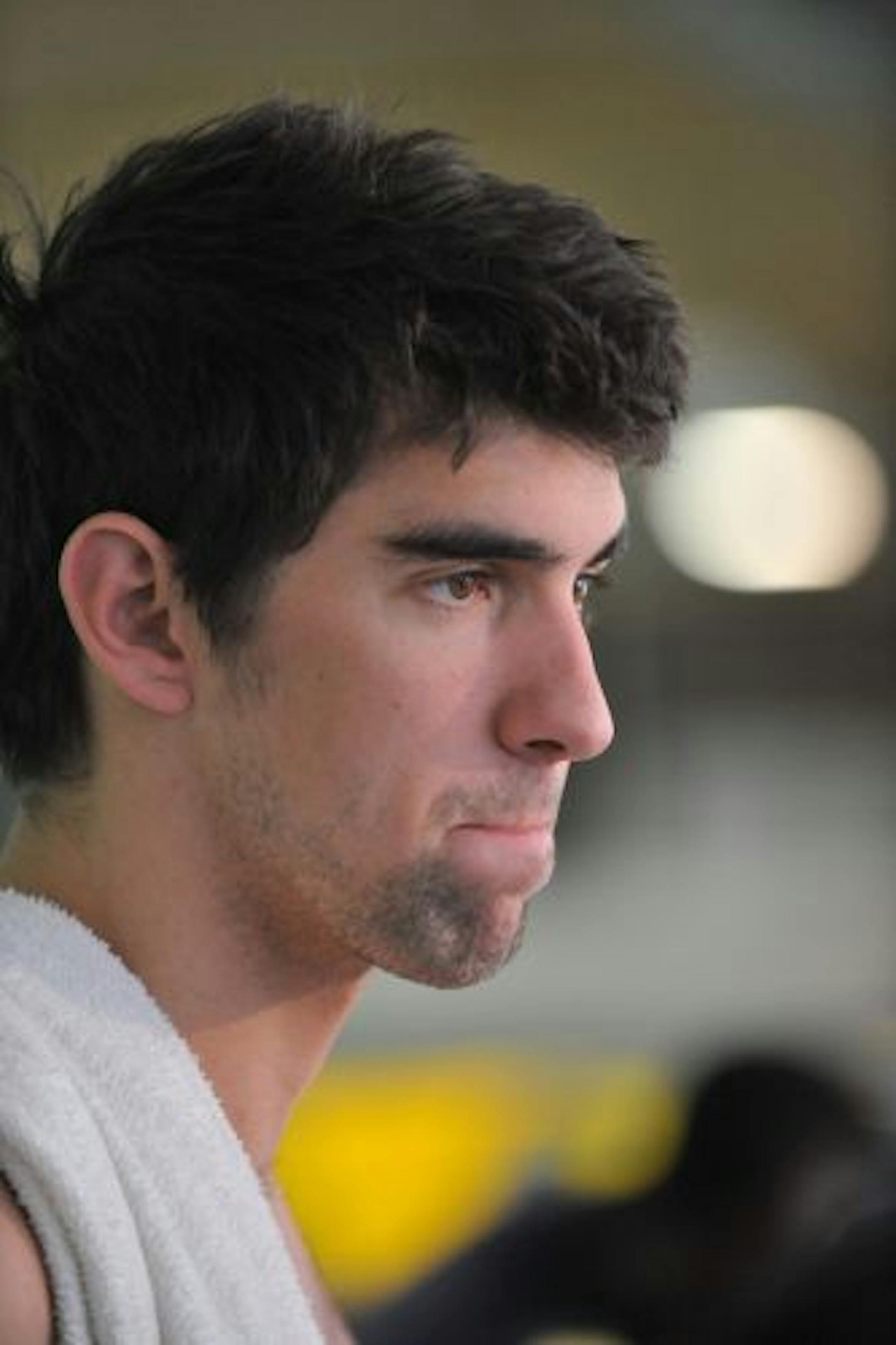
Only a few months ago, Michael Phelps guest-hosted "Saturday Night Live," displaying his now-familiar awkward charm in such sketches as the "Michael Phelps Diet" (four wedding cakes, a bathtub of fettucini Alfredo and an actual pig in a blanket!). One ill-fated party later, Phelps became the show's punchline.
Satirical newsman Seth Myers weighed in last weekend on the snapshot seen around the world: the cell-phone photo of Phelps inhaling from a bong. He chastised USA Swimming for its three-month suspension of Phelps, saying, "Now he won't be able to compete for you in the highly anticipated not-the-Olympics swimming race." Of Kellogg's, which dropped Phelps as a cereal spokesperson, Myers added: "I knew some guys named Snap, Crackle and Pop. And they were drug dealers."
While he joked about the circumstances, Myers didn't take direct aim at Phelps. That seems to be the prevailing public sentiment a little more than a week after the photo was splashed across a London tabloid. Most Americans who cheered Phelps through his run of eight gold medals in the Beijing Games have reacted to his Candid Camera moment with stoner jokes rather than with outrage or scorn.
Sponsors including Speedo, VISA and Hilton Hotels issued statements of support. But Phelps has been punished plenty. The suspension, the loss of his Kellogg's contract, three months without USA Swimming funding, global embarrassment and his mother's anger add up to the worst grounding in history. And, given the circumstances, that should be enough.
Hundreds of public figures have been caught up in the great American sport of creating celebrities, then constantly scrutinizing their behavior. The advent of cell phone cameras and video made everyone a paparazzo; the blank slate of the Internet made everyone a critic.
While we debate whether athletes should be role models, we track their every move, ready to pounce on imperfections. American short-track speedskater Apolo Anton Ohno, who became doubly famous via Olympic medals and the TV show "Dancing With the Stars," learned at a young age how careful he had to be in any public setting.
"In 2002, I went to my first Olympics, and I was 20 years old," he said. "My behavior changed dramatically.
"Once you're allowed to call yourself a U.S. Olympic athlete, there are guidelines and protocol that go along with that. It's important to represent what you'd want your mom or a little kid to see. It's important to be aware of your surroundings and the choices you make."


