

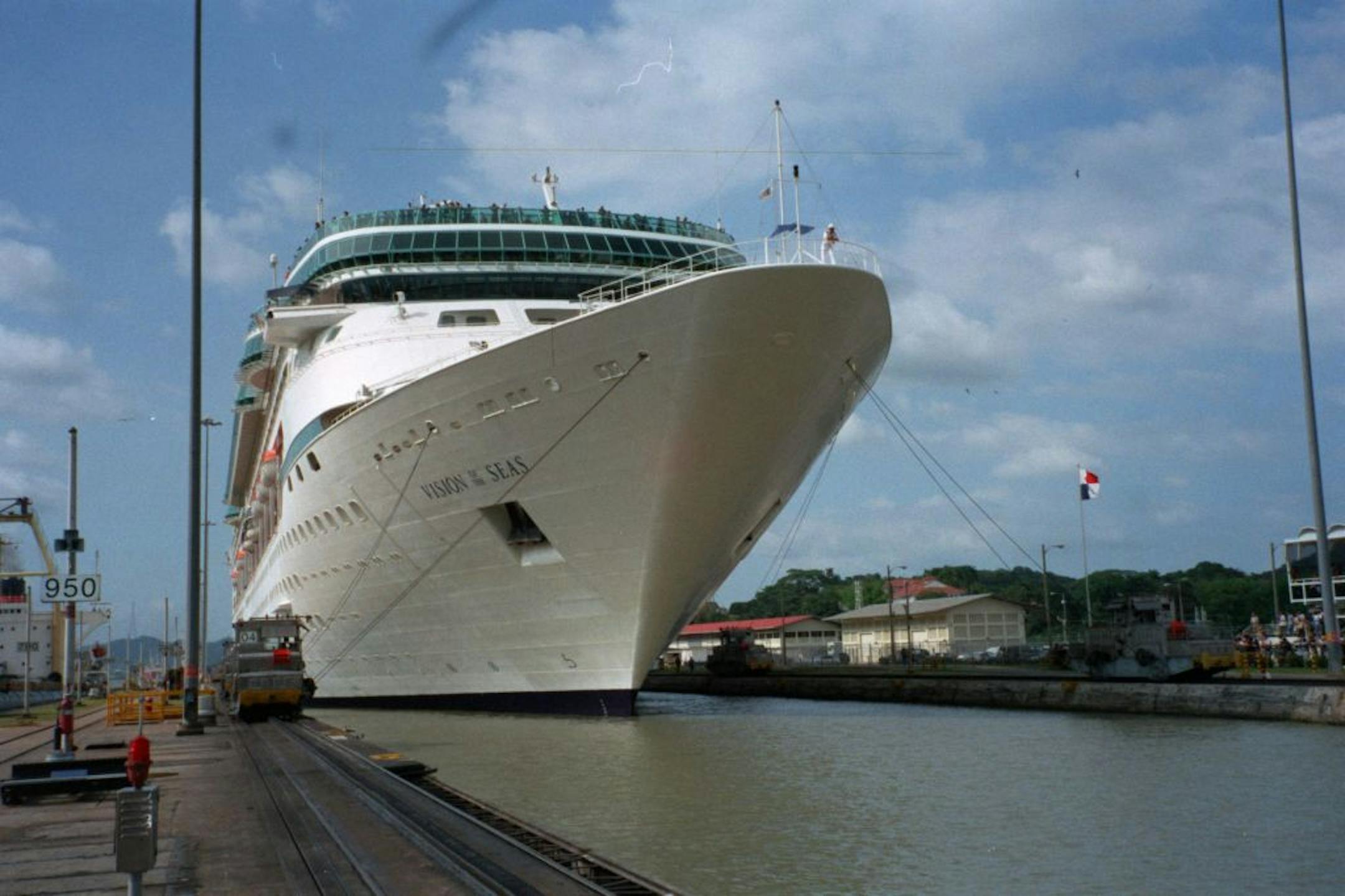
The heart of the Panama Canal is its great watery center, Gatún Lake. This immense, island-studded reservoir formed when the canal was built in the early 20th century. From the lido deck of my cruise ship, the Crystal Symphony, the islands' shorelines looked strangely irregular, and at first I couldn't figure out exactly why. As the ship neared one, though, the reason became clear: There is nothing resembling a beach anywhere; the verdant tropical jungle simply explodes out of the lake at the waterline.
Just a hundred years ago these islands were mountaintops, and when central Panama's rivers were dammed to form Gatún Lake, the rest of the mountains were submerged. Richard Morgan, a retired Canal Zone executive and an expert on the canal's history and technology, was my guide through the Panama Canal. He said that as the water quickly rose, bewildered onlookers on ships observed the green trees of the dry mountaintops growing blacker and blacker. "On closer inspection," Morgan said, "they found that the limbs were covered with tarantulas, clustering together in huge clumps, desperately climbing up from the jungle."
As an engineer, I have great appreciation for the world's modern technological marvels. I've made pilgrimages to see the best of what my fellow thing-makers can do: the Giza Pyramids, Hoover Dam, the Eiffel Tower, the Channel Tunnel, to name a few. But in terms of far-reaching impact on the world, perhaps no other human construction compares to the Panama Canal. So when I had an opportunity to take a technology-themed cruise from Miami to Los Angeles, I jumped. The highlight of the trip was right in the middle: a transit of the storied canal, a place of great import, historically, scientifically and politically.
Arachnids aside, no other freshwater lake sees the frenetic variety of activity that Gatún Lake hosts. As the cruise ship, accompanied by two large tugboats, made a 5-knot run southward to the Pacific, we shared the lake with oil tankers hauling jet fuel, Liberian-flagged grain freighters and legions of container ships, some bearing upwards of 4,000 20-foot-long steel containers. In addition to these transient visitors, there were resident suction and dipper dredges, navigation maintenance launches, patrol boats and the odd pleasure yacht. Morgan said the freighters pay the canal agency more than $100,000 each to make the transit, which seems expensive until he explains that the fee charged to the cruise ship line for this single passage was about $200,000.
While that is a lot of money by any conventional measure, for the Panamanians the canal is not a golden goose. This is one huge and immensely expensive operation, and most money collected in tolls is plowed back into canal operations. There are tugboats to pay for, dredges to operate, lock doors to overhaul, concrete to maintain. Of the $20 billion in tolls collected annually, the country of Panama sees only about $100 million, according to Morgan.
Gigantic construction project
Operating the canal profitably is a tricky business proposition. If the price is too high, ship owners might choose another route or even unload their containers at U.S. ports and send them by rail across the continent. Plus, the largest freighters and cruise ships are too large to fit through the 1910 vintage locks.
To fix that, the outfit that runs the canal, the Panama Canal Authority, is mightily expanding the waterway. As we passed through the southernmost set of locks at Miraflores, a gander to the starboard side showed one of the world's largest construction projects in full swing. As far as the eye could see were trucks and cranes, bulldozers and road graders. To the unaided eye, it looked like a termite colony. Gazing through binoculars, I could appreciate the project's enormity. Millions of tons of earth and rock had been broken, loaded, transported and dumped. Towering concrete walls were poured, set and cured. A human-built river flowed where a large hill had towered just a few years earlier.


