
PBS focuses on a 'Kind Hearted' Minnesotan

PBS documentary showcases the troubles and triumphs of a "Kind Hearted" Minnesotan.

March 30, 2013 at 9:30PM
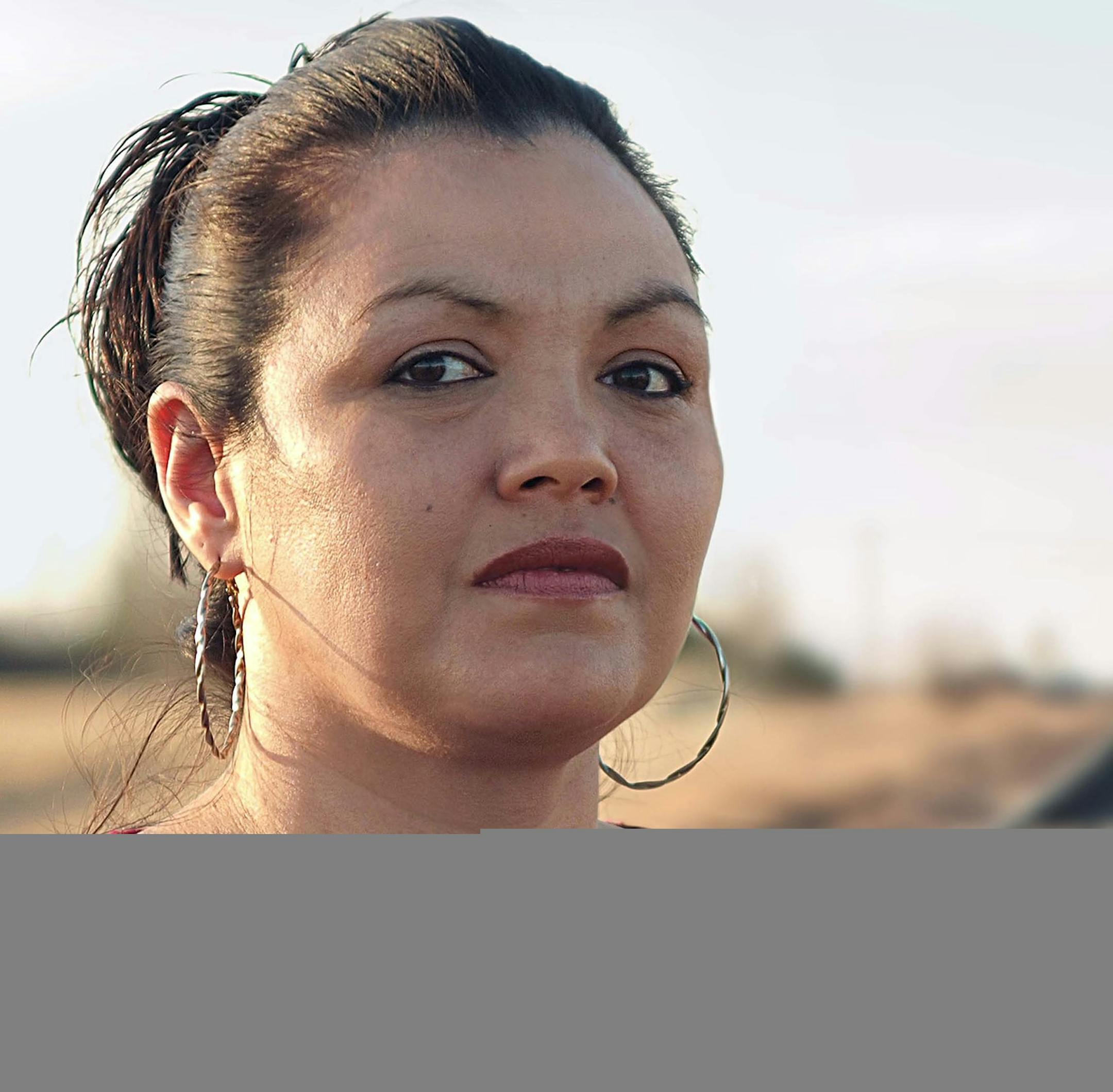
Robin Charboneau, a 32-year-old divorced single mother and Oglala Sioux woman living on North Dakota’s Spirit Lake Reservation, is at the center of the PBS documentary “Kind Hearted Woman.”
Robin Charboneau, a 32-year-old divorced single mother and Oglala Sioux woman living on North Dakota’s Spirit Lake Reservation, is at the center of the PBS documentary “Kind Hearted Woman.” (Provided by Kimmer Olesak/The Minnesota Star Tribune)

When acclaimed filmmaker David Sutherland asked Robin Charboneau to be the subject of his latest documentary, "Kind Hearted Woman," premiering this week on PBS, she panicked.

The Oglala Sioux woman was so guarded about her history of child abuse and alcoholism that during their initial conversation on North Dakota's Spirit Lake Reservation, she insisted they talk in Sutherland's rental car, where she broke down her tragic history for only the third time in her life.

Now the documentarian behind such intimate portraits as 1998's "The Farmer's Wife" and 2006's "Country Boys" was asking her not only to open up about her past, but also to let him observe her life for more than a year.

It took Charboneau three months to make a decision. How would her two kids, daughter Darian, now 17, and son Anthony, 14, react? What people in her life might refuse to speak to her again? Could she control her anger in front of a camera?

She started drinking again. Every day.

Then one night after praying for guidance, she had a dream in which the police entered a house in which someone had died. No one would say anything. Just as the authorities were about to leave, Charboneau opened her mouth and admitted she knew what had happened.

"I woke up sweating, trembling and crying harder than I've ever cried," said Charboneau, who now goes by the name Robin Poor Bear and resides in International Falls, Minn. "I realized I was mad at everyone for not protecting me. It was then that I made the decision to say yes."

Her decision led to a five-hour, emotionally draining edition of "Frontline," which stretches over two nights Monday and Tuesday, and personalizes the long-lasting effects of sexual abuse.

Sutherland thought he had burned out on filmmaking, but he regretted that he had never captured the horrors of abuse in previous projects. He was also eager to work in North Dakota, which he fell in love with while researching and promoting "The Farmer's Wife."

"I like rural America," said Sutherland, a fast-talking, elliptical speaker, who in a phone interview last weekend took more than a half-hour to answer one question, dropping references along the way to Evel Knievel, "The Grapes of Wrath," Louise Erdrich, Pocahontas, Cesar Chavez, Land O'Lakes butter and the state where he wound up filming "The Farmer's Wife."

"I was in Bladen, Nebraska, with Sen. Bob Kerrey and Chuck Hagel — this town that could have been the set of 'High Noon' — and they both told me I was so popular there that I could run for mayor there and win. Maybe I should have done it, although I would have been a lousy mayor."

Instead, Sutherland dedicated himself to this intimate documentary, which examines Charboneau's never-ending list of challenges: counseling Darian, then 13, who was abused by her father; struggling to maintain her grades at Minnesota State University, Moorhead; reuniting with the foster child who was sexually assaulted by her ex-husband; fighting the reservation lawyers for custody of her children.

"Sometimes I wasn't sure she was going to make it," Sutherland said. "She scared me."

Charboneau said the director and his three-person crew were "really, really, really involved," sometimes telling her that they'd be around for only 60 minutes and then not leaving until eight hours later. But overall, having the cameras around actually helped.

"I think they brought out the best in me," she said. "There were no ground rules or boundaries. I didn't know you could have those. It's not like I do documentaries all the time."

Charboneau, who is working at a long-term treatment facility, said she's pleased with the final product.

"If this film helps at least one person out there, it's pretty much worth it," she said.

njustin@startribune.com • 612-673-7431 Twitter: @nealjustin

about the writer

about the writer

Neal Justin

Critic / Reporter

Neal Justin is the pop-culture critic, covering how Minnesotans spend their entertainment time. He also reviews stand-up comedy. Justin previously served as TV and music critic for the paper. He is the co-founder of JCamp, a non-profit program for high-school journalists, and works on many fronts to further diversity in newsrooms.

See Moreicon

More from Minnesota Star Tribune

See More
card image
J. SCOTT APPLEWHITE, ASSOCIATED PRESS/The Minnesota Star Tribune

The "winners" have all been Turkeys, no matter the honor's name.

In this photo taken Monday, March 6, 2017, in San Francisco, released confidential files by The University of California of a sexual misconduct case, like this one against UC Santa Cruz Latin Studies professor Hector Perla is shown. Perla was accused of raping a student during a wine-tasting outing in June 2015. Some of the files are so heavily redacted that on many pages no words are visible. Perla is one of 113 UC employees found to have violated the system's sexual misconduct policies in rece