

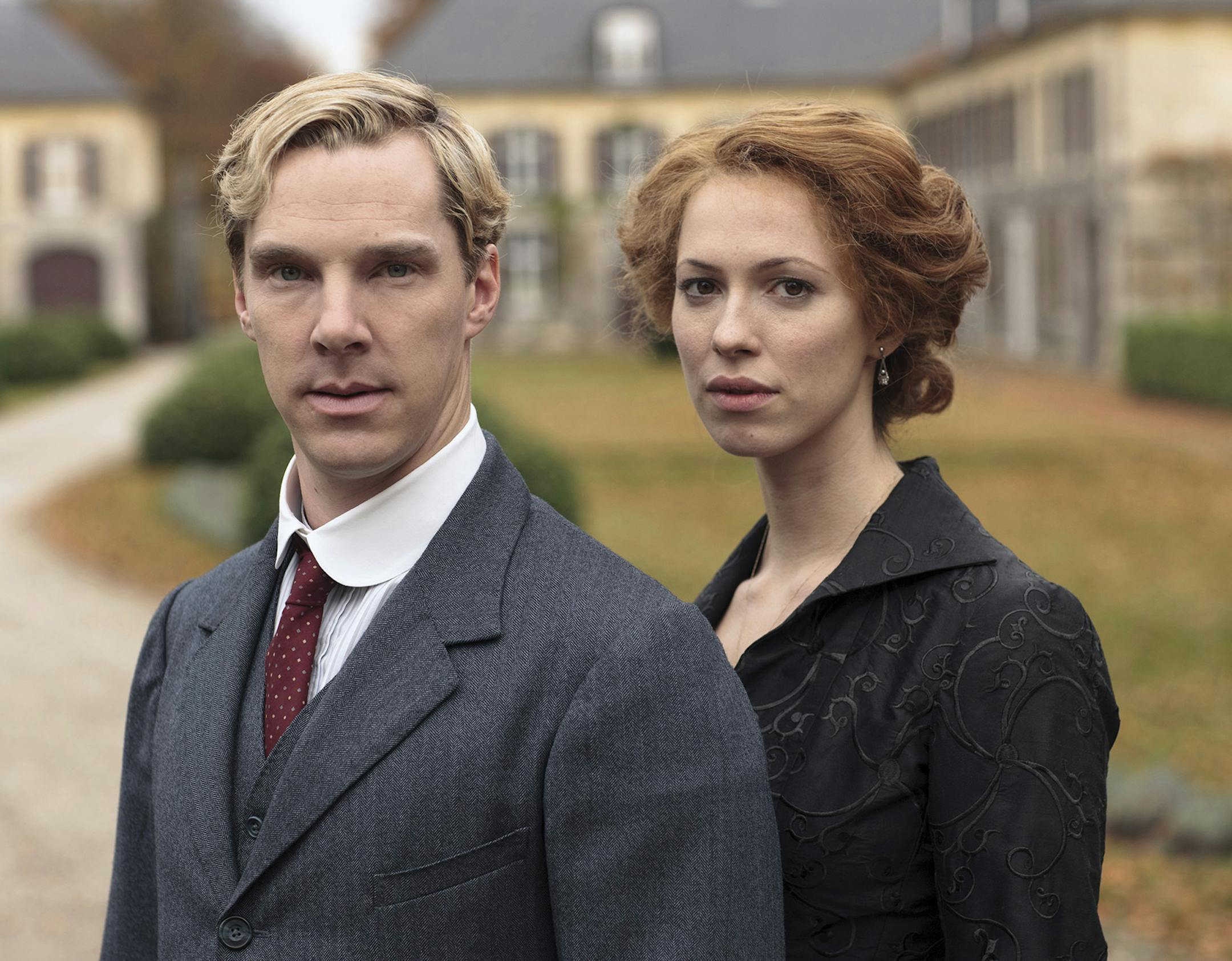
Attention, "Downton Abbey" students: Now that you've breezed through three seasons of PBS' smash hit, you may be tempted to enroll in HBO's five-hour miniseries "Parade's End," written by Tom Stoppard ("Anna Karenina") and starring Benedict Cumberbatch, the best Sherlock Holmes since Basil Rathbone and the future nemesis of Capt. Kirk in "Star Trek: Into Darkness."
As with "Downton," the story is set primarily in World War I-era England and deals with the dismantling of Edwardian ideals. But unlike its predecessor, "Parade's End" lacks the witty putdowns, the delicious twists, the unapologetic soap opera tone.
If "Downton" is tea and crumpets, then "Parade's End" is beef-and-kidney pie, a spiceless, stuffy mess fit only for ironclad stomachs.
Cumberbatch, utilizing a voice so deep it could strike oil, plays Christopher Tietjens, a dour aristocrat whose idea of a smashing time is making corrections to the Encyclopedia Brittanica and conjuring up sonnets based on random words.
This wet blanket inexplicably has a rail-car quickie with a perpetually bored socialite, Sylvia, played by Rebecca Hall ("The Town"), an actress who towers over the rest of the cast both in height and haughtiness.
She gets pregnant and they get hitched, even though they're about as compatible as a water buffalo and a hungry wolf. For much of the "action," Sylvia attempts to seduce her hubby, while he laments that his upper-crust code won't allow him to file for divorce and shack up with a virginal schoolteacher, appropriately named Valentine Wannop.
"I'm a woman desperately trying to get her husband back," Sylvia moans to a kicked-around suitor.
"No, you're not," he replies. "You just want to hear him squeal."


