

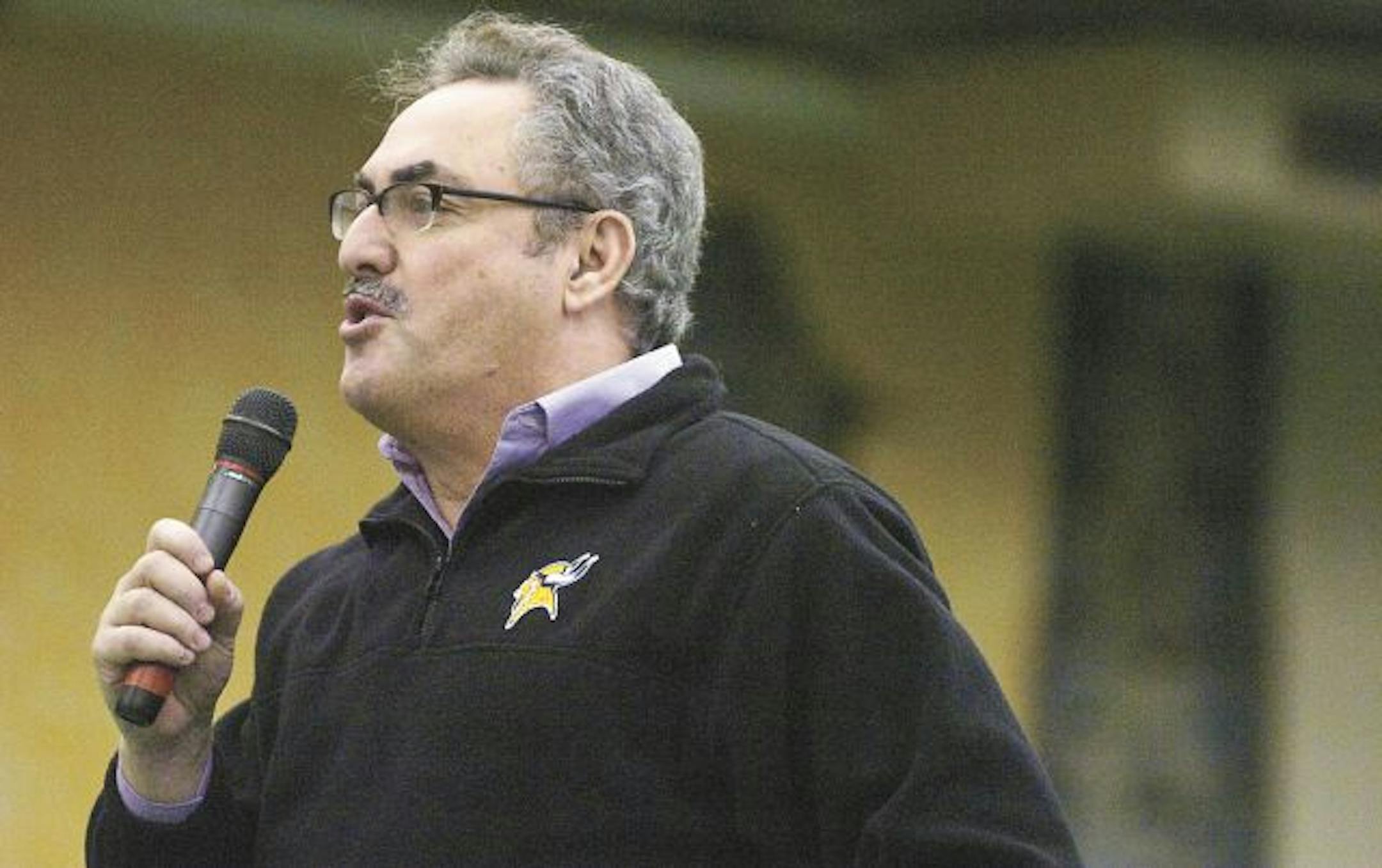
About two weeks ago, the honorable Gov. Tim Pawlenty, who identifies himself as Tim of Eagan when he calls the Sunday WCCO radio show, phoned the office of Vikings owner Zygi Wilf and suggested they meet on Dec. 15 to discuss the team's stadium problems.
Well, they met on Tuesday, and the word you get is that it was a positive meeting and the two parties will meet again in the near future.
Adding to the financial problems of the Vikings, who have the lowest revenue of any NFL team, is that starting next year, the league will be eliminating the supplemental revenue-sharing plan that has been netting the Vikings some $15 million per year.
The Vikings continue to sign only two-year contracts on all their operations. They will do this with their radio broadcasts on KFAN and announce it later this week once the papers are signed, and Clear Channel pays the $350,000 per year they have been giving the Vikings, who also have the right to sell the advertising.
Meanwhile, the Metropolitan Sports Facilities Commission will hold a meeting today, at which they will display a stadium design that was worked on jointly by the commission and the Vikings until they got into a big disagreement a couple of weeks ago.
At that time, a committee headed by Paul Thatcher of the MSFC suggested that the Vikings play $4 million in rent (something they don't pay now) for the balance of the current lease (two years) if they didn't extend the lease for two years.
Lester Bagley, vice president of public affairs for the Vikings, said the club will not be present and will not endorse the plan. While the two parties were getting along, the Vikings had asked for a $1.2 million reduction in the fees they pay to operate the stadium during games, and before the impasse came about, the commission had agreed to give a $675,000 reduction.
Bill Lester, executive director of the MSFC, said the panel believed they were entitled to the two-year extension to give more time to get a stadium going after allowing the Vikings many ways to improve revenue streams from the existing stadium, such as advertising, naming rights, waiving rent and the additional $675,000 or more per year, provided the commission remained in strong financial condition.


