Palm Springs: An oasis of style

Palm Springs' panache comes more from its mid-century buildings than its desert landscape, blazing sunshine or cocktail hour. Just ask Rick Nelson's tour guide.

January 24, 2009 at 4:32PM
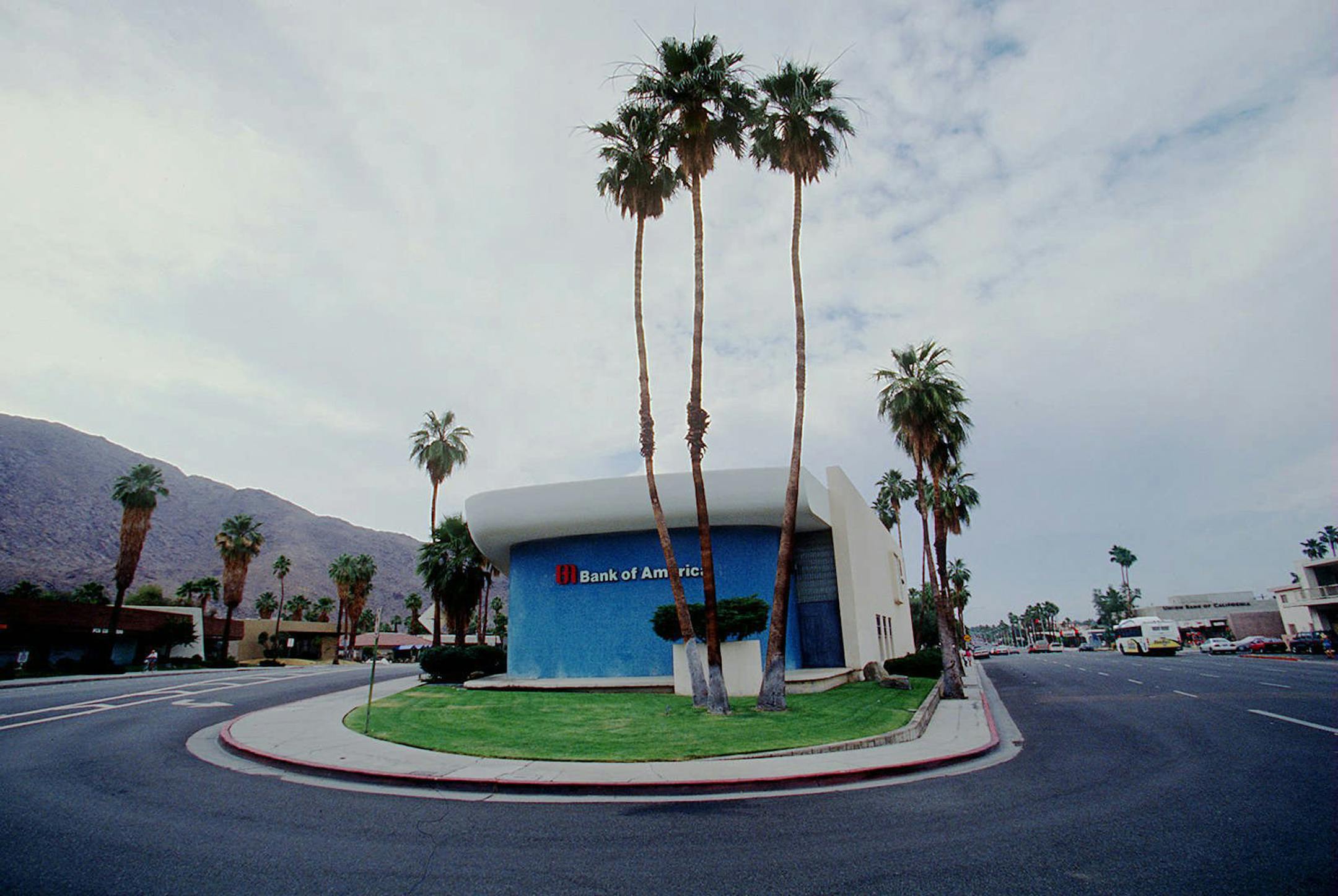
The Bank of America in downtown Palm Springs, CA., is an architectural fixture in this desert resort town. Palm Springs has become a kind of national petting zoo for "atomic modern" architecture, the wild and optimistic style born at the dawn of the space age nearly 40 years ago.
The Bank of America in downtown Palm Springs, CA., is an architectural fixture in this desert resort town. Palm Springs has become a kind of national petting zoo for "atomic modern" architecture, the wild and optimistic style born at the dawn of the space age nearly 40 years ago. (Krt/The Minnesota Star Tribune)

"Carport, breezeway, house. Carport, breezeway, house."

By that point, 90 minutes into our three-hour tour, I'd heard the phrase so many times that my brain was turning it into a sing-song-y lyric, not unlike the one that sets up camp in your cortex following a trip through "It's a Small World" at Disneyland. Except this tune made complete sense.

We were driving through Twin Palms, a neighborhood of 1950s-era tract houses in such uniformly pristine condition that every street looked like a "Brady Bunch" backlot. At each address, tour guide Robert Imber would recite the mantra.

His point? To demonstrate that while each home appeared strikingly different -- thanks to playful variations in rooflines, window placements and ornamental concrete block or stone -- they all followed an identical pattern, that of a carport attached to a breezeway attached to a house. Turns out the houses were all built by the Alexander Brothers, a local developer that found a way to bring the area's iconic modernist design to the masses, a bricks-and-mortar legacy of the United States' cocky postwar confidence.

Although I'd been to Palm Springs, Calif., several times, I never really saw past its obvious attributes: the snow-capped San Jacinto mountains, the eternal sunshine, the desert's flat color palette, punctuated by stretches of grass and gardens. But the rest of the landscape seemed a carbon copy of Southern California's freeway culture: endless strip malls and anonymous gated communities. Yawn.

It took Imber and his three-hour tour to open my eyes to the area's treasure trove of postwar architecture. Despite his minivan's packed-like-anchovies quarters -- and its on-again, off-again air conditioning -- I have never enjoyed a tour as much. Six of us sat, enraptured, as Imber turned the city's streets into a maze and talked, literally nonstop. A good driver? No. An encyclopedic and entertaining advocate for architectural preservation? Absolutely.

L.A. makes its mark

The buildings flew by, with Imber's breathless play-by-play filling in all possible blanks. An elegantly curvy bank, accented with azure tile and a geometric gold screen, would make Le Corbusier do a double take. Another bank, fronted by a reflecting pool and finished with a gleaming bronze facade, seemed plucked off a plaza in Brasilia. Even the familiar sang with mid-century panache. A former gas station, with a thrusting triangular roof acting like a calling card to passing drivers, is now a visitor center.
But it was the houses, more than I could possibly count, that made an indelible impression. In the 1950s and 1960s, Palm Springs boomed as an L.A. weekend getaway, leaving hundreds of exquisite modernist temples in its wake. A recent revival in all things mid-century has brought whole neighborhoods back to life, and the visual impact is remarkable.

That stunner just up the street from our rental? Turns out it's Frank Sinatra's home, a Prairie-meets-the-desert ring-a-ding-dinger. Architect Richard Neutra's exquisite glass-and-stone Kaufmann House (the winter home of the family that commissioned Frank Lloyd Wright's iconic Fallingwater), the hulking concrete turtle-shaped house (owned by Bob Hope and featured in "Diamonds Are Forever"), the sleek "steel" houses, designed by University of Minnesota graduate Donald Wexler? My partner and I might have eventually found them using a map, but without Imber's bottomless well of knowledge we would never have been able to put those Atomic Age beauties into context.

Modernism celebrated

At one point during one of Imber's particularly fascinating dissertations, I thought, this guy ought to make a movie. Turns out, he did. It's called "Desert Utopia," and it's an absorbing documentary devoted to Palm Springs' place-making architects and their work.

The movie had its premiere a few years ago during Modernism Week, an annual celebration of Palm Springs' mid-century design traditions. We happened to be in Palm Springs and somehow landed tickets to the premiere, one of many memorable Moderism Week events we've attended. One year we spent an atypically cloudy afternoon inside the Palm Springs Convention Center, browsing our way through a top-of-the-line array of 1950s and 1960s furniture, art and clothing, and last winter we traded valuable poolside time for a few hours at the Palm Springs Art Museum (another mid-century palace, this time done up in Brutalist concrete and red desert rock).

Catch some rays? We can do that anytime. But soak up a unique period of American design? Only in Palm Springs.

Sometimes when I tell people that we're spending another February week in the desert, I get a look. Palm Springs? Isn't it just golf, SPF-30 and cocktails? It can be, and we enjoy our share of those vacation pursuits (well, maybe not the golf). But for mid-century design enthusiasts, Palm Springs is like nowhere else. Thanks, Mr. Imber, for showing us the way.

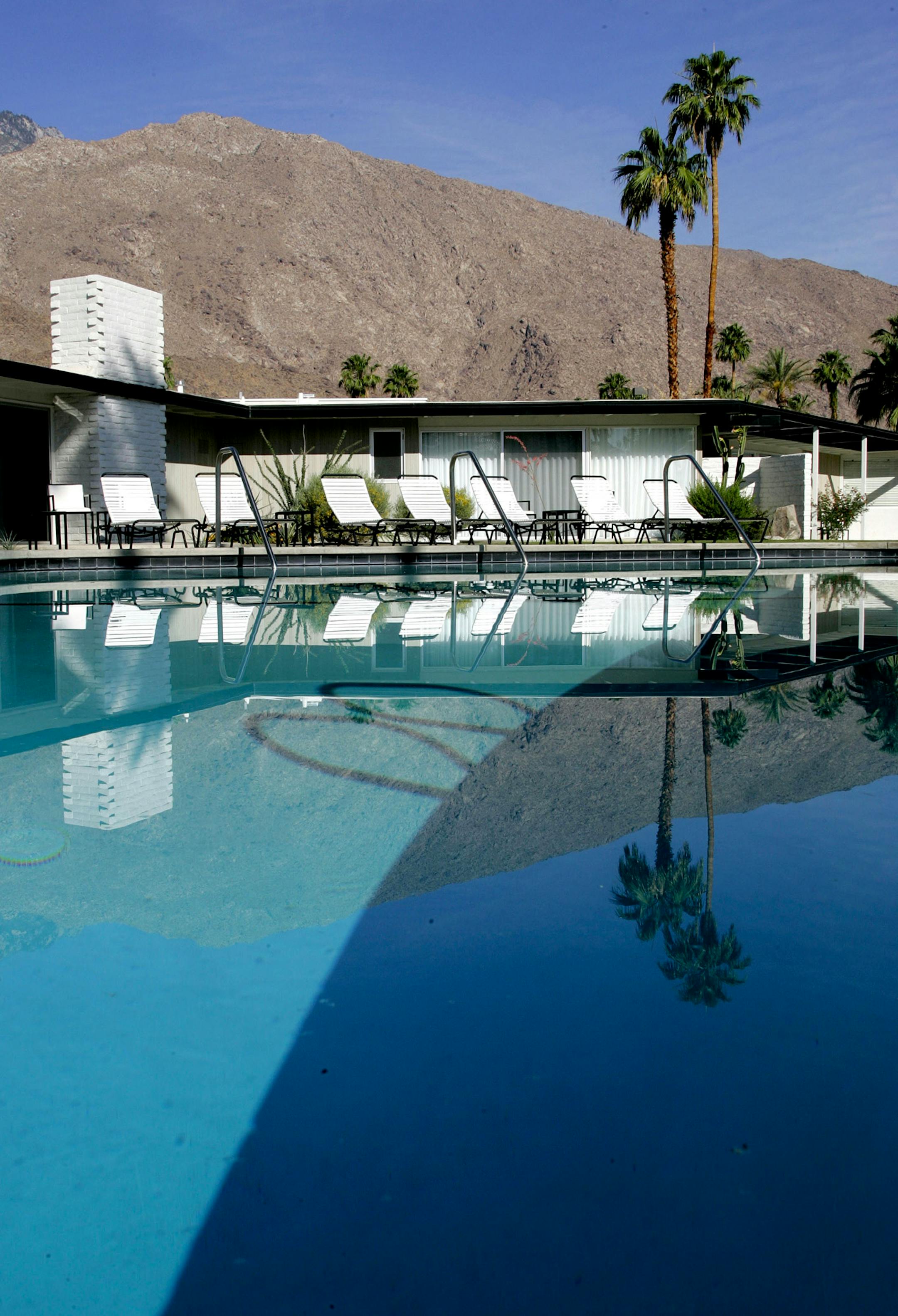
The sun almost always shines on Palm Springs, so there is plenty of time for poolside breaks at the William F. Cody- designed Horizon Hotel. The hotel was built in 1952, and a recent renovation has returned it to its Desert Modern glory
The sun almost always shines on Palm Springs, so there is plenty of time for poolside breaks at the William F. Cody- designed Horizon Hotel. The hotel was built in 1952, and a recent renovation has returned it to its Desert Modern glory (Mct/The Minnesota Star Tribune)
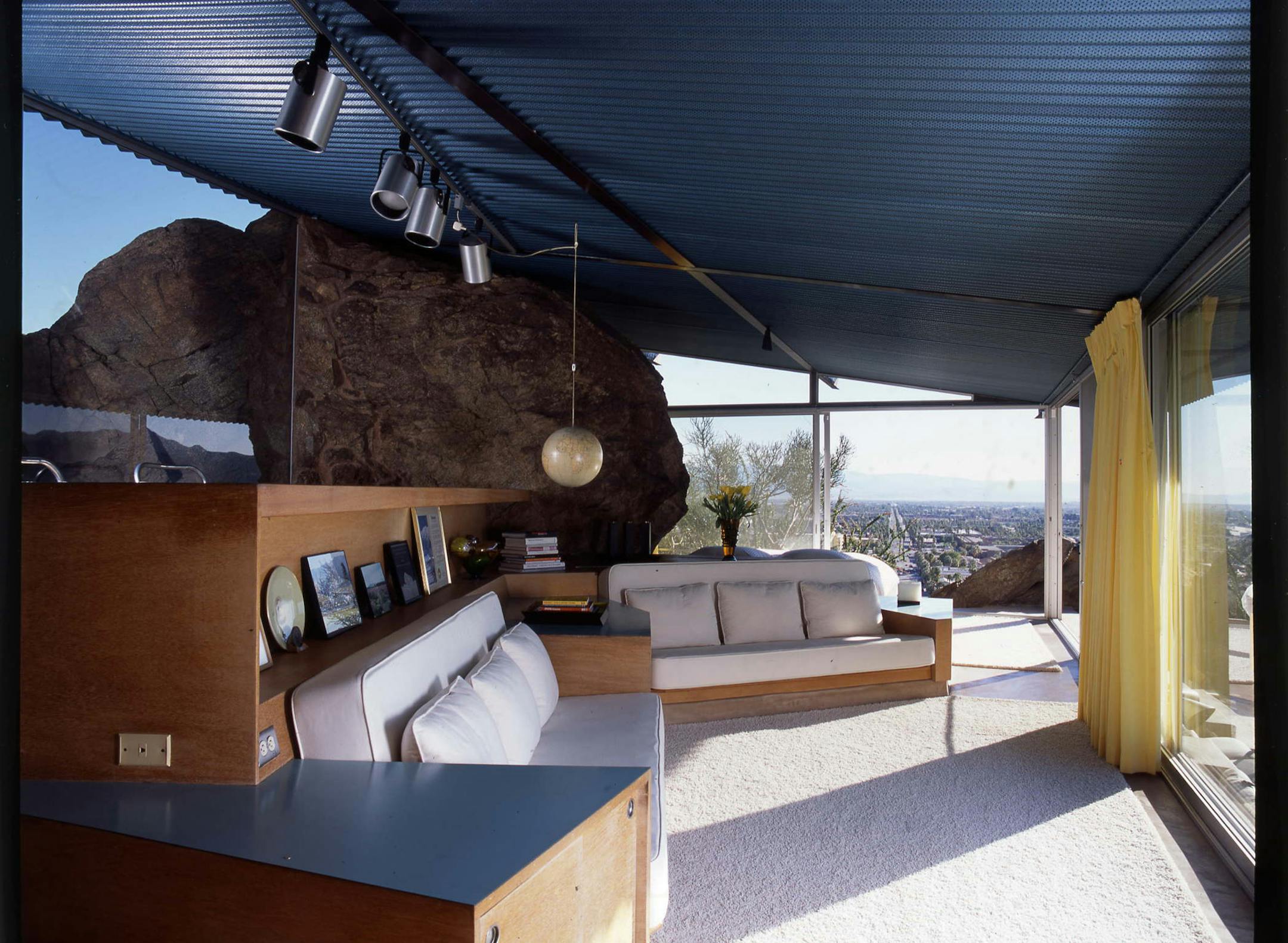
Built in 1963, the Frey House II wraps around a boulder that is native to the site. The gem of a house is not open to the public except during Modernism Week (held this year from February 13-21).
Built in 1963, the Frey House II wraps around a boulder that is native to the site. The gem of a house is not open to the public except during Modernism Week (held this year from February 13-21). (Star Tribune/The Minnesota Star Tribune)
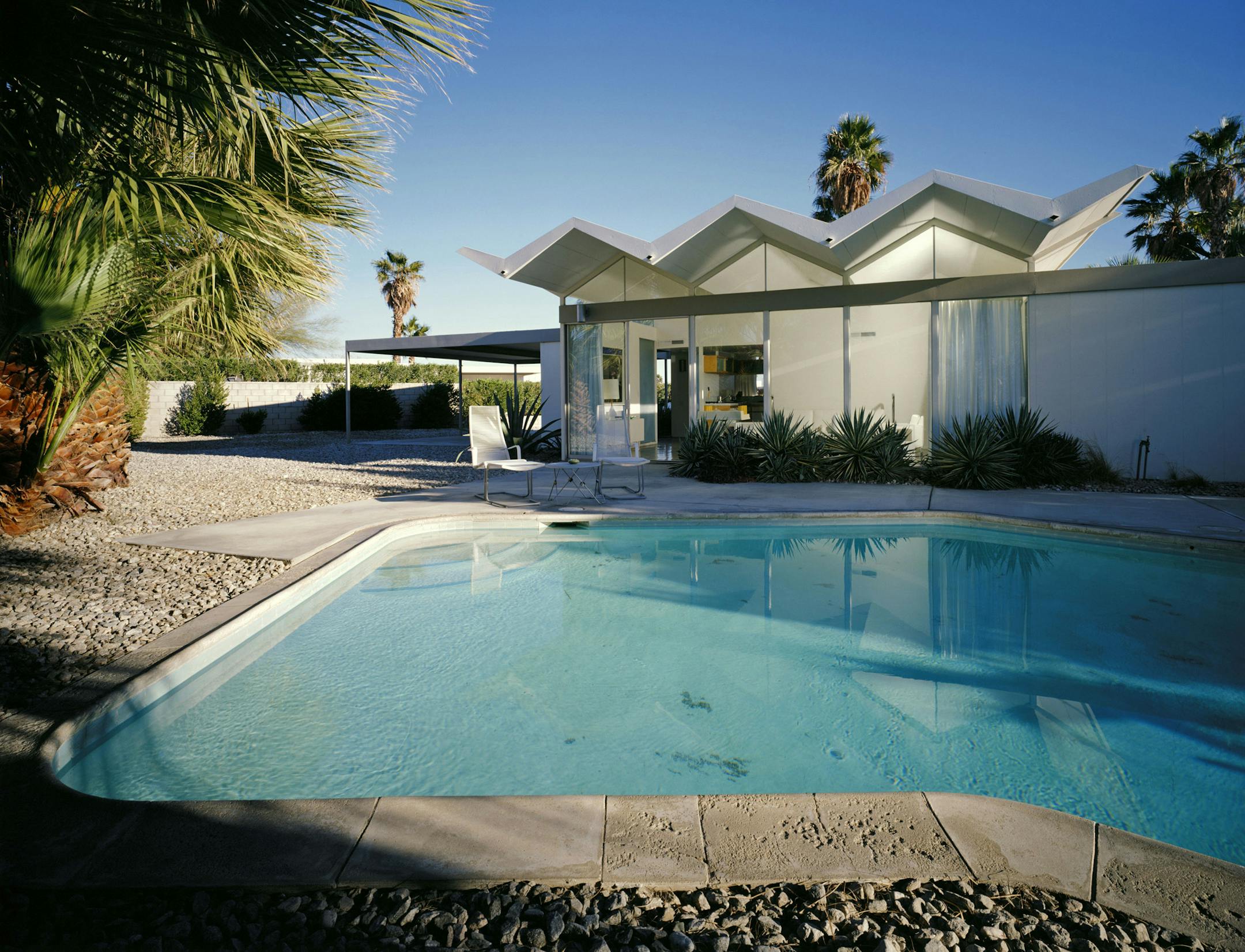
Minnesota-born and trained architect Donald Wexler is one of a few Palm Spring modernist architects who is still living and is being honored at this year's Modernism Week. His Alexander Steel House (above) was built in 1964 and features a folded plate metal roof that originated in that period.
Minnesota-born and trained architect Donald Wexler is one of a few Palm Spring modernist architects who is still living and is being honored at this year's Modernism Week. His Alexander Steel House (above) was built in 1964 and features a folded plate metal roof that originated in that period. (Special to the Star Tribune/The Minnesota Star Tribune)
about the writer

about the writer

Rick Nelson

Reporter

Rick Nelson joined the staff of the Star Tribune in 1998. He is a Twin Cities native, a University of Minnesota graduate and a James Beard Award winner. 

See Moreicon

More from Minnesota Star Tribune

See More
card image
Provided/Sahan Journal

Family members and a lawyer say they have been blocked from access to the bedside of Bonfilia Sanchez Dominguez, while her husband was detained and shipped to Texas within 24 hours.

card image