

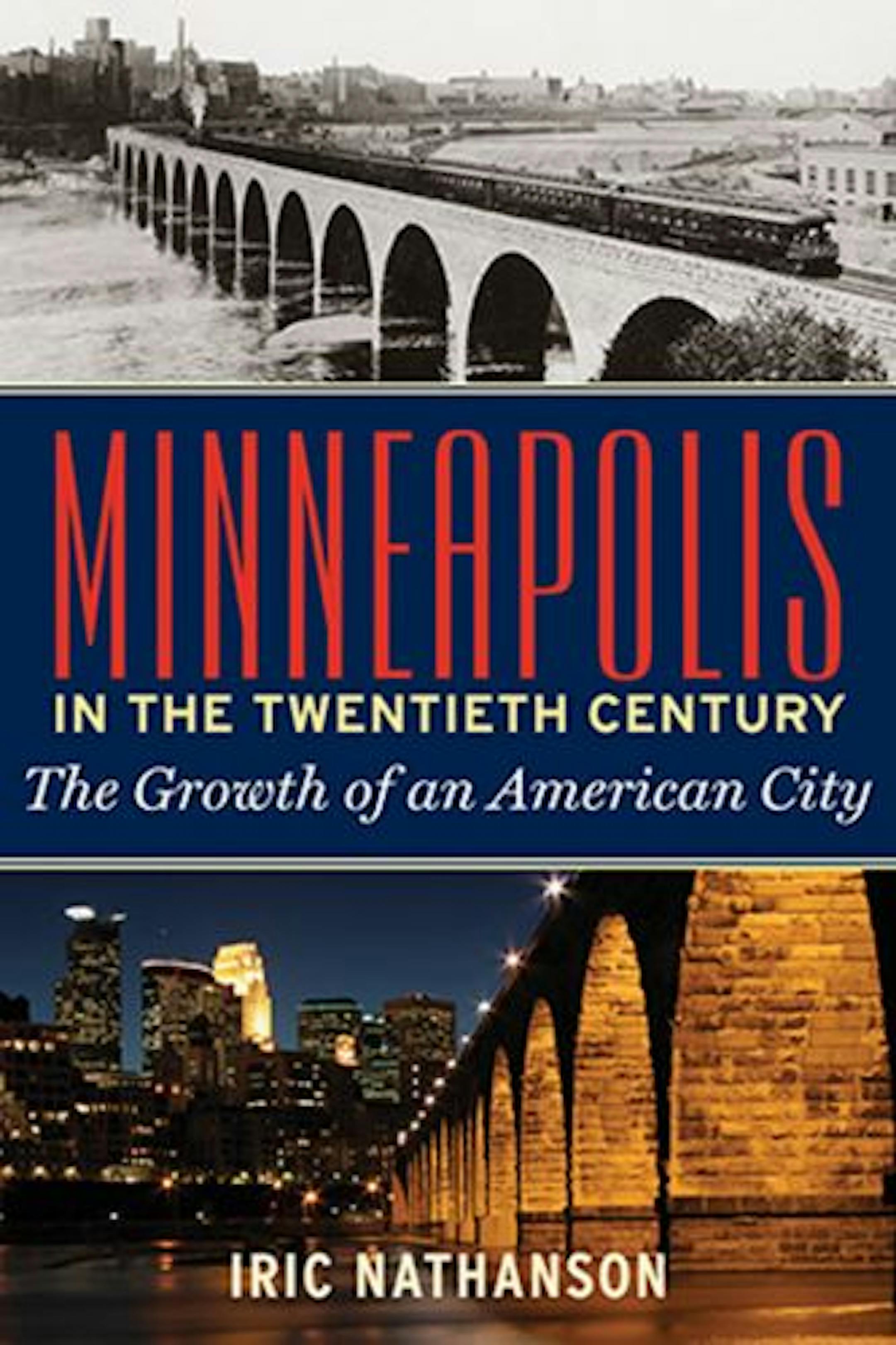
Minneapolis has always preferred to look forward. Unlike its tradition-loving neighbor to the east, Minnesota's largest city treats its past as something best handled with a wrecking ball. Outside of a few well-chronicled moments, such as the violent 1934 truckers' strike and Mayor Hubert Humphrey's civil rights agenda in the 1940s, the amnesia of the City of Lakes is reflected in the absence of sweeping works of history. Iric Nathanson's "Minneapolis in the Twentieth Century" seeks to change that record, with the first general history of the city in decades. It's a ripped-from-the-headlines story, breezing through a century of scandals, riots, hard-fought elections and civic improvement projects. Nathanson introduces himself as a native of the now-vanished Jewish community of the North Side whose experience working for a local congressman and then the city's community development agency put him at the center of the city's attempts to reshape its landscape in the late 20th century.
Yet he keeps himself out of this story, both as a character and an interpreter, relying instead on the conclusions of contemporary pundits and academic historians. The picture that he paints of Minneapolis is not always pretty. Because of its rampant corruption in City Hall in the early 1900s, Minneapolis was held up by journalist Lincoln Steffens as a national disgrace. A civic culture more reminiscent of Al Capone's Chicago than the city's more recent progressive self-image persisted through the century, although Nathanson rightly notes that the election of Humphrey on a clean-up-the-city platform in 1945 was a watershed.
Nathanson offers a surprising take on the Plymouth Avenue unrest, in which black protesters clashed with police and set fire to mostly Jewish-owned businesses in the hot summer of 1967. The city's leaders are credited with responding to the demands of black Minneapolis and thereby avoiding more widespread riots of the kind that ravaged Newark, Detroit and Los Angeles.
Nathanson takes a similarly sanguine view of civic leaders as they built skyways, created the Nicollet Mall and brought in the Hiawatha light-rail line.
The book is more of a collection of essays than a coherent narrative, and its scope keeps it from delving too deeply into any event. The subtitle of the book, "The Growth of an American City," is misleading, given that Minneapolis's population peaked in 1950 at 520,000 and has since fallen to about 390,000. The city's shrunken role in a mostly suburban metro remains unexamined. Yet for those looking for the highlights and lowlights of a dynamic city, it's a worthy read.
A Minneapolis resident since 2005, James Eli Shiffer is a reporter and editor who leads the Star Tribune's Whistleblower team.


