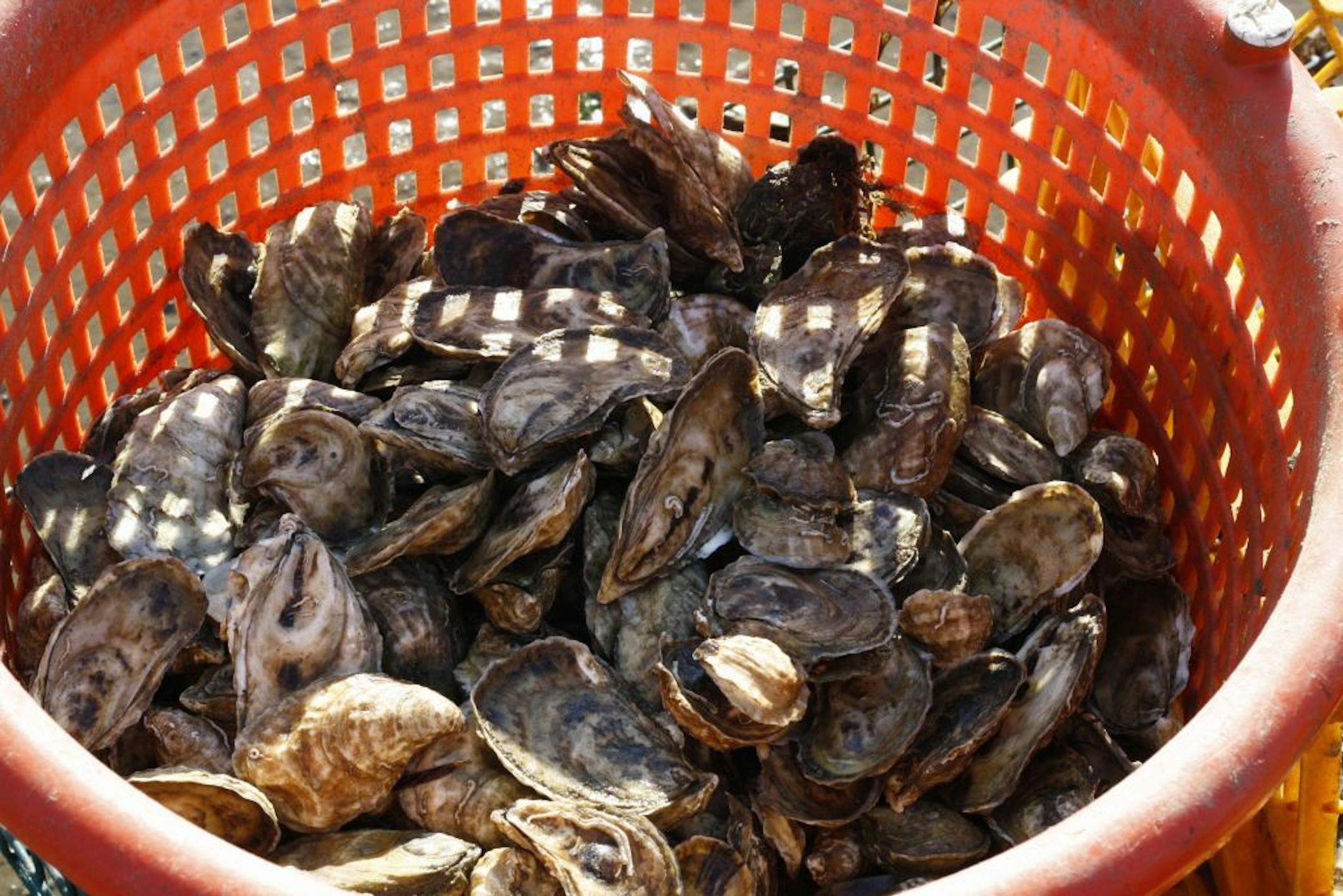
All roads lead to water.
Which means, here on the outer curl of Cape Cod, 70 miles or so into the Atlantic Ocean, where tall marsh greens in autumn turn the color of butterscotch, all roads lead to oysters.
Bumper stickers remind you of the oyster fishermen driving alongside you on Hwy. 6. Oysters are painted on the sides of residential homes. Oysters dominate every menu and suck at your heels on the beach.
Heading north along the long neck of the Cape, you have two options at Wellfleet. Turn right and you hit bluffs, set high against the ocean; here, 100 years ago, Guglielmo Marconi built one of the first radio stations, Theodore Roosevelt sent the first trans-Atlantic radio message (to King Edward VII), and one of the first distress signals from the Titanic was intercepted.
Wellfleet's oysters, though, are the village's legacy, the name a standard chalkboard scribble in upscale restaurants across the globe. So turn left and drive toward the harbor.
There are several ways to eat oysters in Wellfleet. The first is at one of the many restaurants shucking them morning and night. The second is the just-concluded Wellfleet Oyster Festival, a bivalve overload that reminds you why the pilgrims who landed here 400 years ago referred to this place as "Billingsgate," after London's great seafood market.
Breaking the local law
Which brings us to the third way to eat oysters here: Pluck them from the mud. You have not eaten an oyster until you have eaten an oyster pulled from a tidal pool, its shell releasing a satisfyingly wet pop. But to do this, you need to get a permit ($75 for out-of-towners), fish on a Sunday or a Thursday (the only days open to nonresidents) and wear shoes with thick soles. Don't do it the way my girlfriend and I did. We had the right shoes, but not the permit or day. You can look, but you'd better not touch. Though how could you not?