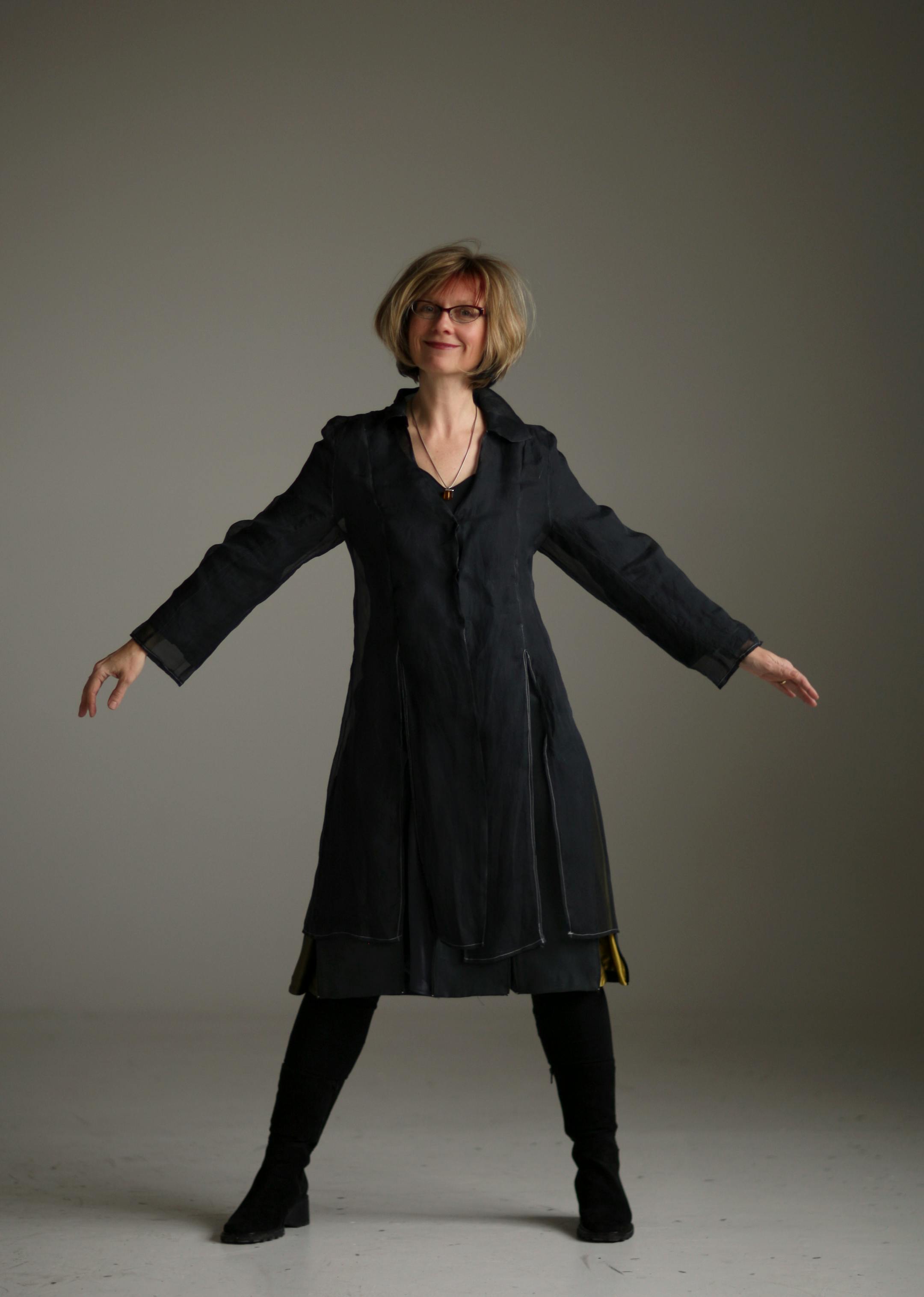
Like most playwrights, Kira Obolensky is not by nature a conformist. So what in the name of Chekhov is she doing wearing the same outfit every day, essentially a uniform?
"I'm not trying to make a statement," said Obolensky, of Minneapolis. "I've just had it with trying to pick something out. The whole nightmare of facing the closet and seven pairs of black pants is gone."
Fed up with facing "too many choices" on a daily basis, Obolensky decided on a singular approach: one outfit (and set of accessories) that worked for business and pleasure, everyday meetings and special occasions. She enlisted an old friend, Theatre de la Jeune Lune costume designer Sonya Berlovitz. "I adored Sonya's costumes for years," said Obolensky. "And it was important to me that it was made by someone local. The money doesn't go to a sweatshop; it goes to someone I know."
For her part, Berlovitz relished the challenge. "It's unique in the sense that the typical commission has been more one of a kind, for a special occasion," she said. "I loved the idea of finding something that was interesting and functional, and of having a blank slate."
Berlovitz's job was made easier by the fact that Obolensky, who's 5 feet 7 and slim, "has a great figure to make clothes for."
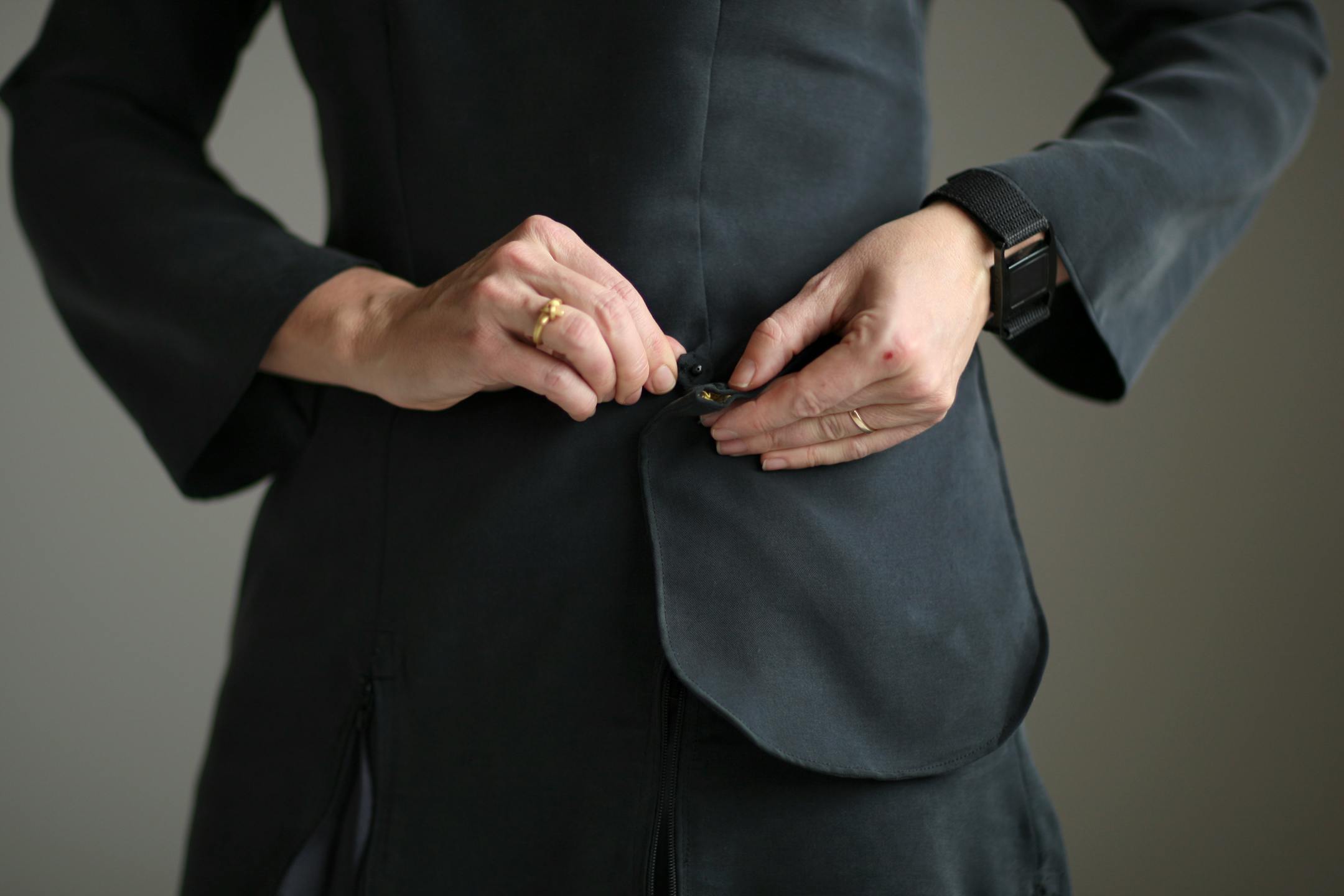
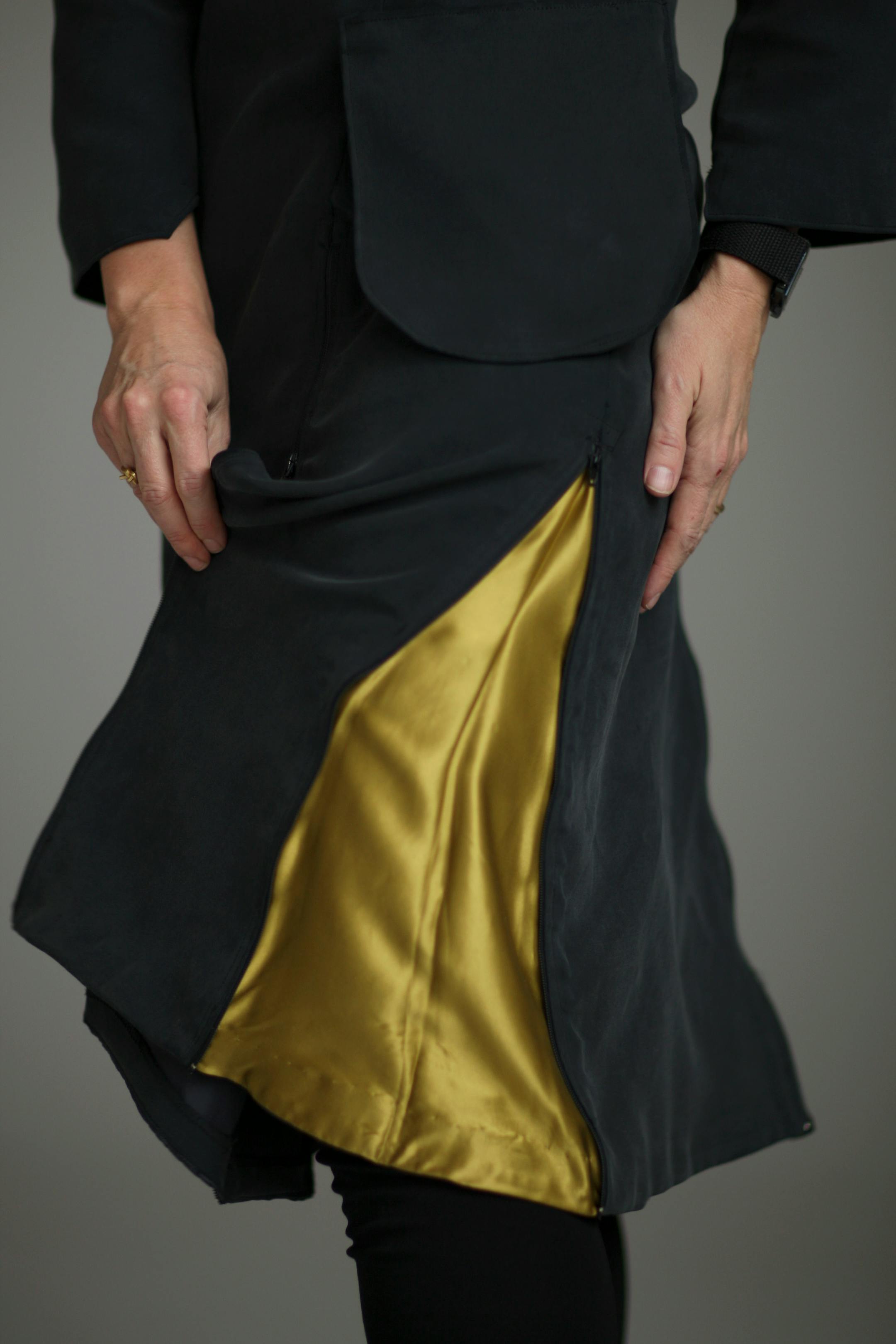
The dark calf-length dress "looks simple, but it's not," Berlovitz said. There are six zippers. Insets provide color on the left (acid green), right (olive) and front and back (light gray).
Accessories include an attachable pocket, which adds formality and utility (storing items that otherwise would require a purse), and a sweater-like vest that is a true salvage item. When Jeune Lune closed earlier this year, "we were going through fabric that I was getting rid of," Belrovitz said, "and Kira found this. It was off-white with purple streaks, and we dyed it gray." There's also a sheer overcoat made with silk organza, which is "warmer than people think," Berlovitz noted.
Obolensky and Berkowitz met several times to hammer out details; the process began last summer. In the beginning they looked at a lot of images, especially saris and other Indian clothing.