

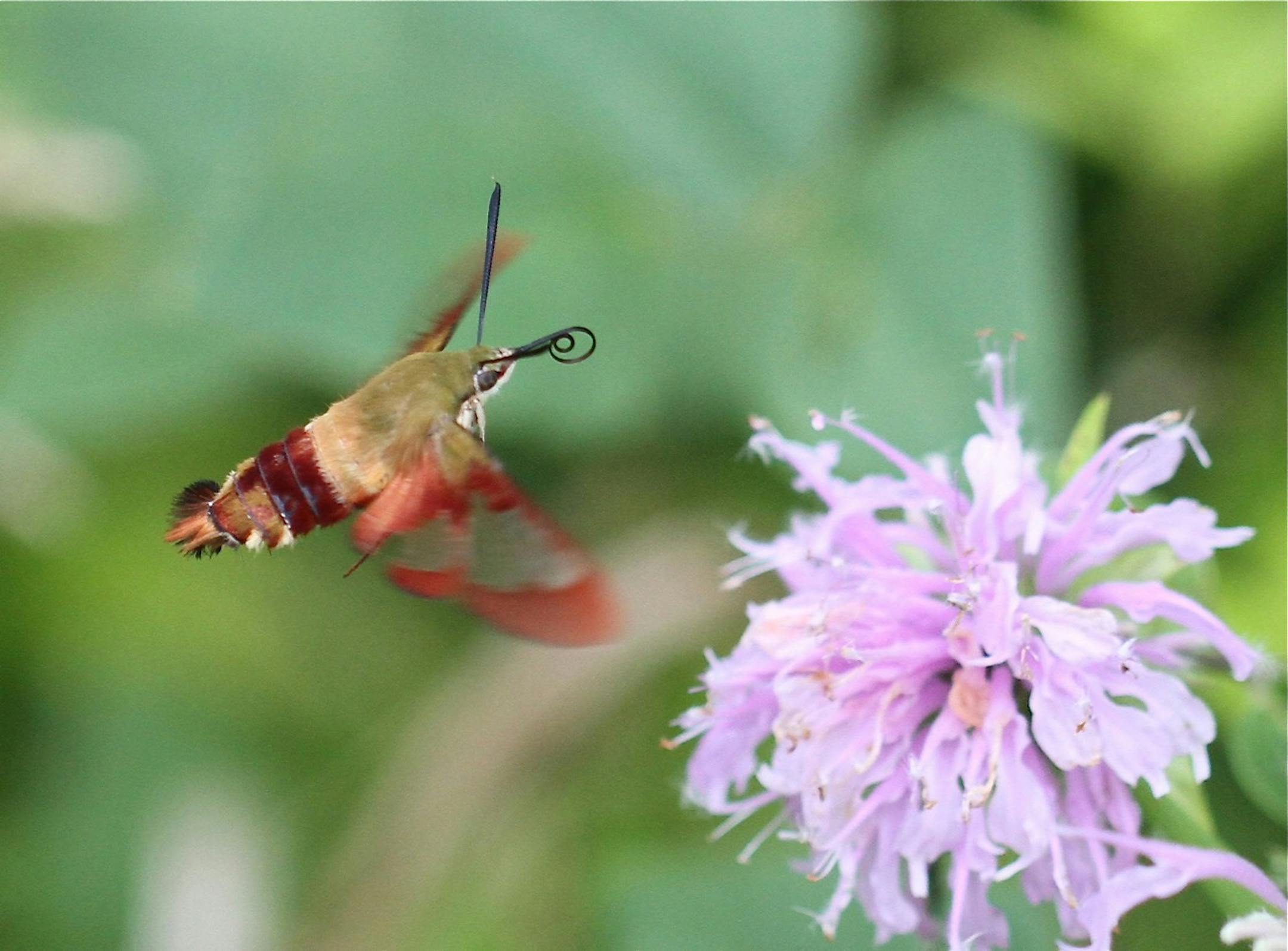
Q We've had several visits to our garden by a hummingbird-like creature. It has a long nose or beak, its wings beat rapidly and it hovers to suck nectar from flowers. Is this some kind of insect?
A Many people mistake the hummingbird clearwing moth for a hummingbird. The moth is slightly smaller than a hummingbird but does have the same preference for flower nectar. They're a treat to watch, as they flit from flower to flower during daylight hours. You can find more about them here: www.butterfliesandmoths.org/species/Hemaris-thysbe.
Male callers pay a visitQ I've had slow but steady traffic of female hummingbirds at my nectar feeders all summer, but in the middle of August I suddenly started seeing males, with their bright throats. Why would they be coming now and not before?
A That's an excellent observation and you're correct: Male hummingbirds may seem to disappear during the summer months, while they defend a feeding territory elsewhere. Then they suddenly begin appearing at feeders when they start their migration. The males migrate several weeks before females and the juveniles do.
Robins regroup in fallQ Where do all the robins go at the end of summer? I don't think I've seen any since the end of July.
A After the breeding season, robins seem to become scarce, as they gather together in large flocks to feed and roost together at night. If you go out to large parks or wooded areas you'll see where the robins spend their early autumn days.
Birds not of a featherQ I want to share something that took place at my feeder: A male cardinal was eating sunflower seeds and one of the doves on the ground began cooing. The cardinal took a seed in his beak and flew down and fed the dove. He did this about five more times and I have to say it made me tear up.
A That's a great story (wish I'd been there to see this) about one bird feeding another bird of an entirely different species.


