

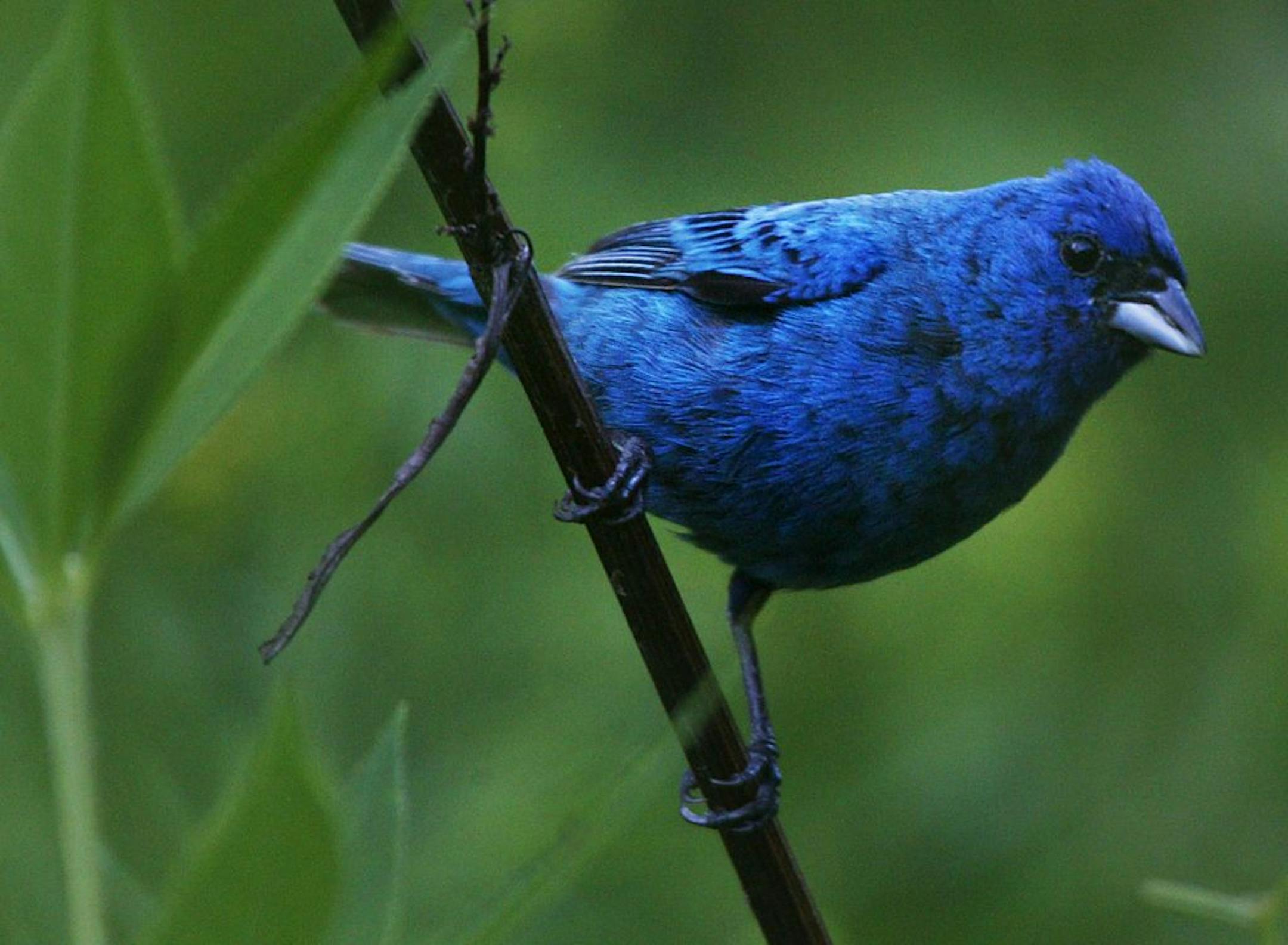
Q My son and I would give anything to see an indigo bunting. Where should we be looking?
A These small blue birds, about the size of a goldfinch, are on many people's "must see" list. They're fairly common in parks, woods and roadsides in our area in spring and summer, but unless they're in bright sunlight, they tend to look black, so they're often overlooked. The very best way to discover a bunting is to learn this species' distinctive song. Unlike many other birds, indigo buntings don't clam up during nesting season but sing all summer long. Check this site to hear their song: www.allaboutbirds.org/guide/Indigo_Bunting/sounds. The song will lead you to the bird.
Rosebeaks in residence Q This spring I saw more rose-breasted grosbeaks than ever before. Any chance they'll stay around all summer?
A Depending on the habitat near your home, you might be able to enjoy a nesting pair of grosbeaks this summer. They prefer to nest at the edge of deciduous woodlands, not deep in the woods, near streams or ponds. They've also been known to nest in parks, orchards and even back yards, as long as there's plenty of cover.
Less messy feed Q I love to watch birds but I live in a condo where the rules forbid any seed mess. Is there anything without shells that I can feed the birds?
A Many birds, including cardinals and chickadees, have a strong preference for sunflower seeds, and these are available without the shells. Look for sunflower hearts or medium-sized sunflower chips. In winter, you could offer the shelled seeds as well as suet cakes, which woodpeckers and other birds enjoy, and whole peanuts without shells.
Why jelly? Q I don't understand why Baltimore orioles would eat an unnatural food like grape jelly.
A Orioles are fond of fruit, as long as it's ripe -- or even overripe. At the end of summer they feast on ripe mulberries, raspberries, cherries and grapes. In the spring, after migrating up from the tropics, where they've been eating fruit all winter, orioles adapt easily to grape jelly, which is similar to their end-of-summer treat. Once they start feeding their nestlings, however, their diet emphasizes insects until their brood leaves the nest.


