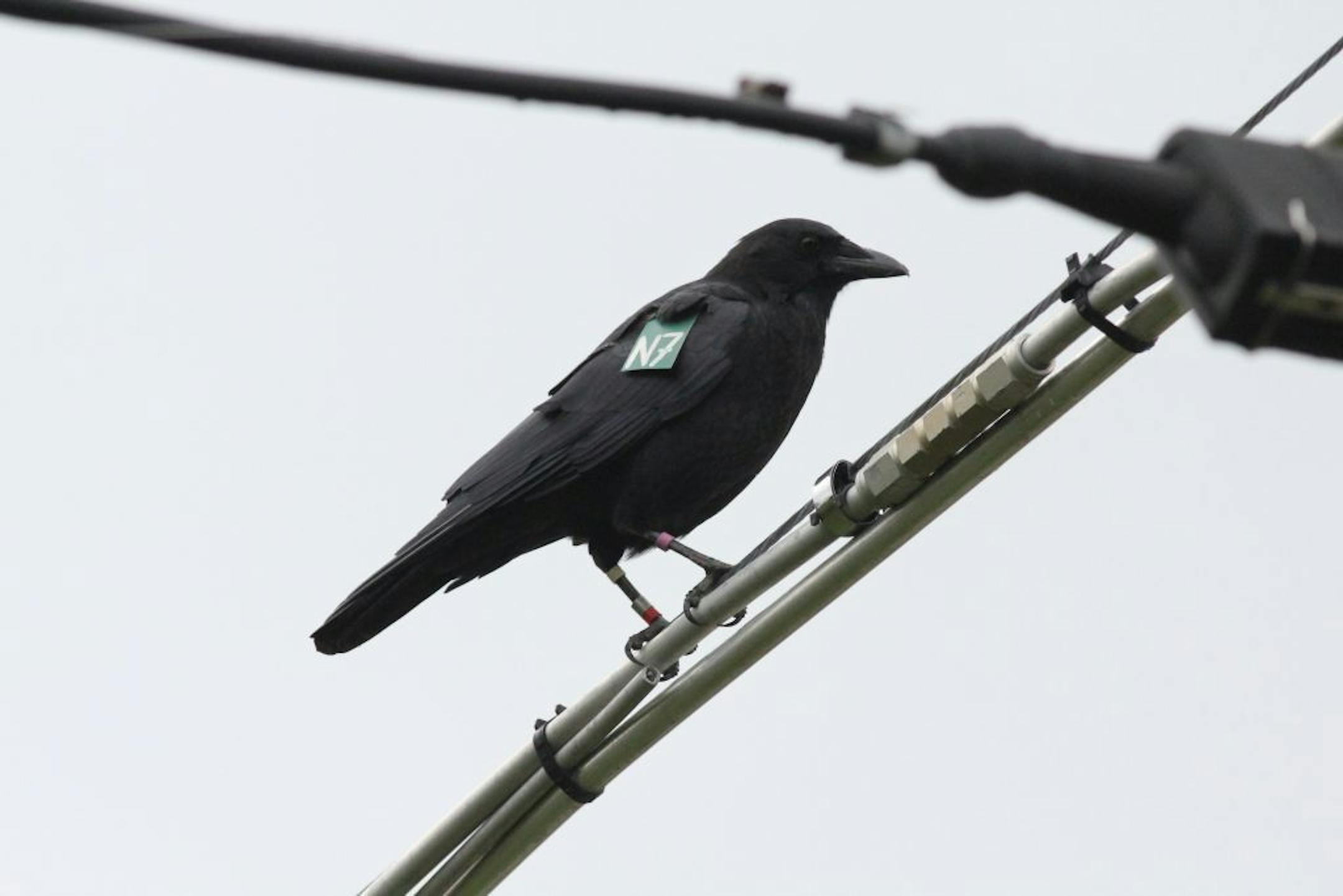
The handsome crow in the photo accompanying this story may look like other crows, but we know some unique things about this bird: He's two years old, spends part of his day at a large composting facility and was busy this past summer helping his mother raise her new brood. Unhappily, those younger crows didn't survive, so N7 is back to being the baby of his family.
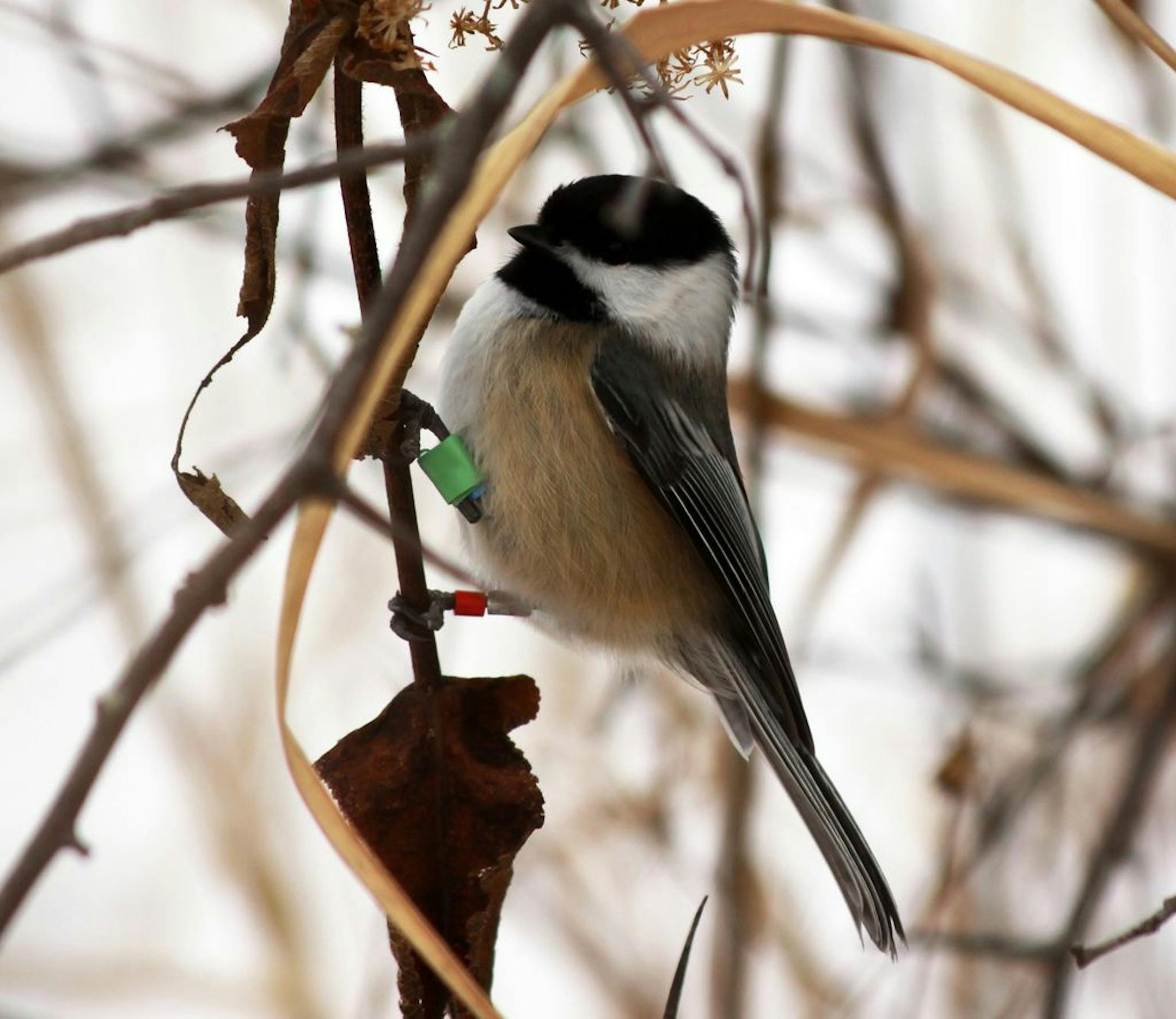
Chickadees look alike, too, but note the left leg of the chickadee in another photo: That lightweight green tag makes him less of an enigma. Thanks to tag readers installed on bird feeders in his area, we know how often he visits feeders, how many seeds he takes each time and the feeding route he follows each day. This kind of information is opening up whole new avenues in our understanding of bird feeding and breeding behavior.
And that white pelican with the backpack is wearing the latest wrinkle in tracking technology, a solar-charged Global Positioning System unit that tracks its every move. Knowing where this bird is and where it's headed at any moment is invaluable to wildlife managers looking to preserve areas where it rests and refuels on its way to and from the Gulf of Mexico.
'Bugging' birds
We humans have always wanted to learn more about the birds that live around us, and it's becoming easier to satisfy that urge. Really, it's a necessity in many cases, as more bird species face human-caused stresses and threats to their survival.
Most of what we know about birds we know because humans have devised ways to single out an individual bird to tell it apart from others of its flock or species. Devices have evolved from metal bands on bird legs to transmitters on their backs. Tracking devices used to be limited to big birds, like osprey, that could carry the weight. But they're now small enough to be used on 2-ounce songbirds, such as purple martins.
How do we know how long birds live? Banding records maintained at the federal Bird Banding Laboratory provide a good indication of a bird species' longevity. How do we know which routes ospreys take on migration? Radio transmitters on the birds' backs finally solved this mystery (and highlighted the importance of preserving stopover sites in the Caribbean). How do we know whether a bird is more endangered during migration or during nesting season? Tracking technology is invaluable here.
Old tech, new tech