

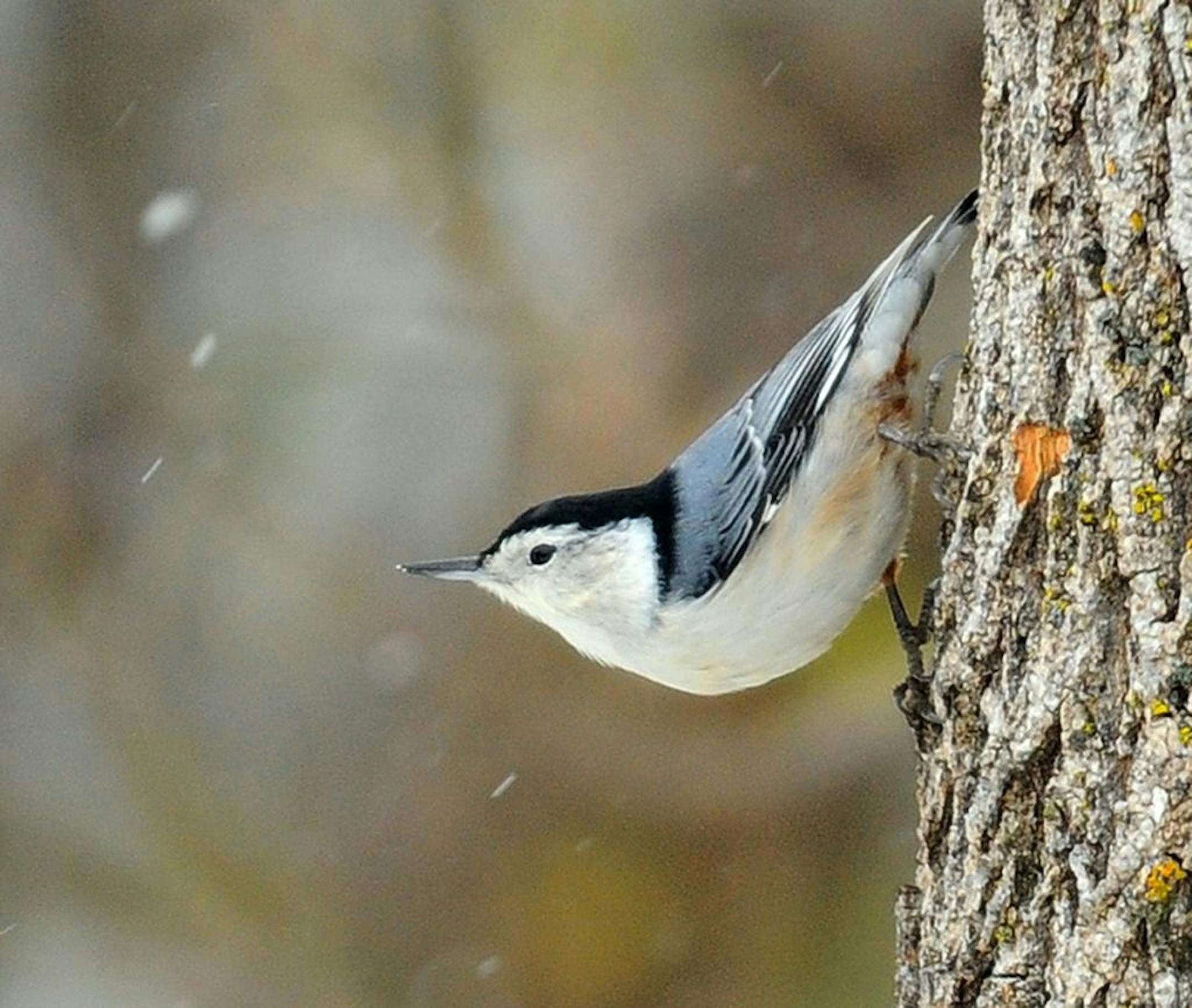
A back-yard scene: Winds howl, clouds scud, snow accumulates but even in this maelstrom, dark little juncos hop under feeders, flashy red cardinals scratch under a pine tree, a natty nuthatch spirals down a tree trunk and big blue jays muscle in for a meal.
"Brrrrr," we shudder, "how can they stand this cold?" But if we think about it for a minute, we realize that our one always-reliable defense against winter's blasts is that down coat hanging in the closet. Down coats are filled with feathers, the best insulator in the world, and all birds are covered by feathers.
Their plumage, layer upon layer of feathers, keeps out the cold. But that's only half the survival story: Birds consume calories during all the daylight hours in winter to stoke their inner furnaces, thereby maintaining a constant body temperature. The primary winter activity of the birds in our back yards is foraging and eating.
The winter landscape may look barren to us, but not to the hardy birds that live and even thrive at our latitude. Their sharp eyes detect shriveled berries on tree and bush, their probing beaks pull out insect eggs and caterpillars hidden in tree bark and on conifer needles, and flower heads offer abundant seeds to finches and sparrows.
Frequent fliers
About 15 species of winter-resident birds may flit through a landscape, including your back yard, several times a day. You may see cardinals, chickadees, several kinds of woodpeckers, nuthatches, house finches and goldfinches, blue jays, crows, juncos, starlings, house sparrows, kinglets and brown creepers. Many of these have favorite feeding sites and travel in small flocks on a circuit between them on a daily basis.
Summer's sweet berries are long gone (the grape, mulberry, dogwood and choke cherry fruit), but harder, even shriveled berries now become popular. Hackberry trees host big flocks of birds, especially the robins that spend the winter. Several kinds of viburnum bushes, especially nannyberry and arrow-wood, hold berries that ripen late in the season, and these are eagerly snapped up by birds.
In his book "Winter World," noted biologist Bernd Heinrich closely watched the shrubs in the beaver bog behind his cabin. In typical meticulous fashion, he weighed the berries from 20 arrow-wood bushes and extrapolated to the entire bog, finding that the yield was just over a ton of early winter bird food. Amazing as it may seem, these and other trees and shrubs have evolved with birds to offer their bounty exactly when other sources of food are scare in the wild. In this way they ensure that birds eat every last berry and scatter the seeds widely.


