

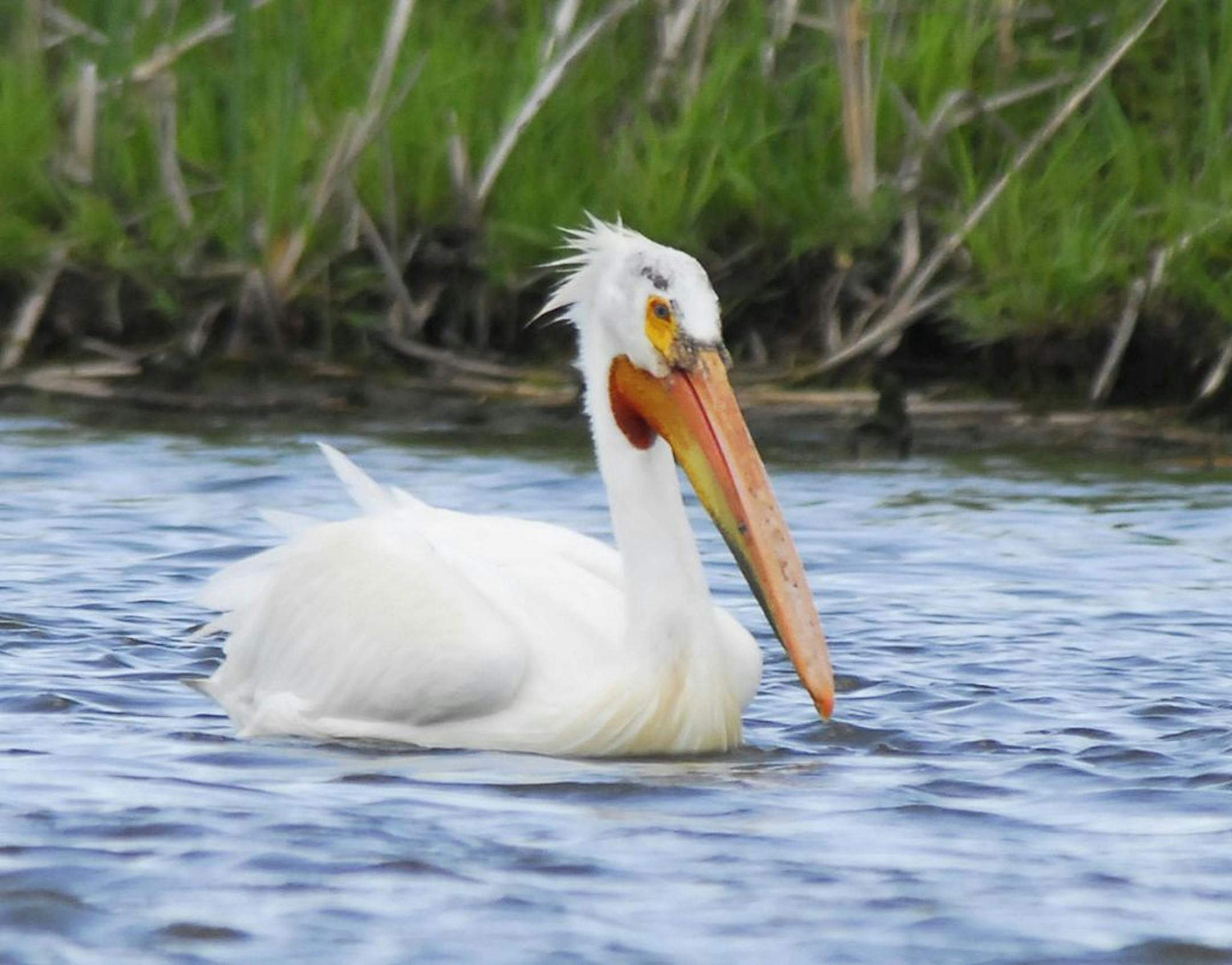
It's been a good-news/bad-news summer for Minnesota's largest colony of American white pelicans.
The birds, about 17,000 pairs of them, nest each year at Marsh Lake in Lac Qui Parle County, on Minnesota's western border. The colony is summer home to 70 percent of North America's population of the birds and a third of the world's population.
The pelicans head south for the winter, many to the Gulf of Mexico. Birds from a given hatch will spend their first year entirely on the Gulf. They return here for mating in their second year.
Adult pelicans weigh roughly 11 to 19 pounds. Each day they'll eat 20 to 40 percent of their weight in fish and other aquatic creatures.
Pelicans use the very elastic pouch on the lower part of their bill to dip for food. The birds flush out bulging mouthfuls of water and eat the capture. But if there are chemicals in the food or water, they're now in the pelican.
Bad news first: You recall the massive BP oil spill two years ago. Some of our pelicans now have traces of oil and oil dispersant in their bodies. No one will say for sure that the chemicals came from the Gulf of Mexico, but the dispersant was used in the BP cleanup effort.
The chemicals moved from adults to eggs. Tests of eggs collected by biologists this spring found oil traces in 20 of the first 22 eggs examined. Corexit, the oil dispersant used in the cleanup, was found in 18 of those eggs. The study continues.
"Regardless of the source, the high prevalence of these contaminants in pelican eggs is troubling," wrote Sarah Courchesne in her blog on the Seabird Ecological Assessment Network website.


