

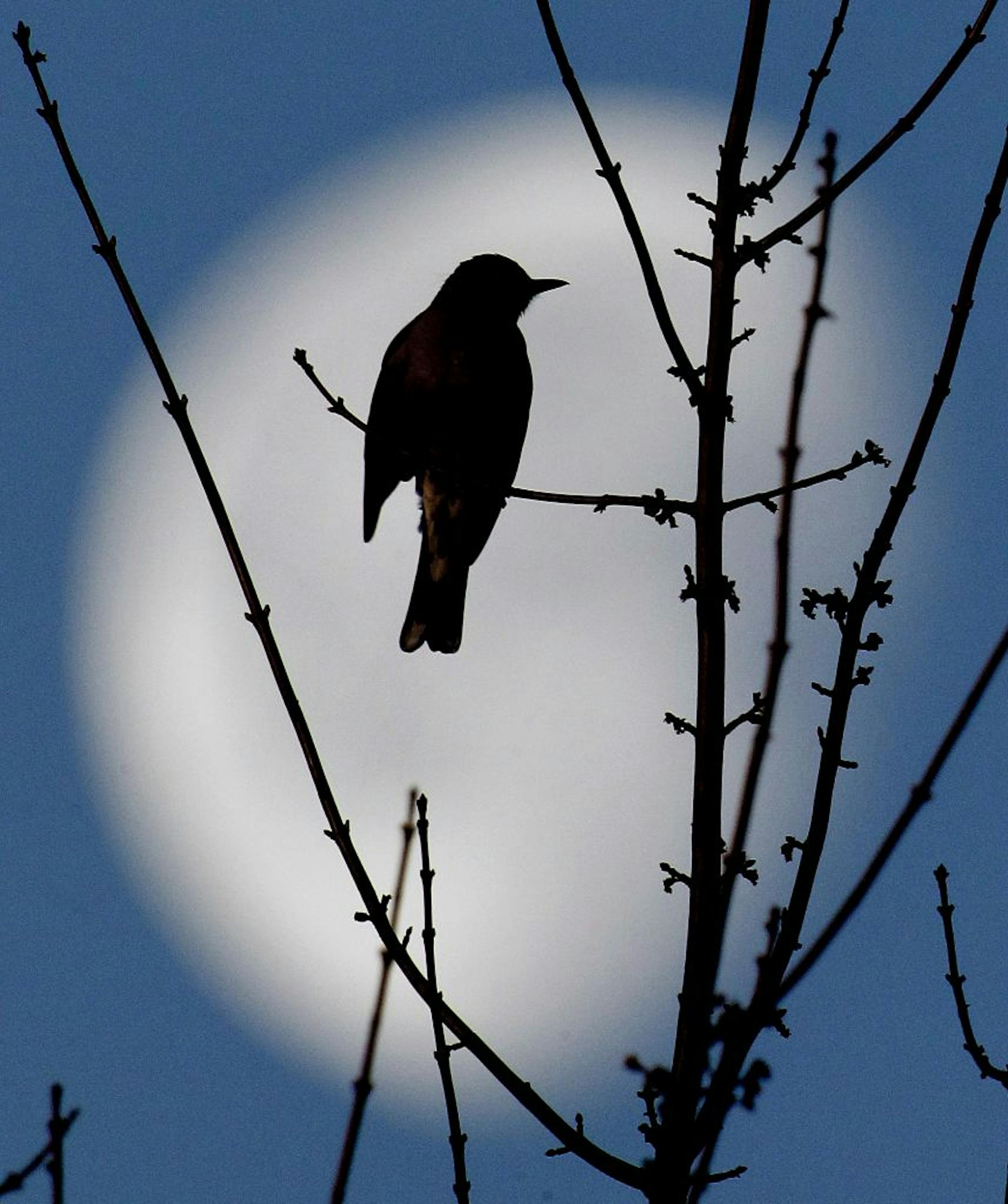
Daylight has no exclusive claim to birdsong.
Many birds sing at night, voices triggered by darkness. Others begin to sing at the very first hint of dawn, still dark for you and me.
From American robins to great crested flycatchers, many species add their musical might to the night's soundtrack, whether vigorous, muted or in chorus. American crows, for instance, can be annoyingly vocal well before alarm-clock time. They open their day with conversation. Robins call at the first light of day, very early, perhaps responding to clues of light in New York City.
Late at night, home from the movies or awake for a glass of water, lean your elbows on the sill of an open window or take two minutes outdoors. Sit on the screened porch at the cabin this summer, when everyone else is tucked in. Listen closely. The list of possible nighttime singers is long, particularly in the spring.
Your chances for a late-night serenade improve near marshes and wetlands. Pied-billed grebes produce a comical series of hoots and grunts from deep in the cattails. Coots do likewise. American and least bitterns call at night. Listen for the soft owl-like call of the least bittern an hour or two after sunset at a cattail marsh.
American woodcocks court at night, as do Wilson's snipes. The winnowing sound of the snipe is created by air flowing through wings as the bird takes a courtship power dive. It can be a strange sound if you don't recognize it -- an unknown sound from an unseen source in a darkened sky.
Three species of owls can be heard here on nights when good fortune is with you -- great horned owl, barred owl and Eastern screech-owl.
The list of nighttime songsters is as long as their songs are varied: Whippoorwills repeat their name endlessly along back-country roads, beginning at deep dusk. Common loons commonly call at night, their wails cutting across inky water and slicing into dreams. Ruffed grouse drum at night. The males are around-the-clock swains.


