

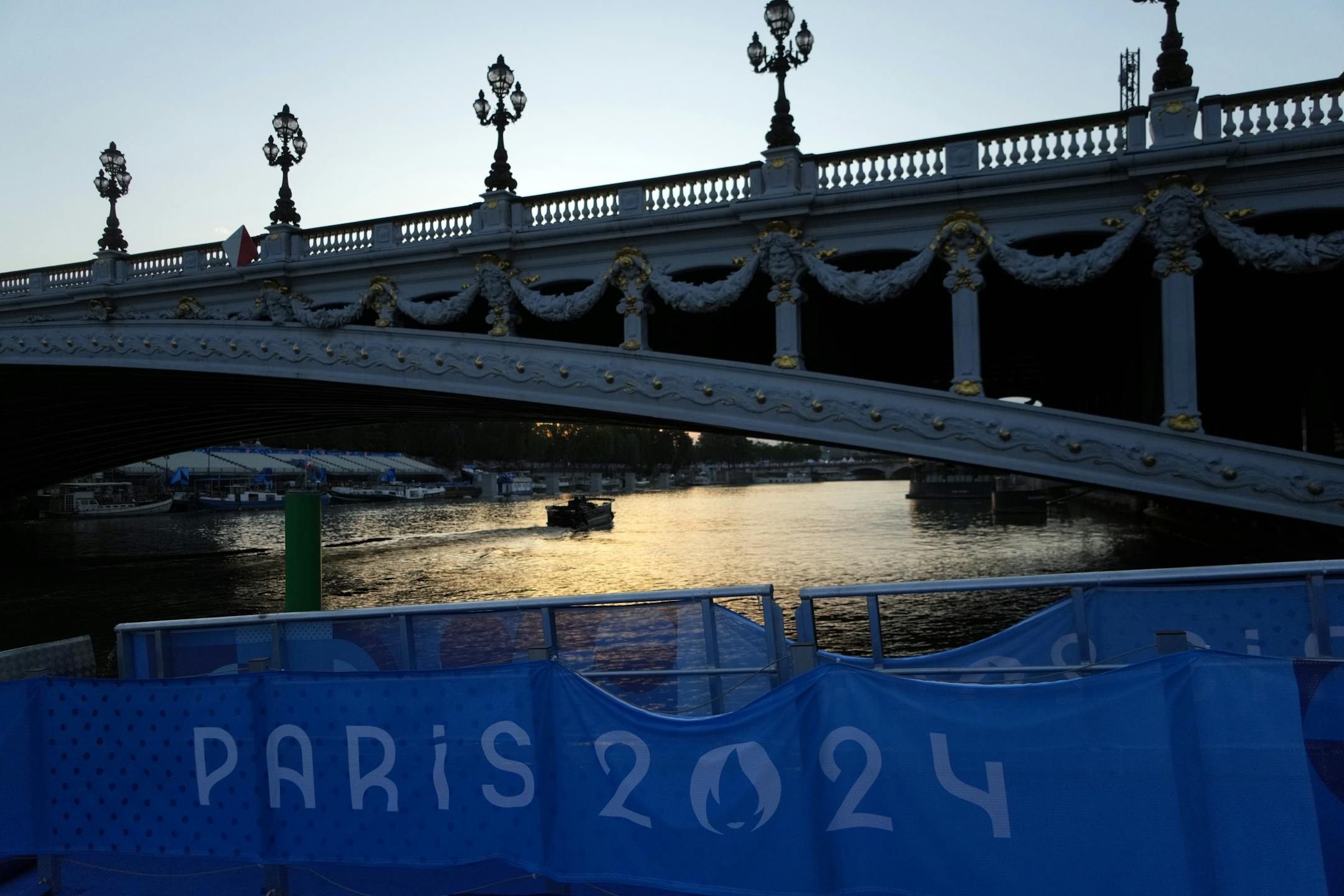
PARIS — Olympic triathletes dove into the Seine River on Wednesday after organizers declared the water in Paris safe for swimming following days of concerns about elevated bacteria levels caused by heavy rains last week.
The women jumped into the river near the majestic Pont Alexandre III around 8 a.m., with steady rain tapering off just as the athletes splashed into the water. Some dunked their swim goggles in the Seine before putting them on and heading into the river with the Eiffel Tower in the background. The men followed just under three hours later.
The decision to go ahead with the swim for the triathlon competitions was a big deal for the city, Olympics organizers and the athletes. Officials undertook an ambitious plan, including 1.4 billion euros ($1.5 billion) in infrastructure improvements, to clean up the long-polluted Seine. They had been steadfast in their insistence that the swimming portion of the triathlon and the marathon swimming events could safely be held in the river.
After days of uncertainty following rain on Friday and Saturday, organizers said early Wednesday that the latest tests of the water showed compliance with quality standards. They couldn't contain their delight that their gamble of holding Olympic events in the long-toxic river was paying off.
''It's magic,'' said chief Paris Games organizer Tony Estanguet, speaking to French television. ''It's a very important legacy for Parisians to be able to swim from next year in the Seine.''
The infrastructure projects undertaken to better manage wastewater have paved the way for Paris' ultimate goal: allowing Parisians to enjoy the waterway again after more than a century of it being off-limits, with plans to open public pools in its waters starting in 2025.
''Here we are!'' French President Emmanuel Macron proclaimed on X. ''Thanks to a massive investment ... we have achieved in just 4 years what was impossible for 100 years: the Seine is now swimmable.''
As they swam, the triathletes stayed close to the barges and boats that line the banks of the river. Spectators watched and cheered from the stands set up along the side and from the bridges spanning the waterway.
