

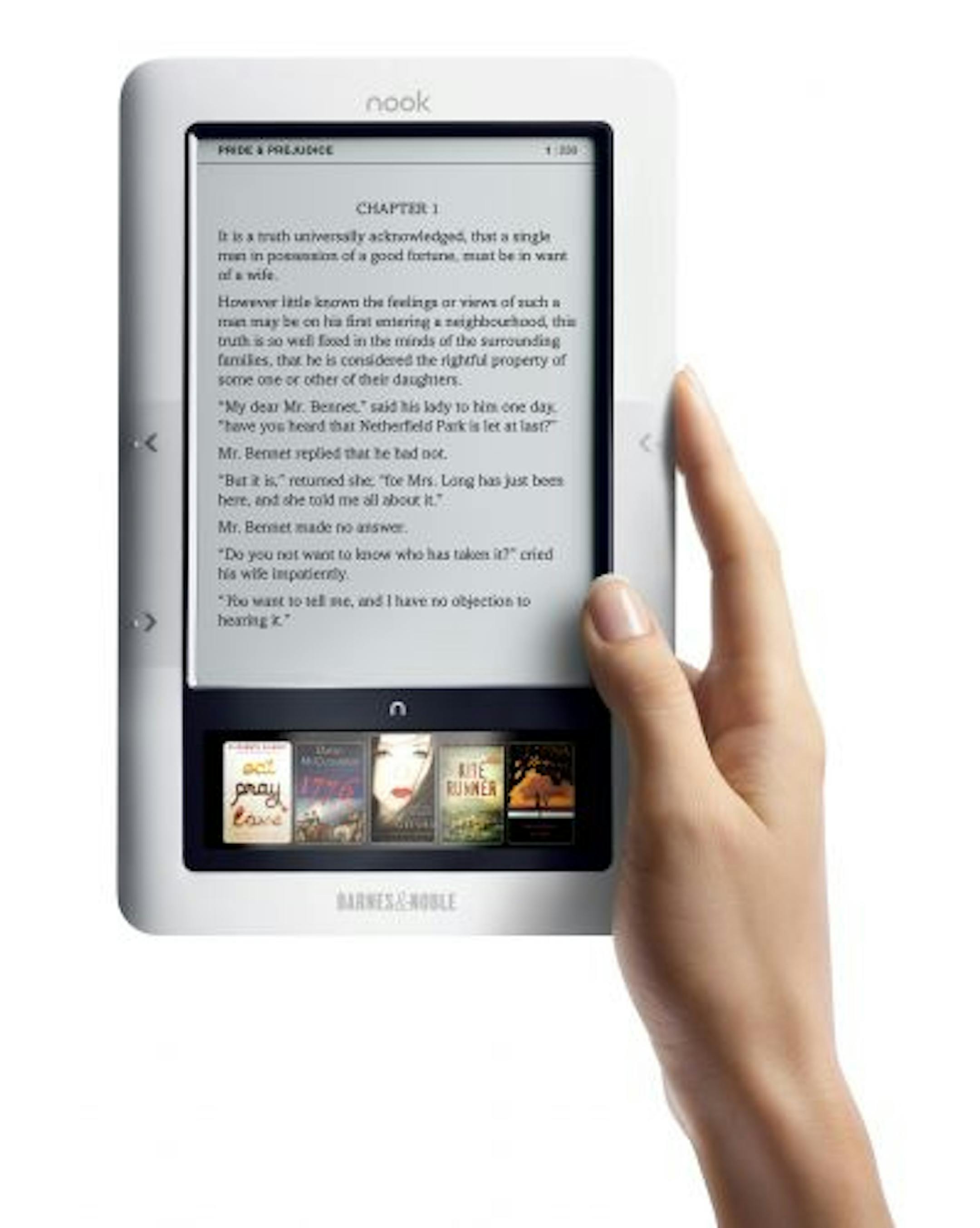
Judy Ellis, 67, got her first cell phone two years ago. So it's fair to say that like many in her generation, the Minneapolis resident has not been an early adopter of new technology. Then Amazon's Kindle came along.
"It's just so easy to use," she said, "and the adjustable font size makes a big difference in how quickly you can read."
But don't typecast this as a one-note phenomenon. For Ellis and many of her peers, larger type size is just one reason they have embraced e-readers, the increasingly popular mobile devices for reading electronic versions of books, newspapers and magazines.
Portability, accessibility, affordability, readability (beyond the font size) and the availability of thousands of titles have made Kindle, the Barnes & Noble Nook, the Sony Reader and other e-readers enormously appealing to seniors and baby boomers.
"It should be a very good holiday for e-readers and tablets," said Ross Rubin, executive director of industry analysis for the New York-based consumer-research company the NPD Group. "And relative to many other device categories, the early adopters have tended to skew older."
While demographic breakdowns are not available, there's little doubt that a mature audience has helped drive sales of e-readers. An estimated 6.4 million units will be sold this year, compared with 580,000 in 2008, said Steve Kidera, spokesman for the Consumer Electronics Association. E-book sales rose 177 percent last year, according to the Association of American Publishers, and about 350 percent in the first four months of this year.
Older readers in the Twin Cities area have found a lot to like with the new technology.
"The background is so easy on the eyes," said Minneapolis poet Phebe Hanson, 82, who has limited vision in one eye and no vision in the other. "I can read it for longer than I can a computer."


