

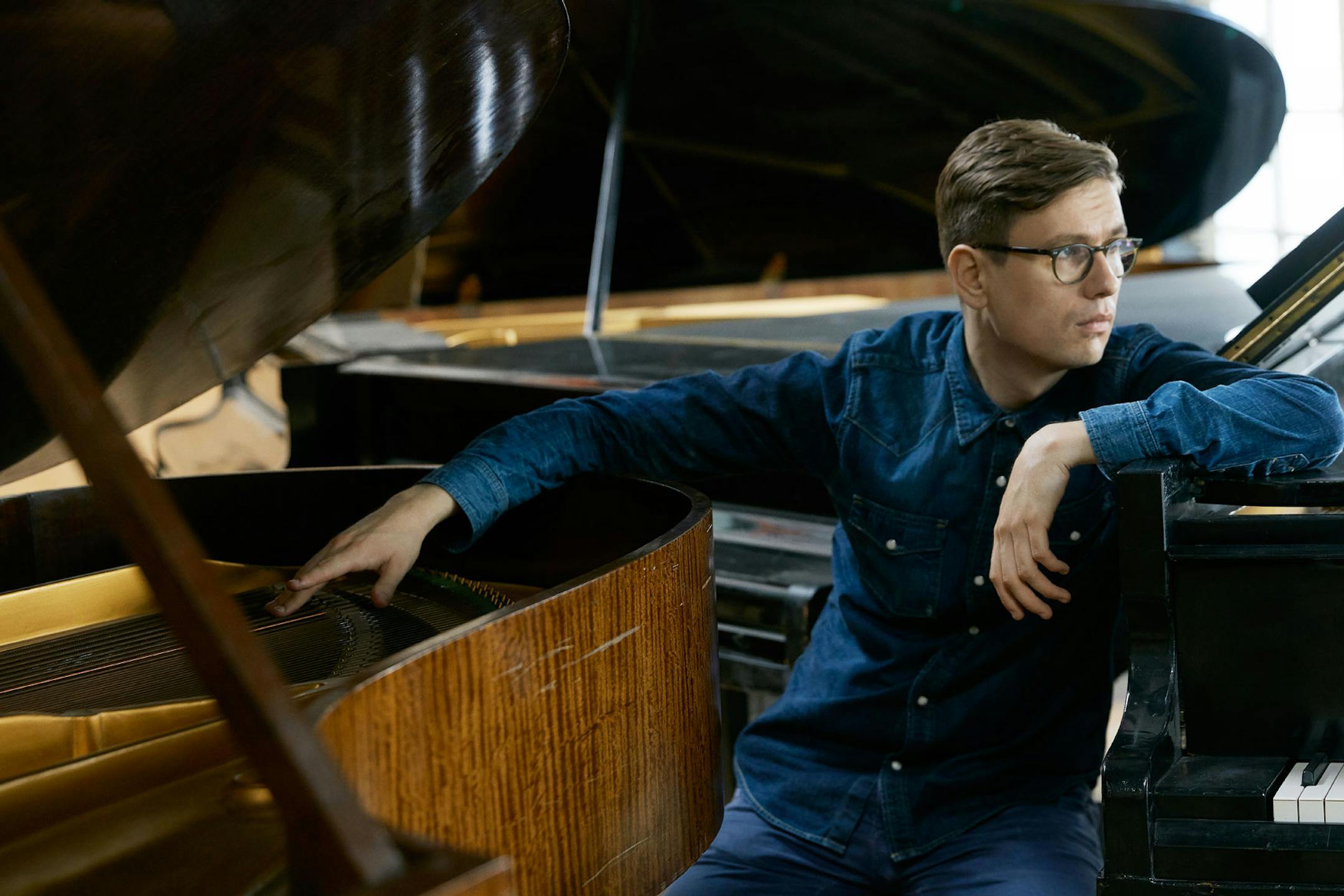
What can a musician say with Mozart that hasn't been said before?
One could be excused for wondering if Icelandic pianist Vikingur Ólafsson had reached his limit on unearthing epiphanies when choosing to create an album and concert program set entirely in the 1780s, mostly Mozart with a handful of peers from the period.
Yes, his magnificent album of J.S. Bach topped the classical charts and his mix of Jean-Philippe Rameau and Claude Debussy was full of unexpected insights. But surely Mozart was turf too well-trod to offer fresh blossoms.
Any skeptics attending Sunday's recital at St. Paul's Ordway Music Theater likely left enlightened as to this 37-year-old pianist's brilliance as both pianist and programmer. Ólafsson provided a deeply absorbing exploration not only of how much Mozart could accomplish with short solo works for keyboard, but how the first stirrings of romanticism were emerging from his vision and those of such contemporaries as C.P.E. Bach and Joseph Haydn.
Each half of the Schubert Club concert unspooled like an engrossing story, propelled by tension that built, erupted and then receded. With 15 pieces on the program, it was a generous feast of pianism, leaving little doubt that Ólafsson is one of the most exciting artists working in the classical realm.
While it followed the track order of his latest album, "Mozart & Contemporaries," the sharp mood swings were more electrifying live, and the first half's progression from one complementary key signature to another seemed a stroke of satisfying musical wisdom, Ólafsson engaging with exceptional subtlety, touch and technical skill throughout.
Contrast was key to the first half, the 10 pieces uninterrupted by applause. Somber works often gave way to bright fancies before solemnity took hold again, slices of stormy Baldassare Galuppi and haunting Domenico Cimarosa shaken from their solemnity by bright and breezy Mozart (two Rondos) or his unfinished Fantasy No. 3, conveying a struggle between sadness and acceptance.
The arc of each half reached an apex of thunderous proto-romanticism. Before intermission, that came on a fiery, turbulent interpretation of Haydn's very Beethoven-esque Sonata No. 47 in B minor.


