
Oh, the irony: Chisholm mining museum will move for ore

The Minnesota Discovery Center sits on land atop ore, with rights owned by some of the state’s most storied families.

The Minnesota Star Tribune
December 28, 2025 at 12:00PM
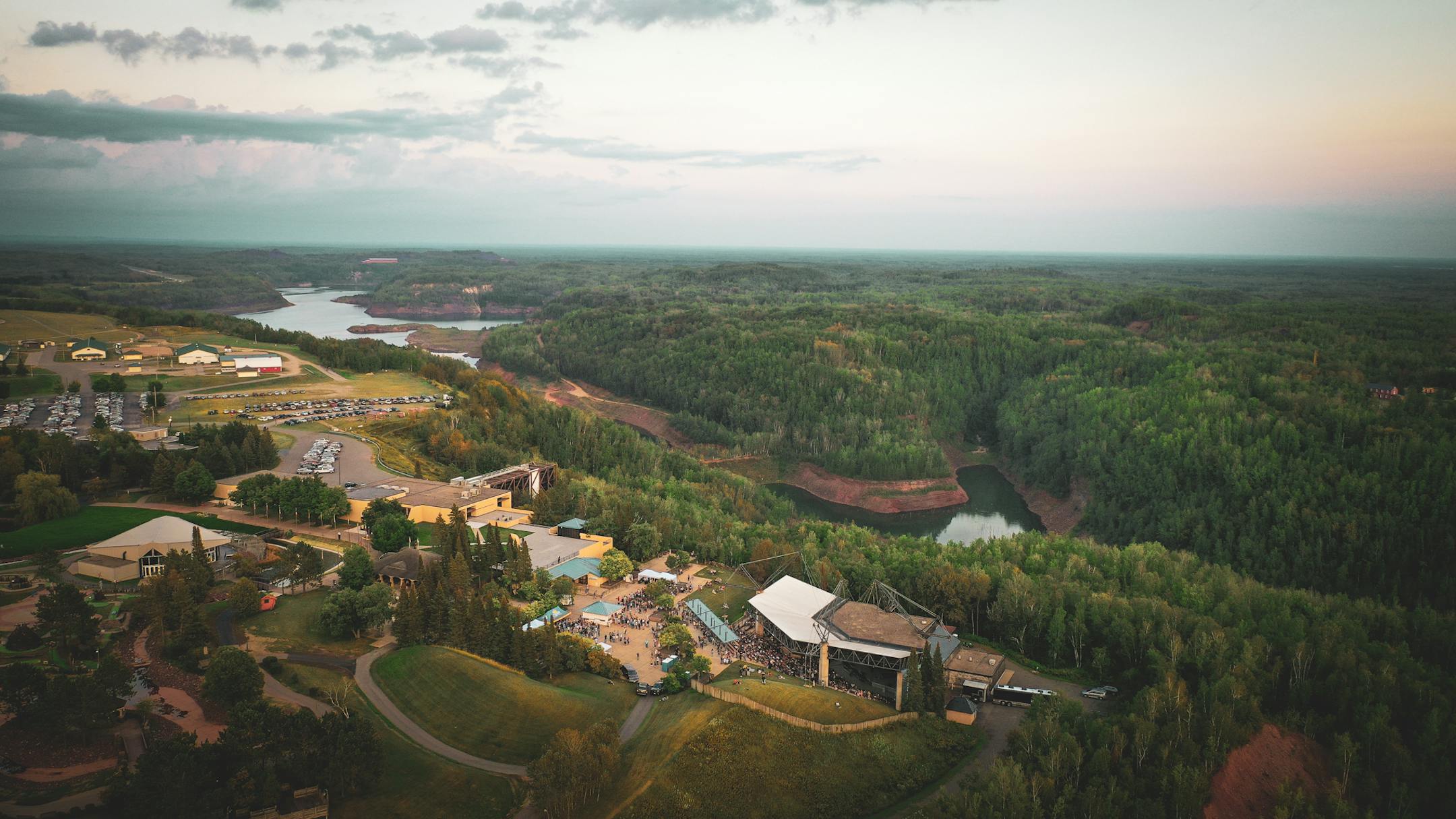
An aerial view of the Minnesota Discovery Center in Chisholm, Minn. (Minnesota Discovery Center)

DULUTH – The Minnesota mining museum complex best known as Ironworld is seeking millions in state funding to move to a new location, even though it is under a lease in its current Chisholm site for another 23 years.

Officially called the Minnesota Discovery Center, the nonprofit sits on 660 acres and is connected to the Redhead Mountain Bike Park that winds through old iron ore pits. The center serves as the second-largest “cultural complex” north of the Twin Cities, its director says, with a museum capturing the region’s rich mining heritage and the history of immigrants from more than 40 countries who helped build it. Its vast archives are a repository for genealogy research.

Superior Mineral Resources, an engineering company, has the mineral rights to 120 of the 660 acres, including the 40 that lie below the center’s buildings, and parcels nearby that include the closed Glen Mine.

The Minnesota Department of Iron Range Resources and Rehabilitation (IRRR), which owns the museum complex, is seeking $3.2 million from the state to pay for a new site within Chisholm and to help design a new center.

Officials are pursuing the move partly out of concern that the complex could get booted off the land with little notice well before its 75-year lease ends.

Superior Minerals has not issued a “formal” notice to the IRRR regarding lease renewal, company general manager Bill Boucher said. But a letter provided by the IRRR shows that Boucher wrote to department Commissioner Ida Rukavina in early 2024 “to remind” her of lease agreement terms for the majority of the land.

The letter noted that the company can terminate the lease with just six months notice, now that 50 years has passed since the agreement began. Superior Minerals and the IRRR also met about the lease this year, Rukavina said.

Starting the moving process now would help secure funding to tear down and rebuild somewhere else, said Discovery Center Director Char Conger.

Superior Minerals won’t say whether there is interest in mining the land from likely candidates Cleveland Cliffs or U.S. Steel. Locals question how much ore remains under the center’s grounds.

“Someone would have to teach me that that’s an economically viable decision,” said former Iron Range legislator Tom Anzelc, who in the 1970s worked as an assistant commissioner under Gov. Rudy Perpich.

Perpich, a Hibbing native, spearheaded the creation of the discovery center, which was first called the Iron Range Interpretive Center and later renamed Ironworld Discovery Center.

Its current campus faces up to $50 million in deferred maintenance. Conger said it doesn’t make sense to continue investing in buildings that must be torn down in the next couple of decades.

Rukavina said she was not aware of any immediate interest in mining the site, though the land has long been recognized as having potential for it — made clear in the lease agreement, she said.

“Our agency agreed to this early termination provision precisely because we support mining and the critical jobs it creates in our region,” Rukavina said. “This kind of planning is not new to the Iron Range.”

She referenced the move of Hibbing between 1919 and 1921.

Because the Oliver Mining Co. wanted to meet demand for steel during World War I, the village of Hibbing agreed to relocate its northern half. Nearly 200 buildings were moved via horses, logs, tractors and a steam crawler two miles south so that the Hull Rust-Mahoning Mine could be expanded, according to the Minnesota Historical Society.

Rukavina said that between costs to improve the current Discovery Center campus and an “unlikely” lease renewal, “we believe it is prudent to evaluate whether future investment is better directed toward a new facility at a secure site.”

The IRRR will need to demolish the center’s buildings and return the site to Superior Minerals in the condition it was in 1974, the start of the lease.

The state department has gathered public feedback on next steps for the Discovery Center and will issue its findings in January. The current location will operate for several more years as funding is sought to rebuild.

A relocation would be expensive, said St. Louis County Commissioner Mike Jugovich, who represents Chisholm.

But so would paying for major improvements to the existing buildings, he said, and waiting until closer to the lease expiration would only mean steeper construction costs.

Chisholm Mayor Adam Lantz sees opportunity in a move, as long as the complex stays inside the city of about 4,700. Rebuilding closer to downtown could bring a new audience to the site, and if built on city land, would offer the permanence it doesn’t have now, he said.

“The mineral owners and their families are hoping to cash in one day, and I respect that and I understand,” he said.

Superior Minerals manages the mineral interests of the Pillsbury, Longyear and Bennett families. Prospectors Russell M. Bennett and John Longyear found iron ore on Mesabi Range land owned by the Pillsburys in the 1890s.

about the writer

about the writer

Jana Hollingsworth

Duluth Reporter

Jana Hollingsworth is a reporter covering a range of topics in Duluth and northeastern Minnesota for the Star Tribune. Sign up to receive the new North Report newsletter.

See Moreicon

More from Duluth

See More
card image
Minnesota Discovery Center

The Minnesota Discovery Center sits on land atop ore, with rights owned by some of the state’s most storied families.

card image
card image