

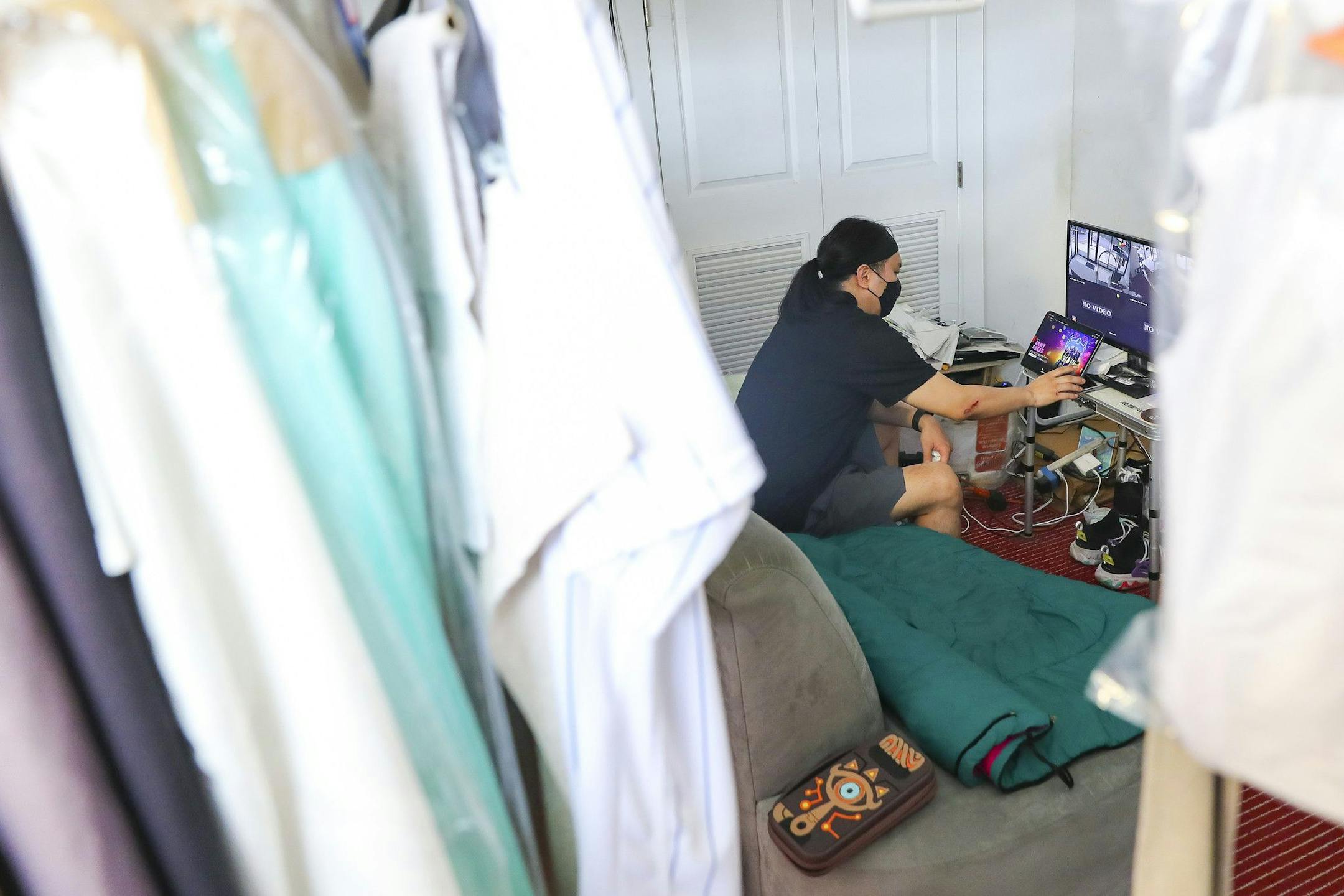
As the U.S. looks to put the COVID-19 pandemic behind it, customers are quickly returning to the businesses they used to frequent. But for many, dry cleaners are no longer part of the weekly routine.
The pandemic has diminished the use of professional and formal attire, leaving the dry-cleaning business well below 2019 levels and causing cleaners to worry that COVID-19 has permanently altered the viability of their industry, which has struggled ever since non-iron shirts become popular. In Illinois, it's a decline that hits particularly hard in the Korean American business community, which owns the majority of the dry cleaners in the state.
Shin Kim, manager of Chicago Cleaners in the Noble Square neighborhood, said that while more customers are starting to drop in with clothing for special events — suits, dresses, tuxedos — the overall volume of clothing he's cleaning is way down thanks to a lack of day-to-day items like dress pants and dress shirts.
Before the pandemic, Kim said the average monthly income at Chicago Cleaners was between $8,000 and $10,000. Now it's closer to $4,000.
"Because of the pandemic, it's kind of a dying service or business, you could say," Kim said.
The pandemic has resulted in a wave of closures across the state. Sue Kratz, an executive director at the Illinois Professional Drycleaners and Launderers, said there are 549 licensed dry cleaners in Illinois — a 20% decrease from the 688 in business at the end of 2019. Approximately 80% are run by Korean Americans, and many are small mom-and-pop shops, she said.
The industry has been losing about 30 dry cleaners a year since the early 2000s, but "COVID has definitely stepped up that pace," Kratz said. She believes the industry has hit its bottom and hopes the current number of dry cleaners can be maintained.
For many of the mom-and-pops that have been in business for years, "economically, they're back to square one," said Steve In, a board member of the Illinois Korean American Dry Cleaners Association.


