

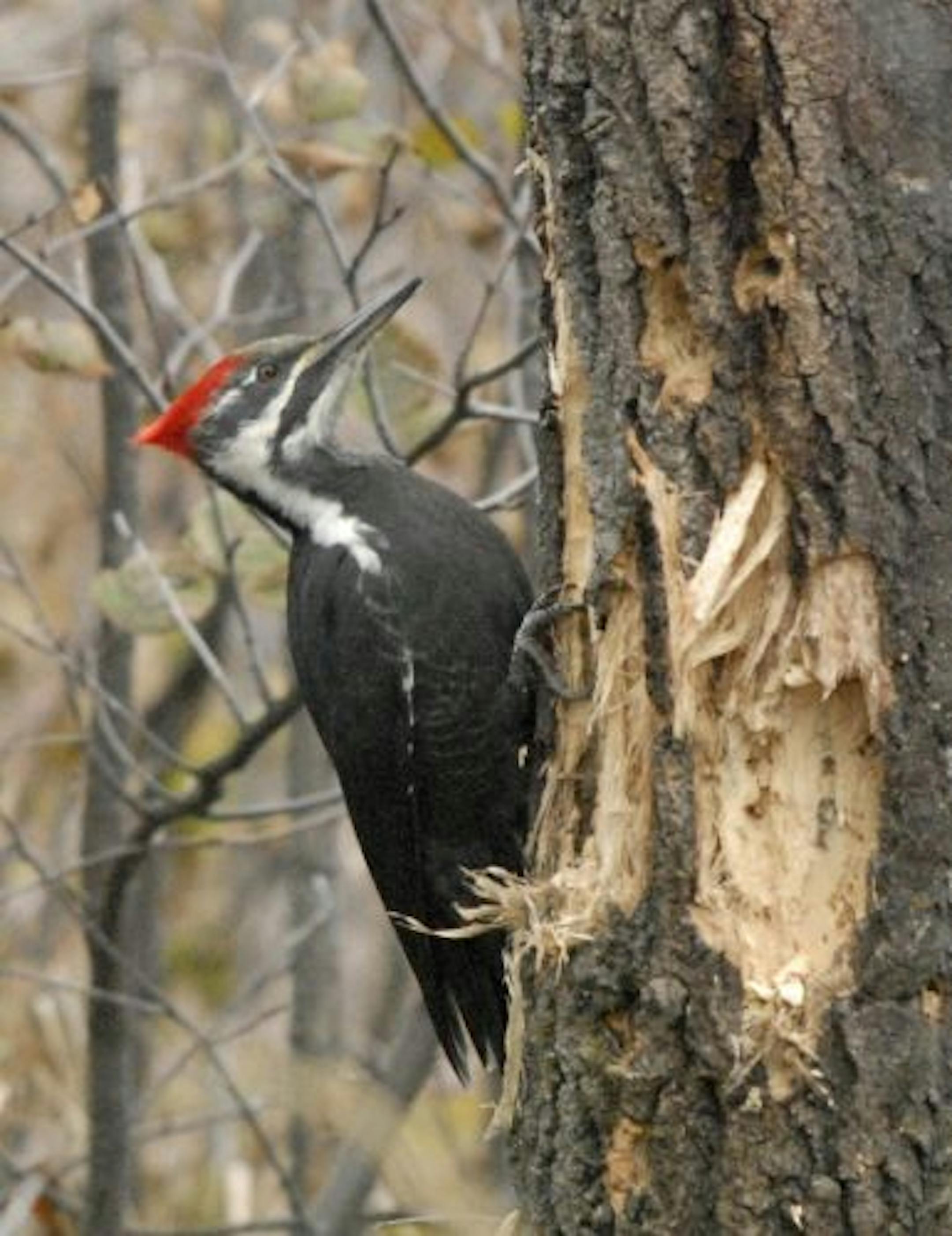
If the emerald ash borer visits your yard, the neighborhood woodpeckers will know about it long before you do.
"Woodpeckers are spectacularly successful in finding ash borers," said Michael Raupp, a professor and extension specialist with the Department of Entomology at the University of Maryland.
Woodpeckers listen for the sound of chewing, then hack away at tree bark to expose the borers, grubs, ants and other edibles that are at work within. In fact, they're so good at what they do that "in some of our ash borer test plots it was difficult to find borers because the woodpeckers had taken them all out," said Raupp.
But Raupp, who has long been studying these pests (the borers, not the birds), doesn't think there are enough woodpeckers to solve the emerald ash borer problem. It's likely that there will be way more of the tree-killing insects than the woodpeckers can eat.
I hadn't called Raupp to ask about woodpeckers. I'd wanted to know if there was reason to be concerned about what the two main pesticides used to kill borers might to do birds.
"Both chemicals pose problems," he said, "but there is no direct evidence that either chemical -- imidacloprid or ememactin benzoate -- is going to harm birds," he said. He sees a bigger problem in the loss of the trees.
"It's a matter of weighing the use of poisons against the loss of an entire genus of trees," he said. "I read one Forest Service report indicating there are 80 billion ash trees in North America." About 934 million of those are in Minnesota. "The loss of these trees will have devastating repercussions for natural and managed ecosystems," he said.
John Moriarity, natural resources manger for Ramsey County parks, agreed. Moriarity said he isn't concerned about a threat to songbirds from the poisons that might be used to fight the bug. In fact, he said, woodpeckers might even get a boost from the presence of the borers simply because when food is plentiful, more birds survive and reproduce.


