
Obituary: Robert Michel, longest-serving GOP leader of U.S. House

February 18, 2017 at 2:18AM
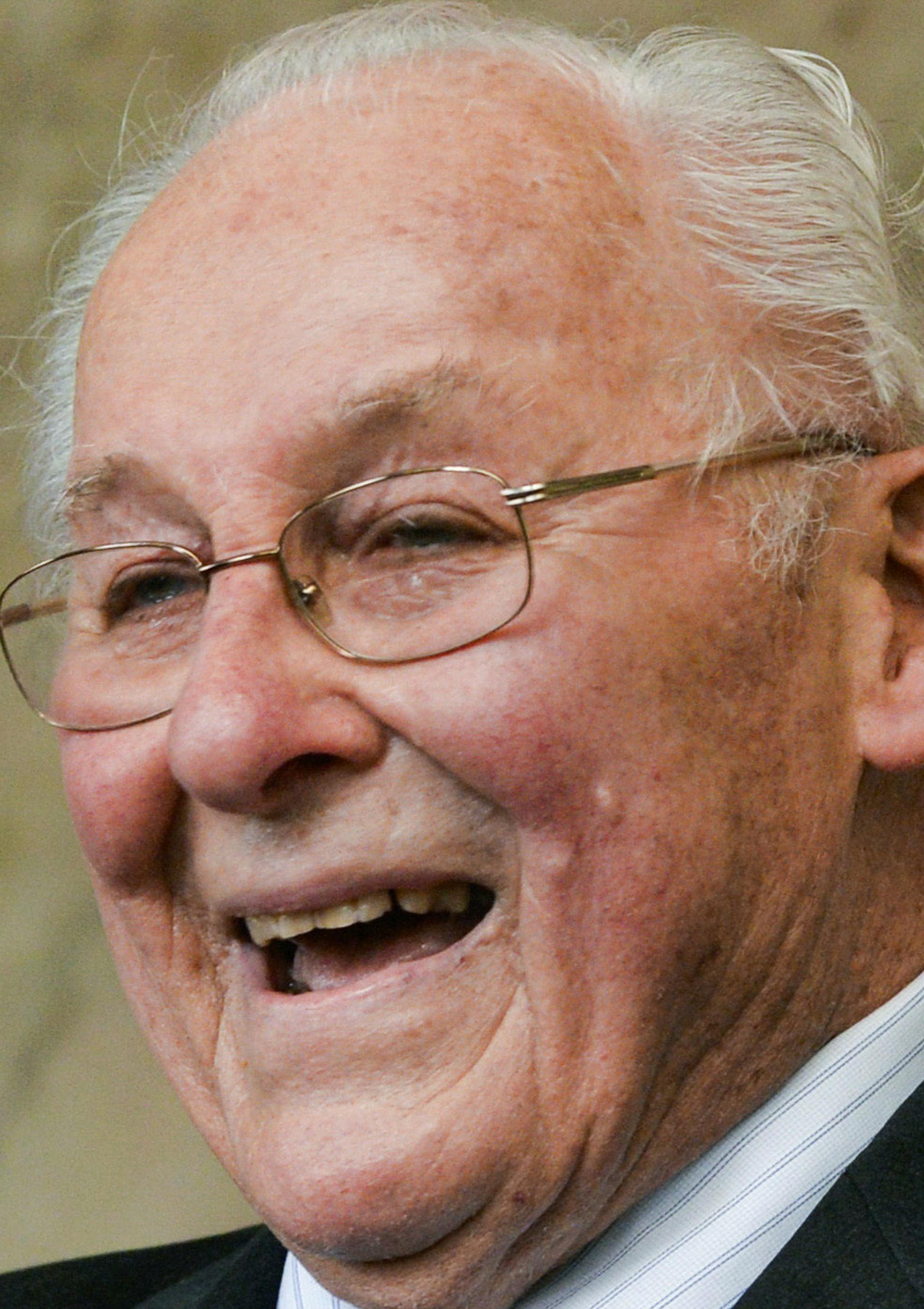
In this April 26, 2013 photo, former House Republican Leader Bob Michel smiles at his 90th birthday party in Peoria, Ill. Michel, an affable Illinois congressman who served as leader of the Republican House minority for 14 years and was skilled at seeking compromise critical in getting many initiatives of two Republican presidents through Congress, died Friday, Feb. 17, 2017. He was 93. (Ron Johnson /Journal Star via AP)
Michel (The Minnesota Star Tribune)

Robert Michel, 93, who became the longest-serving Republican leader in the history of the U.S. House while earning a reputation as a genial conciliator who worked with Democrats to get major legislation passed, died Friday in Arlington, Va.

Michel, who was from Peoria, Ill., had represented his hometown district for 38 years. He lived in Washington at his death.

He led his party as House minority leader for 14 years, from 1981 until he retired in 1995, having decided, at 71, not to seek another term in 1994. It was one election too soon.

The '94 midterm elections produced what was called the Republican Revolution, with the party winning control of both the House and the Senate for the first time in 40 years, capturing a majority of the nation's governorships and dealing President Bill Clinton a crushing setback.

Michel, having announced his retirement, was wistful after Election Day. "I feel like the small boy who ate his spinach and his broccoli but leaves the table before his mom brings the strawberry shortcake," he said.

In a 2008 interview, Michel said the "most exhilarating time" in his long years in the House had been when he got President Ronald Reagan's economic program through the lower chamber. Though Republicans had picked up seats on Reagan's coattails in the 1980 election, they were still 26 short of a majority, and Michel had to sway enough conservative Democrats to pass tax and spending bills.

For many years, he was known for getting along with Democratic leaders, golfing frequently with Speaker Thomas O'Neill of Massachusetts. But younger Republican House members — especially Newt Gingrich of Georgia, the assistant leader, or whip — later began challenging the Democrats constantly and complaining that Michel was too pliable.

The new breed of Republicans were not much more conservative than Michel, whose votes were judged 85 percent correct by the American Conservative Union. But they believed that the only way to win control of the House was through confrontation.

In 1992, without warning Michel, Gingrich told reporters that he would run for House GOP leader in two years — a potential faceoff that was averted by Michel's retirement.

A triumphant Gingrich went on to become House speaker in the wake of the GOP tide of 1994. Afterward, Michel was critical of the Republican agenda called a "Contract With America," saying that its proposed tax cuts and increases in military spending could deepen the budget deficit.

Until he joined a Washington law firm as an adviser in 1995, Michel's entire working life had been spent in the House. He had gone to Washington in 1948 as an assistant to Rep. Harold Velde right after graduating from Bradley University in Peoria.

When Velde retired in 1956, Michel won the seat. He was elected minority whip in 1975. He was seriously challenged only in 1982, when recession hit Peoria hard. He still won, with 51.6 percent of the vote.

When Clinton presented Michel with the Presidential Medal of Freedom in 1994, he lauded him as having "served our nation well, choosing the pragmatic but harder course of conciliation more often than the divisive but easier course of confrontation."

Robert Henry Michel was born in Peoria on March 2, 1923.

New York Times

about the writer

about the writer

More from Minnesota Star Tribune

See More
card image
J. SCOTT APPLEWHITE, ASSOCIATED PRESS/The Minnesota Star Tribune

The "winners" have all been Turkeys, no matter the honor's name.

In this photo taken Monday, March 6, 2017, in San Francisco, released confidential files by The University of California of a sexual misconduct case, like this one against UC Santa Cruz Latin Studies professor Hector Perla is shown. Perla was accused of raping a student during a wine-tasting outing in June 2015. Some of the files are so heavily redacted that on many pages no words are visible. Perla is one of 113 UC employees found to have violated the system's sexual misconduct policies in rece