
Obituary: John V. Tunney, California senator and son of heavyweight boxing champ

January 14, 2018 at 12:14AM
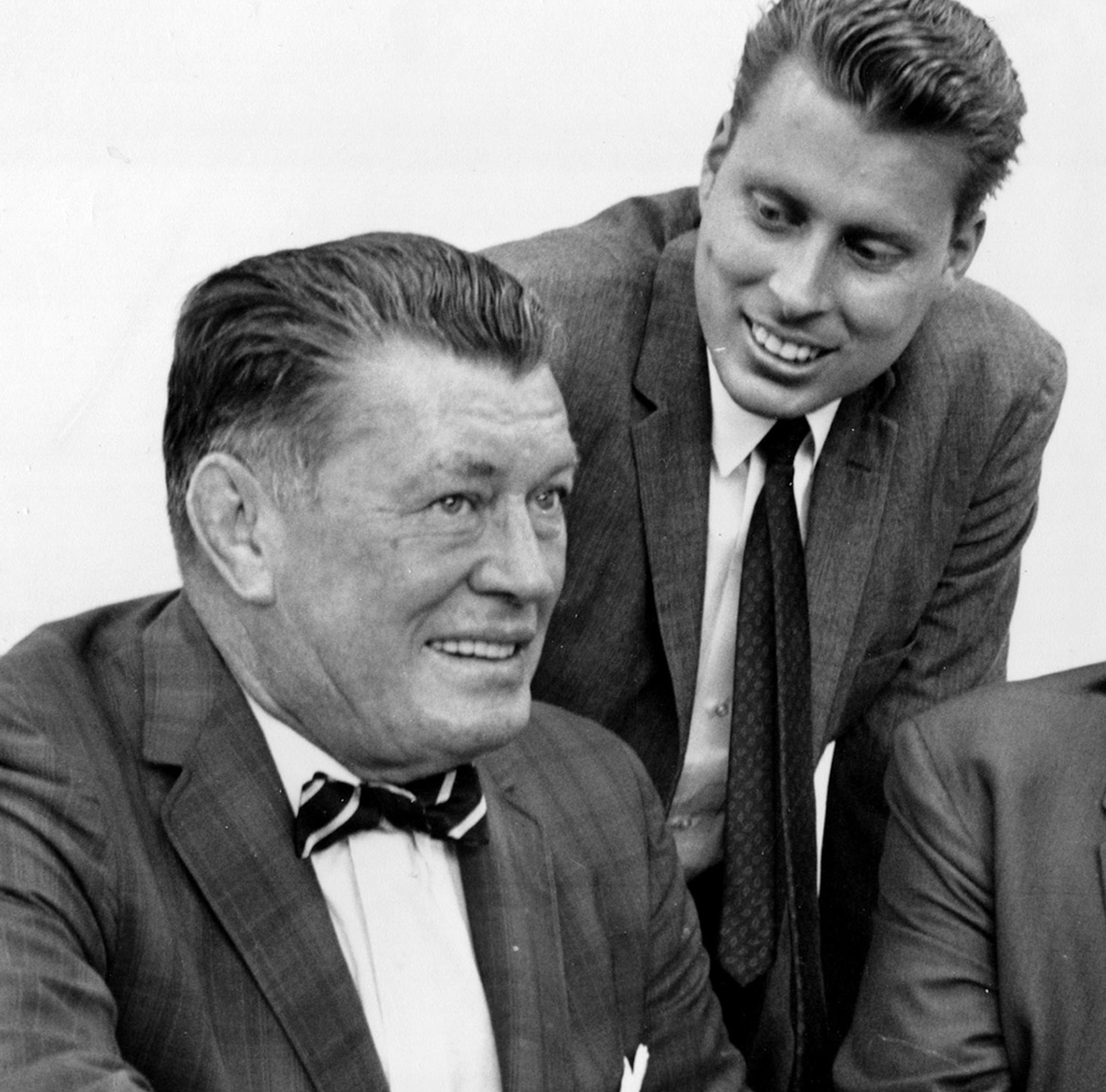
FILE - In this Sept. 23, 1964 file photo, boxing heavyweights Gene Tunney, left, and Jack Dempsey, right, pose with Tunney's son, John V. Tunney, at a news conference in Los Angeles. John Tunney, the former U.S. senator from California, has died. His brother Jay Tunney says John Tunney died Friday, Jan. 12, 2018 in Santa Monica, Calif., of cancer. He was 83. John Tunney was the son of heavyweight boxing champion Gene Tunney, and was among the youngest people elected to the U.S. Senate in the pas
John Tunney, right, with his famous dad, heavyweight boxing champion Gene ­Tunney, in September 1964. (The Minnesota Star Tribune)

John V. Tunney, 83, a famous boxer's son who became a charismatic congressman and senator from California and seemed to be a rising star in the Democratic Party, only to be sent into early political exile because of turbulent times, his own miscalculations and the unpredictability of the Golden State, died Friday at a home in Los Angeles.

The cause was prostate cancer.

John Tunney seemed to have a charmed political life until 1976, when at age 42 he lost his Senate seat after just one term to an unlikely GOP challenger, a former Democrat, Samuel I. ­Hayakawa.

A Canadian-born academic who had never run for office, Hayakawa was 70, tired easily on the campaign trail and was prone to gaffes, suggesting, for instance, that the internment of Japanese-Americans during World War II had a side benefit: exposing them to broadening new experiences.

Yet, as political post-mortems suggested, Hayakawa, a conservative, was helped by his crowd-pleasing eccentricities in defeating Tunney, who ran as a moderate.

Tunney was first elected to the U.S. House of Representatives in 1964, the year President Lyndon Johnson defeated Sen. Barry Goldwater in a landslide. Tunney was re-elected in 1966 and 1968.

In 1970, when he was 36, Tunney ran for the Senate. He was blessed with a weak Republican opponent, the one-term incumbent George Murphy, a former actor and song-and-dance man whose age — late 60s — and health were issues.

Tunney's victory margin in 1970 was bigger than that of Ronald Reagan, who was re-elected California governor. Soon, Tunney was mentioned as a possible running mate of Sen. Edmund Muskie of Maine, who looked to have the inside track for the Democratic nomination to run against President Richard Nixon in 1972. But Muskie's campaign flamed out early in 1972.

That summer, Robert Redford starred in "The Candidate," a film based on Tunney's 1970 campaign; the senator still appeared to have a bright future.

In 1974, the independent California Poll showed him to be more popular than Reagan, then in his last year as governor. In 1975, Tunney led a successful fight in the Senate to cut off funds for covert military operations by pro-American rebels in Angola. Tunney and like-minded lawmakers feared that involvement in Angola could lead to a Vietnam-like quagmire in Africa.

But many liberal Democrats thought he had been too slow to turn against the Vietnam War, which he had supported early on, and they were disappointed by his refusal to embrace a boycott of California grapes by striking farmworkers.

Liberals found a champion in Tom Hayden, the former campus radical who challenged Tunney in the 1976 Senate Democratic primary. Tunney defeated Hayden, but the effort weakened him going into the November general election against Hayakawa

John Varick Tunney was born June 26, 1934, in New York City.

New York Times

about the writer

about the writer

More from Minnesota Star Tribune

See More
card image
J. SCOTT APPLEWHITE, ASSOCIATED PRESS/The Minnesota Star Tribune

The "winners" have all been Turkeys, no matter the honor's name.

In this photo taken Monday, March 6, 2017, in San Francisco, released confidential files by The University of California of a sexual misconduct case, like this one against UC Santa Cruz Latin Studies professor Hector Perla is shown. Perla was accused of raping a student during a wine-tasting outing in June 2015. Some of the files are so heavily redacted that on many pages no words are visible. Perla is one of 113 UC employees found to have violated the system's sexual misconduct policies in rece