
Obituaries: Inmate exonerated after 14 years on death row dies in New Orleans

October 7, 2017 at 11:48PM
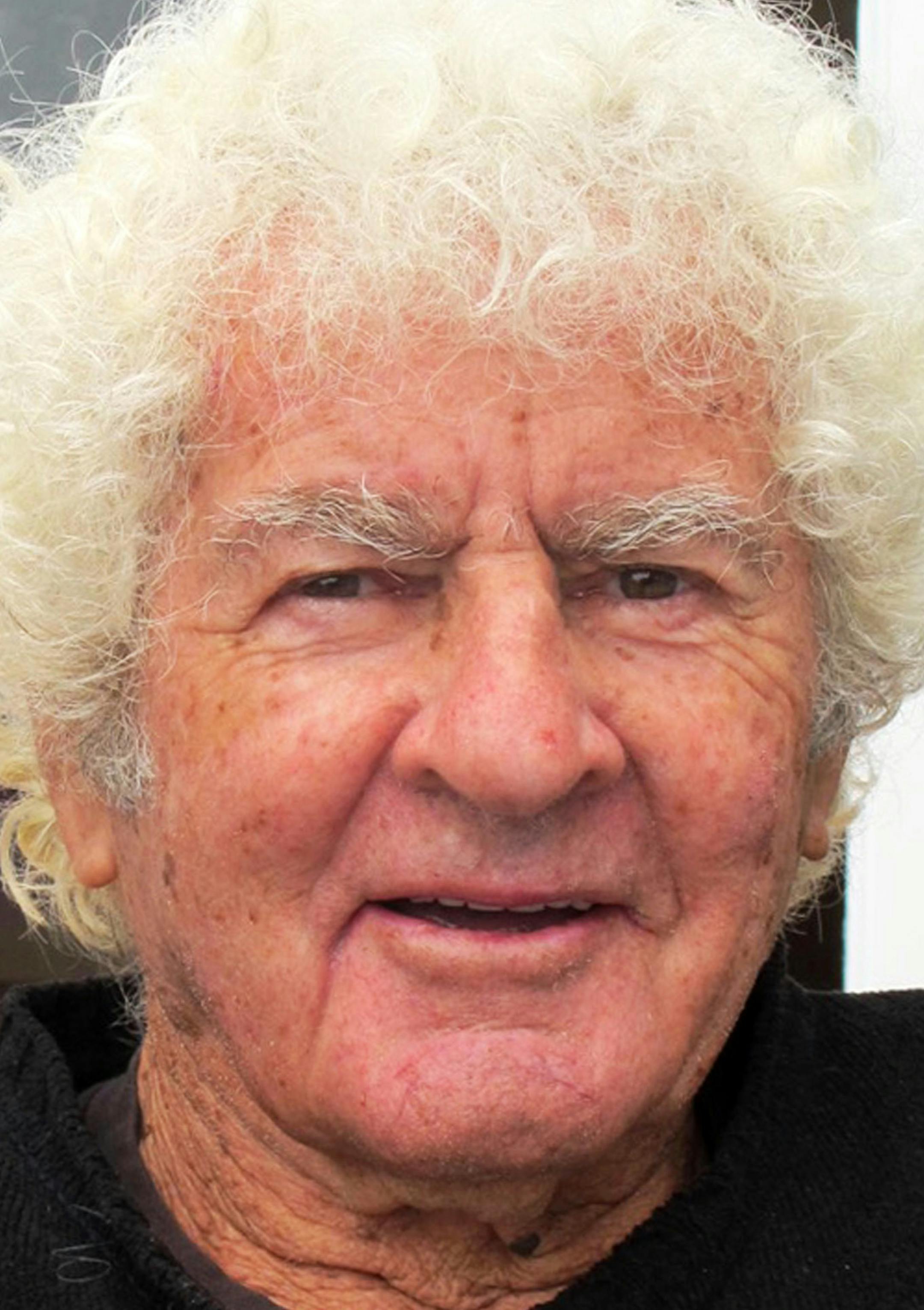
This August, 2011 photo provided by France Janov, shows Arthur Janov, a psychotherapist whose "primal therapy" had celebrities screaming to release their childhood traumas and spawned a best-selling book in the 1970s. Janov died Sunday, Oct. 1, 2017, at his home in Malibu, Calif., from respiratory arrest following a stroke, said his wife, France Janov. He was 93. (France Janov via AP)
Janov (The Minnesota Star Tribune)

John Thompson, 55, who spent 14 years on death row in Louisiana before being exonerated in a murder case that brought national attention to prosecutorial misconduct, died Tuesday at a hospital in New Orleans.

The cause was a heart attack, said Emily Maw, the director of Innocence Project New Orleans.

Thompson was a 22-year-old self-described "small-time weed dealer" in 1985, when his legal nightmare began.

That January, he was arrested, after authorities received a tip, for the murder weeks earlier of Ray Liuzza Jr., a New Orleans hotelier. Thompson was then identified as the alleged assailant in an unrelated earlier ­carjacking.

Prosecutors put him on trial first for the carjacking, winning a conviction in April 1985. The next month, he was convicted in the murder case.

In large part because of the prior carjacking conviction, prosecutors successfully argued Thompson should receive the death penalty.

During the yearslong legal drama that followed — a time Thompson spent in an isolation cell 23 hours a day — a raft of evidentiary problems emerged.

At the murder trial, a co-defendant blamed the crime on Thompson, who had in his possession Liuzza's ring and the gun used in the killing. Thompson's legal team made the strategic call that he not testify, to avoid possible cross-examination about the carjacking conviction.

The decision not to testify meant Thompson could not explain how he came to have the ring and gun: "A few weeks earlier Freeman had sold me a ring and a gun; it turned out that the ring belonged to the victim and the gun was the murder weapon," Thompson wrote in an Op-Ed published in the New York Times in 2011.

As controversy mounted, a lawyer came forward to say his friend, a former prosecutor by then deceased, had confessed on his deathbed he had concealed a lab report to more easily convict Thompson.

In 1999, New Orleans District Attorney Harry Connick Sr. joined Thompson's lawyers in requesting a stay of execution. The stay was granted, a new trial was ordered, the carjacking charge was eventually dropped, and Thompson was removed from death row.

He received a new murder trial and, in 2003, was acquitted. "You forget about the beauty of small things," he said in 2003, describing the disorientation of freedom after so many years of incarceration.

After his release, Thompson helped start Resurrection After Exoneration, an organization that helps former inmates readjust to life outside bars.

John Colin Thompson was born in New Orleans on Sept. 6, 1962.

Arthur Janov, 93, the psychologist who created, practiced and preached primal therapy, a sensation of the 1970s in which patients were coached to let out sobs or screams as they relived childhood trauma in a quest to overcome neurosis, died Oct. 1 at his home in Malibu, Calif.

The cause was respiratory arrest following a stroke.

Through his treatment of celebrities — among them entertainers John Lennon, Yoko Ono and James Earl Jones — Janov became a celebrity in his own right beginning in the 1970s.

In a bestselling book, and in appearances on TV, he converted curious onlookers to committed followers with an enticingly simple explanation of psychological ­ailments, and what he billed as a near surefire way of resolving them.

His debut book, "The Primal Scream," was published in 1970 and sold more than 1 million copies. In that and subsequent volumes, he laid out his theory of Primal Pain, a term he rendered in capital letters.

If a baby suffers unduly during birth, or if his or her basic needs of food, warmth, love and stimulation are not met during infancy, that child may grow up and develop neuroses or other ills. To resolve Primal Pain, Janov invited patients to regress to childhood. Only once they have reached their former infant state might they access the Primal Pain that they had repressed.

His therapy became popularly known as "primal scream therapy" for the manner in which patients sometimes released that pain — through shouts such as "Daddy, be nice!" or "I hate you, I hate you!" Janov said his work was often misrepresented and reduced to screams, when in fact the release might instead take place through writhing or crying.

Janov declared his treatment "the most important discovery of the 20th century." Mental-health professionals were less enthusiastic. In 1977, Janov sued the publication Psychology Today for $7.1 million in libel damages for describing primal therapy as "jabberwocky."

Arthur Janov was born in Los Angeles on Aug. 21, 1924.

M. Cherif Bassiouni, 79, a renowned Egyptian-American jurist who helped found two war-crimes tribunals and was widely regarded as a godfather of modern international criminal justice, died on Sept. 25 at his home in Chicago.

The cause was complications of multiple myeloma.

Bassiouni, a descendant of a prominent Egyptian family, was a mix of quintessential intellectual, diplomat and human rights activist. He taught at universities, worked for the United Nations and advised governments.

In books, law journals, seminars and reports from conflict zones, Bassiouni elaborated on definitions of the gravest international crimes, including crimes against humanity and genocide. And he helped shape new ways to hold perpetrators accountable.

In the early 1990s, long before trials were held, he denounced the large-scale sexual abuse of Muslim and Catholic women in Bosnia as war crimes and said that Bosnian Serbs were using rape as a tool of ethnic cleansing.

With his erudition and ebullient presence, he trained a cohort of international lawyers and judges. While running institutes in the U.S. and Europe and teaching courses in many places, he was also a workaholic author whose writings included 35 books, close to 40 edited volumes, and more than 270 essays and law review articles.

"When I saw him, he was working on his memoirs, dictating to his assistants," said William Schabas, a longtime friend who teaches law at Middlesex University in London and visited him less than a week before his death.

With his direct knowledge of the Muslim world, Bassiouni wrote influential texts on interpretations of jihad and of Islamic law, running seminars on those subjects for lawyers and western military personnel as Islamist violence expanded.

He drew ire for his candor and passion, particularly when his opinions and fact-finding ran afoul of the intentions of diplomats.

Mahmoud Cherif Bassiouni was born in Cairo on Dec. 9, 1937.

news services

about the writer

about the writer

More from Minnesota Star Tribune

See More
card image
J. SCOTT APPLEWHITE, ASSOCIATED PRESS/The Minnesota Star Tribune

The "winners" have all been Turkeys, no matter the honor's name.

In this photo taken Monday, March 6, 2017, in San Francisco, released confidential files by The University of California of a sexual misconduct case, like this one against UC Santa Cruz Latin Studies professor Hector Perla is shown. Perla was accused of raping a student during a wine-tasting outing in June 2015. Some of the files are so heavily redacted that on many pages no words are visible. Perla is one of 113 UC employees found to have violated the system's sexual misconduct policies in rece