
Now here's a survey with teeth

Most of us have no idea what we're talking about when it comes to dental habits and oral health.

Chicago Tribune
July 21, 2012 at 6:20PM
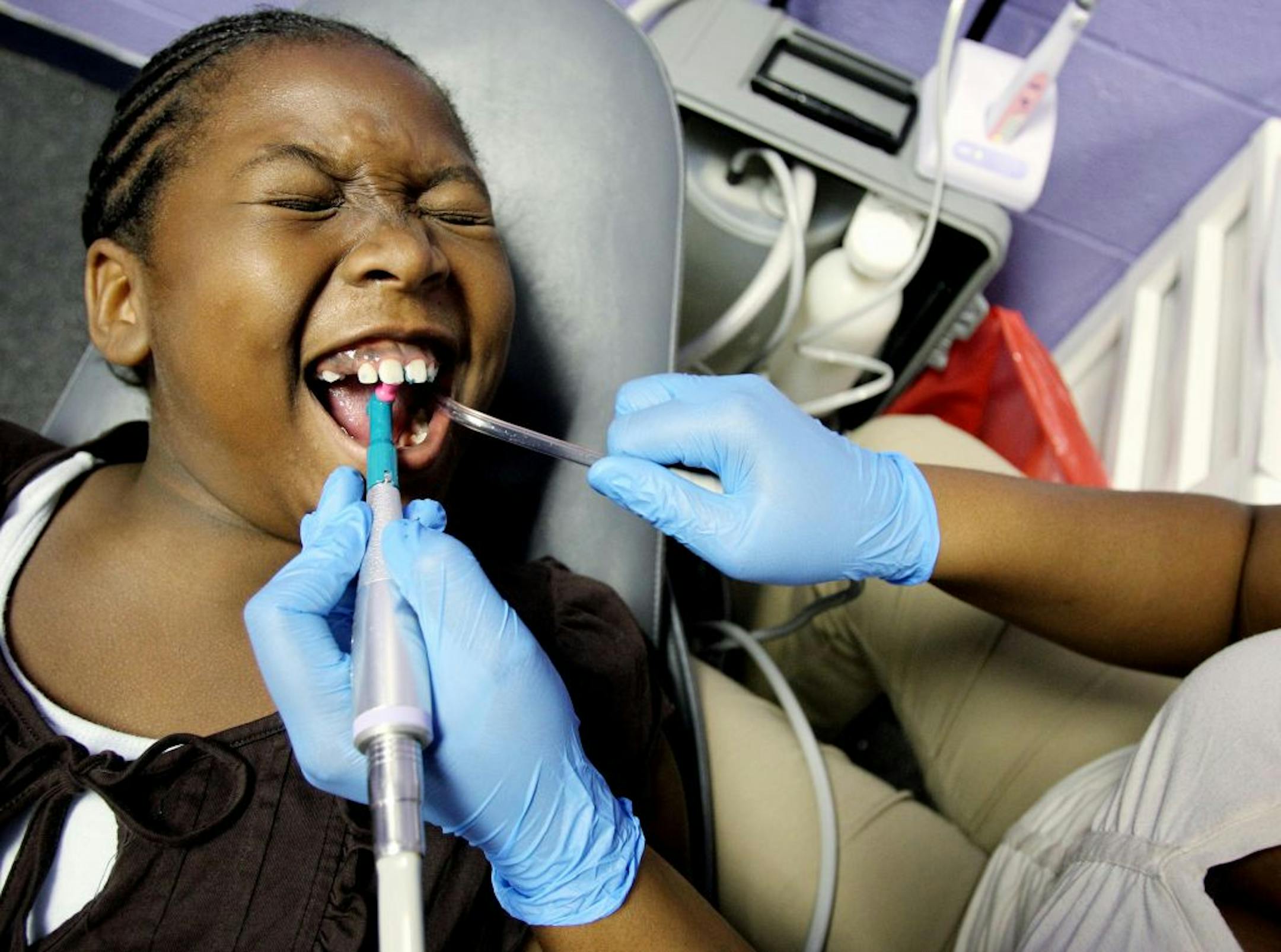
Heavenlea James, 9, has her teeth cleaned at Christ Community Health Services in Memphis, Tenn.
Heavenlea James, 9, has her teeth cleaned at Christ Community Health Services in Memphis, Tenn. (Associated Press/The Minnesota Star Tribune)

Pop quiz: How often should you floss?

If you think twice a week sounds about right, you're like most Americans surveyed in the American Dental Association's first oral health quiz. And you'd be wrong, as they were, about that and many other dental basics, netting them the lowly grade of "D" on the quiz.

"We're hoping that this sets the low bar," said Dr. Ada Cooper, a dentist in New York and an ADA spokeswoman.

The ADA released the survey results alongside the launch of mouthhealthy.org, which aims to bring oral health enlightenment to the masses -- from what to do when you crack a tooth to what foods to eat when you have canker sores. You can take a modified version of the quiz on the site.

Vigilance about the state of your mouth and small habit changes can go a long way toward preventing tooth decay and catching a problem before it becomes more costly, Cooper said.

Nine out of 10 adults ages 20 to 64 have had cavities in their permanent teeth, and dental disease is the most common chronic disease suffered by children, according to the National Institute of Dental and Craniofacial Research. Twenty-four percent of adults have untreated cavities in their mouths, according to the Centers for Disease Control and Prevention. Among children ages 6 to 19, it's 16 percent.

Here are some common misconceptions people have about their teeth, according to the ADA's survey of 1,500 adults, which was conducted in May.

Survey says: 90 percent of respondents believe they should brush after every meal.

ADA says: Brush only twice a day.

Survey: 65 percent of respondents believe they should replace their toothbrush twice a year.

ADA: Replace your toothbrush every three to four months, or sooner if the bristles are frayed.

Survey: 75 percent of respondents don't know what age to take their child to the dentist for the first time.

ADA: A child's first trip to the dentist should be within six months after the first tooth appears or no later than the child's first birthday.

Survey: 81 percent of respondents think that sugar causes cavities.

ADA: Cavities are caused by germs in the mouth that feed on sugar and then produce acid that attacks tooth enamel. In time, the acid attacks weaken the enamel to the point where a cavity forms.

Survey: 59 percent of respondents don't realize cavity-causing germs can be passed from person to person.

ADA: Yes, they can. Parents and caregivers can pass bacteria that cause cavities to their children by pre-chewing food, sharing utensils or licking a pacifier to clean it.

Survey: 53 percent of respondents think you should floss twice a week.

ADA: Floss once a day. Tooth brushing doesn't clean between the teeth so germs can grow there and cause tooth decay and gum disease.

Survey: 67 percent of respondents think refined sugars are more harmful to teeth than natural sugars.

ADA: All sugar can promote tooth decay. The frequency of exposure, such as sipping any kind of sugary beverage, increases decay risk.

about the writer

about the writer

ALEXIA ELEJALDE-RUIZ

More from Minnesota Star Tribune

See More
card image
J. SCOTT APPLEWHITE, ASSOCIATED PRESS/The Minnesota Star Tribune

The "winners" have all been Turkeys, no matter the honor's name.

In this photo taken Monday, March 6, 2017, in San Francisco, released confidential files by The University of California of a sexual misconduct case, like this one against UC Santa Cruz Latin Studies professor Hector Perla is shown. Perla was accused of raping a student during a wine-tasting outing in June 2015. Some of the files are so heavily redacted that on many pages no words are visible. Perla is one of 113 UC employees found to have violated the system's sexual misconduct policies in rece