WHITE SANDS MISSILE RANGE, N.M. -
The road to Trinity Site is a good place to log some thinking about a profound human moment.
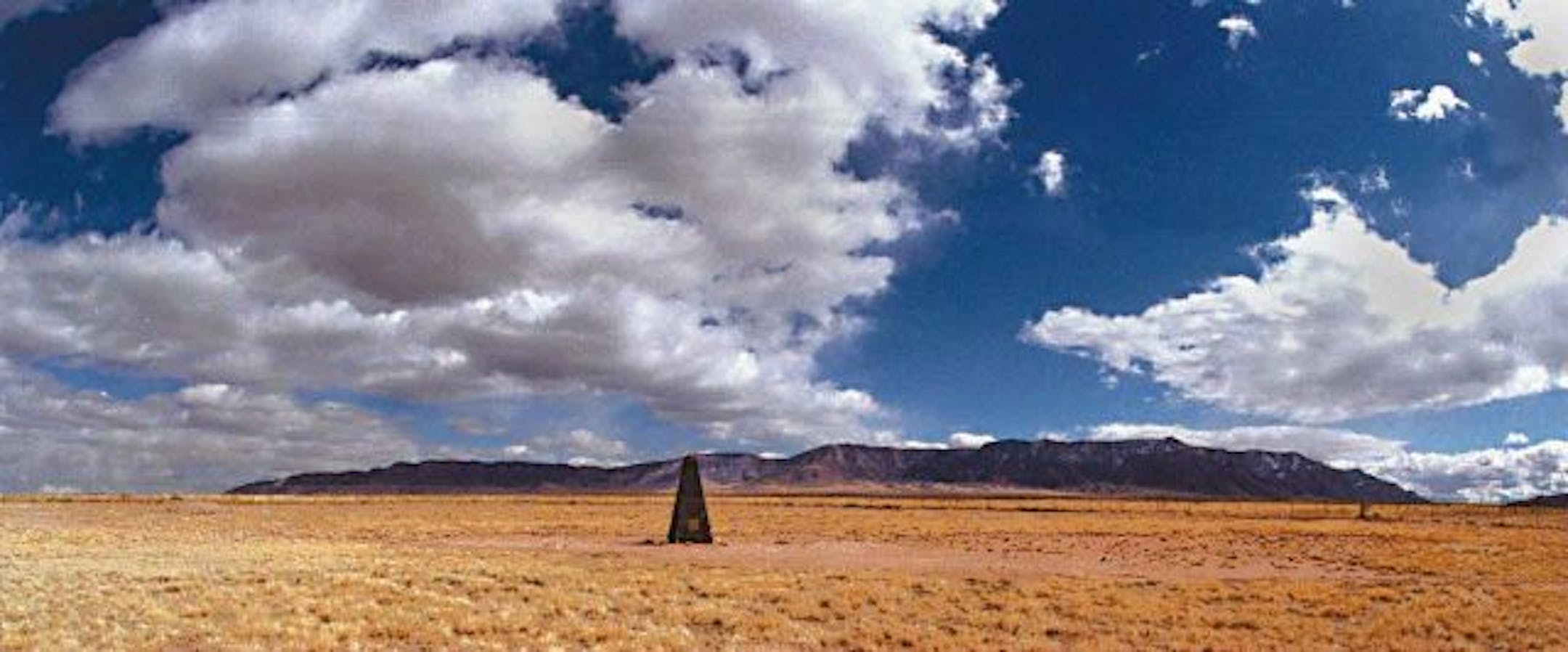
The only distractions for miles are red Southwest dirt, scrubby trees and grasses. The timeless landscape is bound on all sides by blue waves of distant mountains. Amid this isolation came the breakthrough that helped end World War II in the Pacific: the explosion of the first atomic bomb on July 16, 1945. The test proved that the energy of a split atom could be harnessed for weapons.
Trinity Site is now part of the military base called White Sands Missile Range (WSMR), a sophisticated testing ground for military and commercial interests. The base runs two open houses, which are free but restricted to two dates a year, the first Saturdays in October and April.
A sharp breeze announced autumn at 4,900 feet on Oct. 3 as I headed toward the Hwy. 380 turnoff to WSMR's Stallion Range Center, 12 miles east of San Antonio, N.M. The gate had opened at 8 a.m., and by 8:20, vehicles were backed up as members of the WSMR staff questioned each driver.
Do you have weapons or alcoholic beverages? Both are forbidden. Does everyone have picture IDs to show the guards? That's mandatory at any U.S. military base.
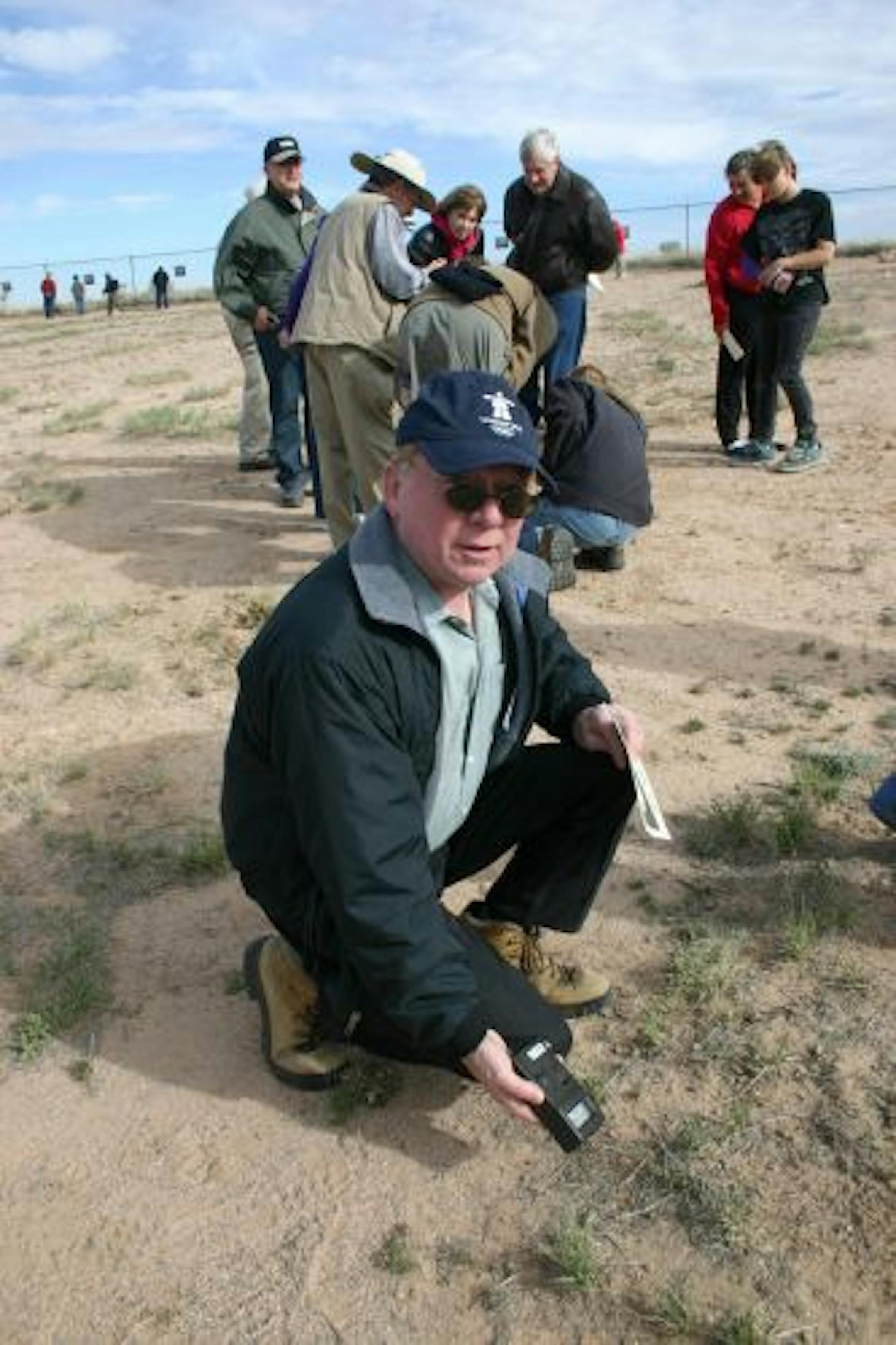
Trinity is not on the way to anywhere, but 3,300 people showed up. Many arrived as I did, through the north gate, unescorted, in a private vehicle. The National Museum of Nuclear Science and History, a Smithsonian affiliate in Albuquerque, provided the only docent-guided tour this year. Sun Tours of Albuquerque sent two buses on an overnight trip that included White Sands National Monument near Alamogordo, N.M. The Socorro (N.M.) Heritage and Visitor Center offered a van ride for $2. Some cars arrived through the base's east gate in a caravan escorted from the Alamogordo area by Department of Defense police.
A full house