

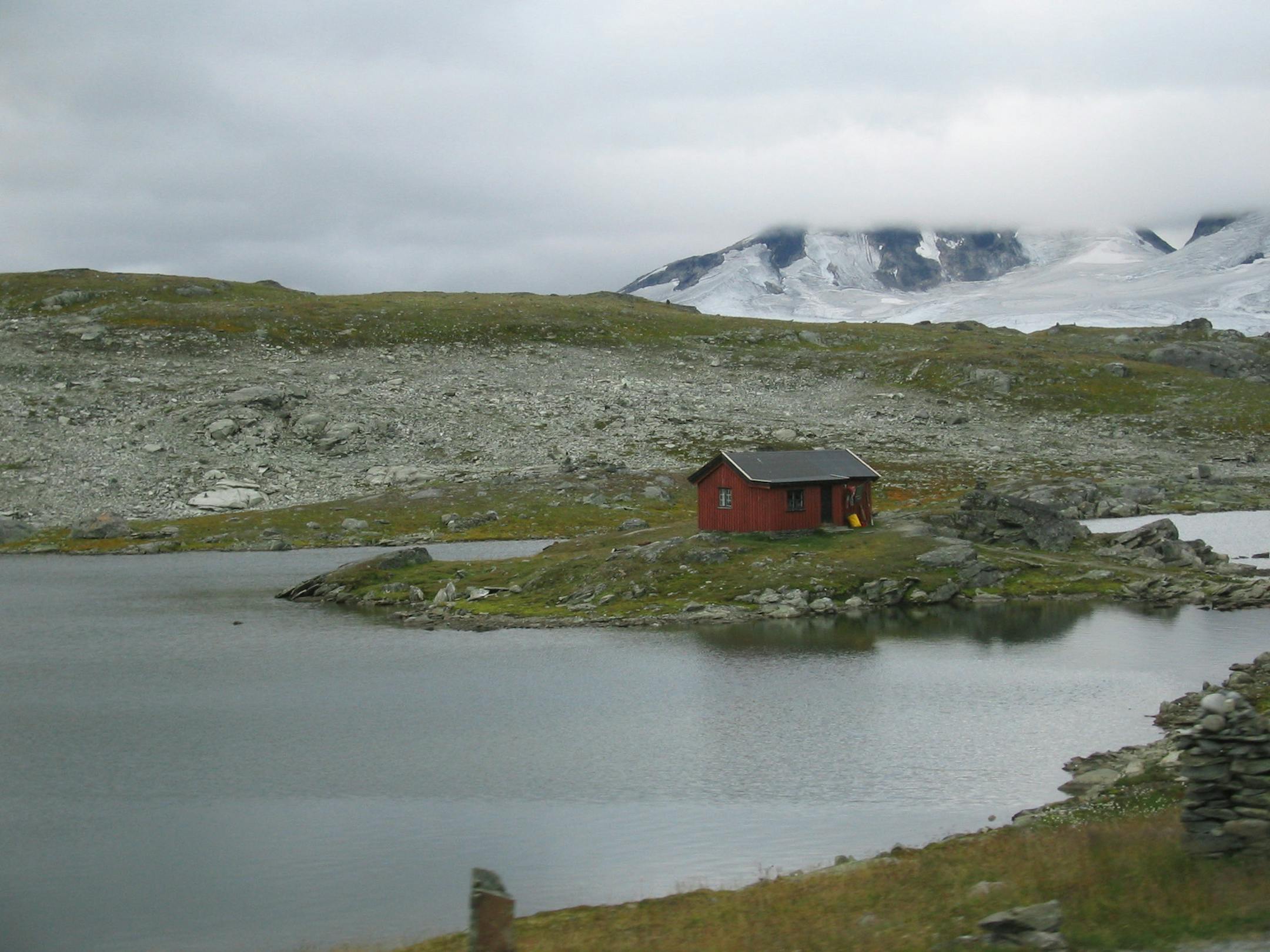
During a year's stay in Norway, my wife, Katy, and I marveled at the beauty of the country: the crystal waters ringed by dense green foliage and the mountains that rise up nearly vertically from fjords and finally give way to rock cliffs topped with whipped cream-like snowcaps. My great-grandfather Ellef Drægni came from a town 127 miles up a branch of one of those picturesque fjords, the Sognefjord, which itself stretches like a crooked finger inland north of Bergen. Why, we wondered, would anyone leave?
To answer that question -- and to see just what was left behind -- Katy and I and our new Norwegian-born son boarded a boat at Bergen and began the journey along the coast and up the Sognefjord to Fortun, my great-grandfather's town. Fortun, ironically, means "fortune" in English. During the 19th century (when there was little good fortune), the fjord, like much of Norway, was cut off from the rest of Europe's industry and opulence, and people along it struggled to survive on preserved fish and porridge.
Our boat -- and, later, the car we drove on the last leg of the trip -- passed red and yellow wooden houses wedged on a tiny ribbon of shoreline. Occasionally, large houses stuck out halfway up the mountain with only steep paths leading to the front doors. Local legend tells of people who live high up on the fjelds who tie their kids to a leash so they don't fall off the cliff at the edge of their yard. The townspeople of one village boast that some of the houses can be reached only by ladder. When the taxman comes, people lift the ladders to avoid tax increases.
•••
When we were just about at Fortun, I recognized a modern mountain lodge, which I'd seen in an article, run by a Drægni. We stopped in and asked the 40-year-old blond guy at the reception if he knew the Drægni who owns the lodge.
"That's me; I'm Ole Berger Drægni," he responded.
I had found a long-lost relative! I pulled him outside so we could get our photo taken together and commented how much we looked alike with our blue eyes and blond hair -- ignoring the fact that he stood a head taller than me.
My great-grandfather Ellef was one of the "dark Norwegians," and the family myth was that a long-lost grandmother, a damsel in distress, was captured by Vikings on a raid of Lisbon, Portugal.


