

China is very much in our thoughts these days. The world's most populous nation is our creditor, our second-largest trading partner and our rival in geopolitical influence. Whether the conversational topic is jobs, national debt, military security or America's sense of itself, the subtext is China.
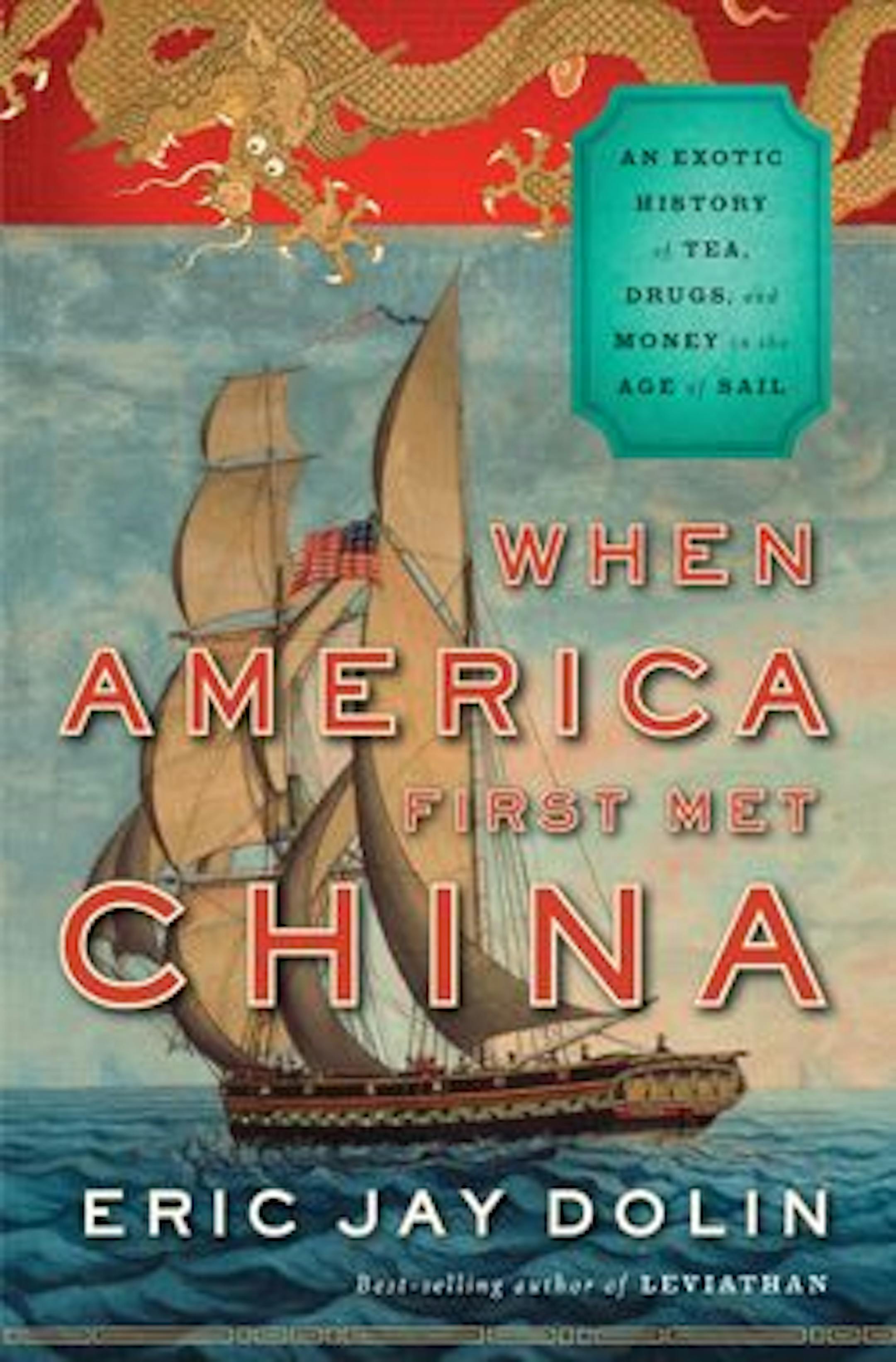
"When America First Met China," Eric Jay Dolin's fascinating and entertaining account of U.S. trade with China, assures us that the uneasy partnership between the two nations has deep roots. In colonial times, Americans adopted Great Britain's taste for tea -- "the froth of the liquid jade," as one Chinese poet put it -- as well as such other Chinese imports as silk, porcelain and household ornaments. Americans' craving for fashionable Chinese goods only increased as the Revolution brought freedom to trade directly with China. Poet Philip Freneau patriotically summed up America's new maritime prowess: "She now her eager course explores / And soon shall greet Chinesian shores / From thence their fragrant teas to bring / Without the leave of Britain's king."
Dolin explores the early fortunes that were made and the lives of the financiers, like John Jacob Astor and Stephen Girard (both immigrants), who bought furs from American Indians and turned a profit in Canton (now Guangzhou), the only port open to Western ships. Dolin is excellent at conveying the spirit of adventure and opportunity; he, moreover, is eloquent at explaining the ecological cost of free trade. China's desire for sea otter and fur seal pelts led ship crews to hunt them to near-extinction. A similar pattern followed with sandalwood. Chinese furniture-makers valued the wood for its fragrance and its beautiful grain. Western traders clear-cut forests of it, first on the Hawaiian islands, then on the Fijis, then anywhere else they could find it.
Then, as now, the problem with the China trade was China's self-sufficiency. China was already contented with its cuisine, its tea, its culture; it wanted few of the commodities that America (and Great Britain) could deliver, and so Western countries needed to pay with silver. This changed in the 1770s, however, as the British began to transport opium from India to China. While opium was illegal in China, the Chinese government was far too weak to block the thousands of chests of "foreign mud," Britain's (and America's) most lucrative product. Levels of addiction were especially high among government workers, "the very people in charge of curtailing the opium trade." And as for moral qualms, one American trading agent explained that "we pursued the evil tenor of our way with supreme indifference." After all, opium was legal in the United States, widely consumed as laudanum.
Dolin's masterful history of this era goes far to explain China's fierce sense of autonomy today and its sensitivity to Western slights. His work is well-researched, rich in illustrations and full of life.
Tom Zelman teaches English at the College of St. Scholastica in Duluth.


