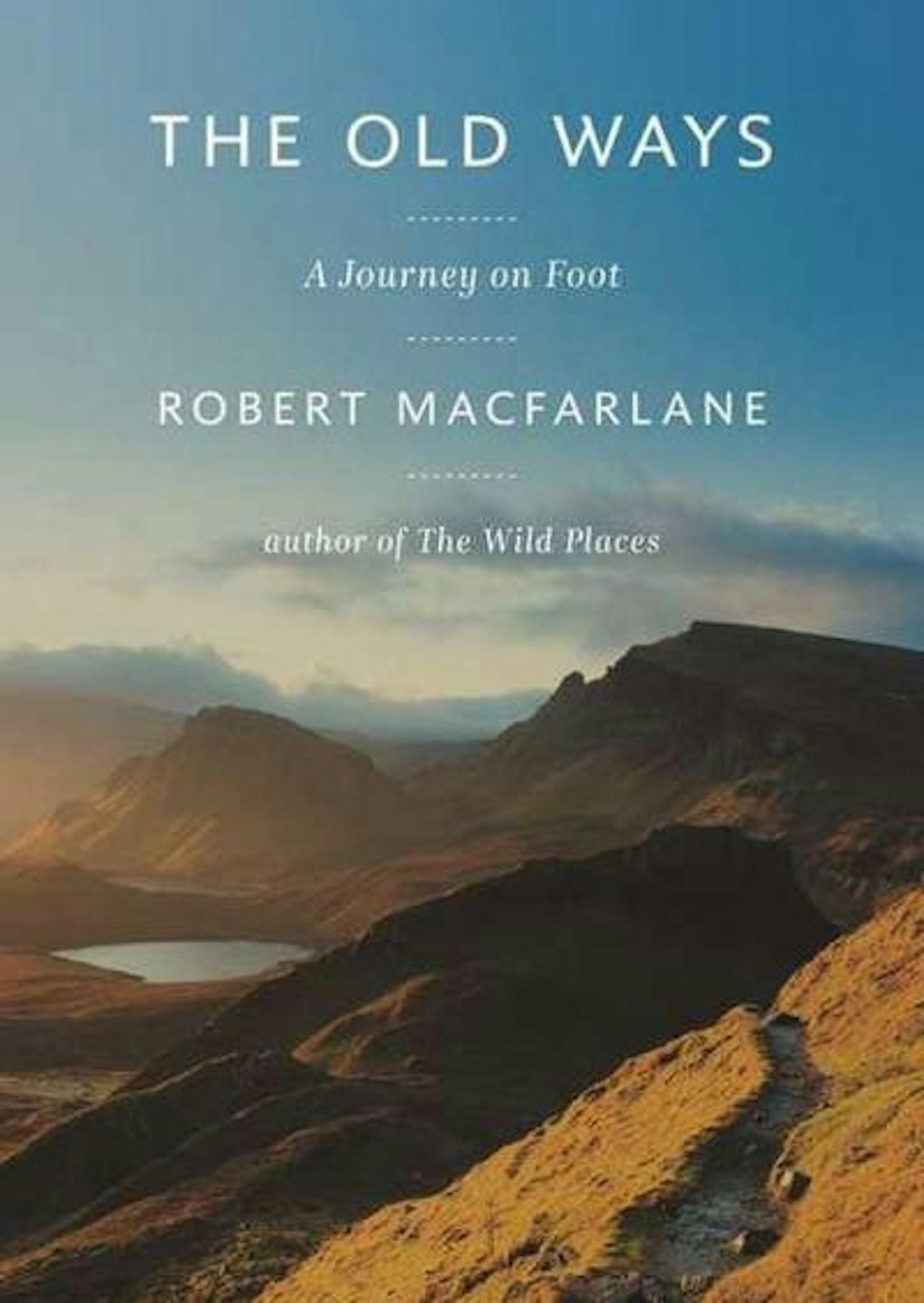
Robert Macfarlane has just witnessed mountain rubble cohere into a line of cairns: another path, old and unmapped, saved from oblivion, along with its history and lore. After walking the trek, ecstatic, he bends to drink from a pool. Under the surface shine bits of quartz. A word flashes into his mind, from the Gaelic: èig, "the quartz crystals on the beds of moorland stream-pools that catch and reflect moonlight, and therefore draw migrating salmon to them in the late summer and autumn."
Such lyrical interactions between word and world are common in "The Old Ways." The way we ramble shapes how we name experience, how we experience the names. The journey outward is inward: the landscape figures our deepest selves.
Macfarlane explores these rich exchanges between places and people by walking the earth. He traverses the Icknield Way, a spooky chalk path ranging from Norfolk to Dorest; the Broomway, on the Essex coastline, visible only when the tide is out, deadly to those caught in the mud when the water returns; and the uncanny paths of the Outer Hebrides, where he happens upon the submerged crystals. He takes to the water, too, sailing the old North Atlantic sea roads in an open boat; and he journeys beyond his British home: to Spain, Palestine, the Himalayas.
These travels push Macfarlane "backwards in time to the histories of a route and its previous followers." There are ghosts on the trails, such as Edward Thomas, a peripatetic depressive who wrote beautiful poetry before being freakishly killed in World War I; and Eric Ravilious, whose paintings of the "silvered bleakness of the Arctic," inspired by the chalk downs, "possess a lonely watchfulness."
Marfarlane is likewise inspired by the fellow pilgrims he meets along the way. One is Steve Dilworth of the Isle of Harris; he blends bones, beaks, skins, blubber, shells, bronze, saltwater and wood into "ritual objects for a tribe that doesn't exist."
"The Old Ways" is as enchanting as its subjects, transforming geology, cartography and archaeology into prose as weirdly bewitching as Anglo-Saxon verse, with its "whale-roads" and "sky-candles." Following Macfarlane, you happen upon terms at once outlandish and ultraprecise: "mafic," "zawn," "stramash." Or you discover sentences you could spend a moon appreciating: "The sky tilts again and suddenly the water-filled footprints are mirrors reflecting the sky, the shuddering clouds and whoever looks into them."
Some books make you dash for the highlighter. Then you find yourself marking every sentence. You put the pen aside. Why gild what's already brilliant? "The Old Ways" is such a volume. I lose myself in its shining prints, but then find lovely reflections I never knew to see.
Eric G. Wilson is the author of "Everyone Loves a Good Train Wreck: Why We Can't Look Away" and "Against Happiness: In Praise of Melancholy."