

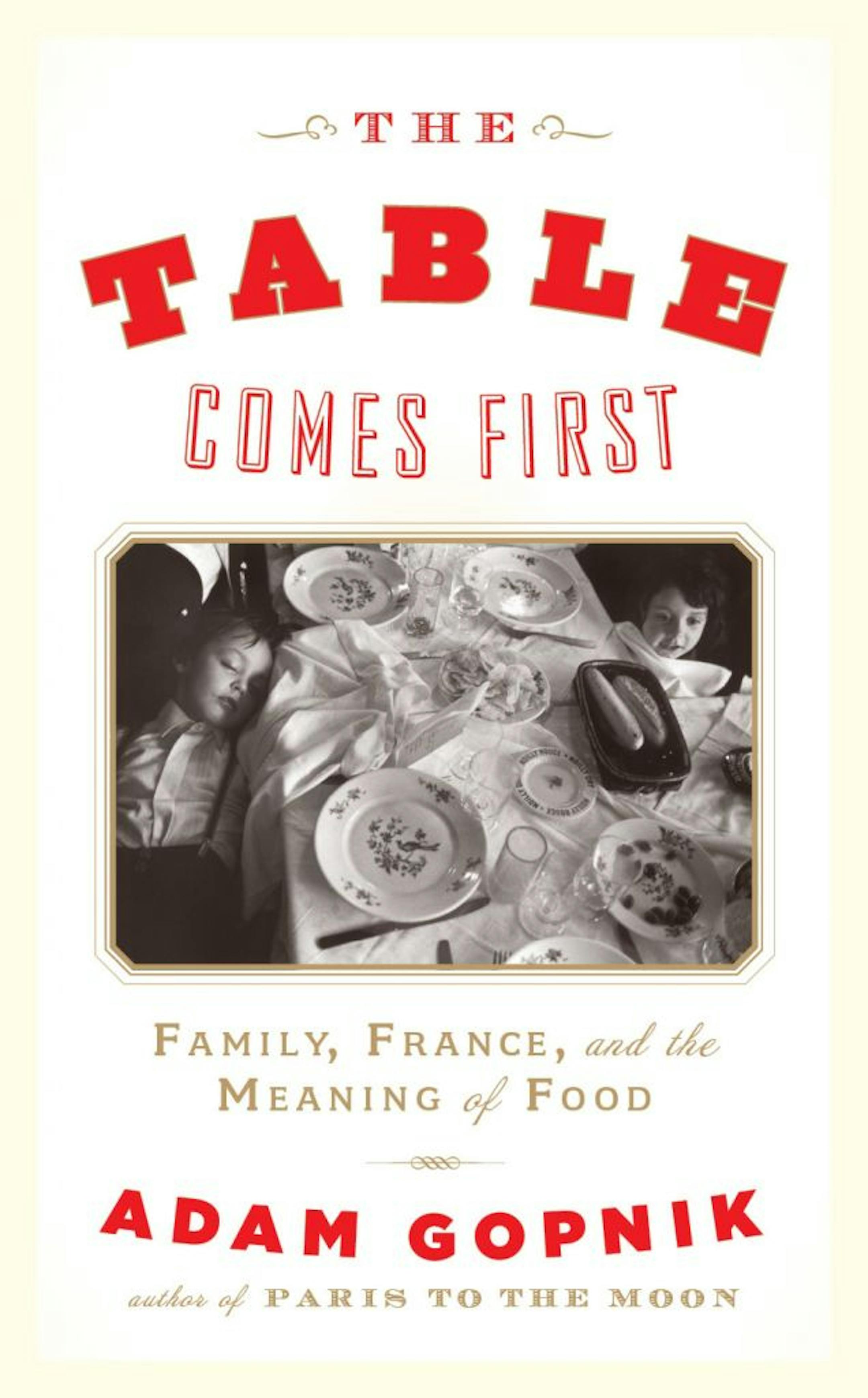
For his last meal on earth, Adam Gopnik would have roast chicken with lemon and an apricot souffle for dessert. Or maybe beef with béarnaise sauce, with chocolate pot-au-crème for dessert.
Questions of food consume Gopnik in "The Table Comes First: Family, France and the Meaning of Food," an exploration of eating from the earliest restaurant in pre-Revolutionary Paris to what we find at our dinner tables now.
Gopnik travels from the United States to Europe, from the past to the cutting edge, posing the question: Why do we eat what we eat?
The book has the outline of a meal -- starters through dessert -- and the unevenness of a progressive dinner. Some stops are delightful. Others disappoint.
Gopnik is at his best when he's out exploring, and is at his weakest when he's giving history lectures.
This book lacks the charm of "Paris to the Moon," Gopnik's 1990s collection of essays for the New Yorker when he was a new father introducing his little boy to Paris. But he recaptures that spirit in places.
It's there when he introduces us to the death-row inmate contemplating his favorite meals.
It's there when he introduces Elizabeth Pennell, a Victorian-era food critic with un-Victorian attitudes toward food and sex. He is so taken with this "Nigella Lawson of the age of Whistler" that he strikes up an imaginary correspondence, dropping e-mails to Pennell between chapters like palate cleansers.


