

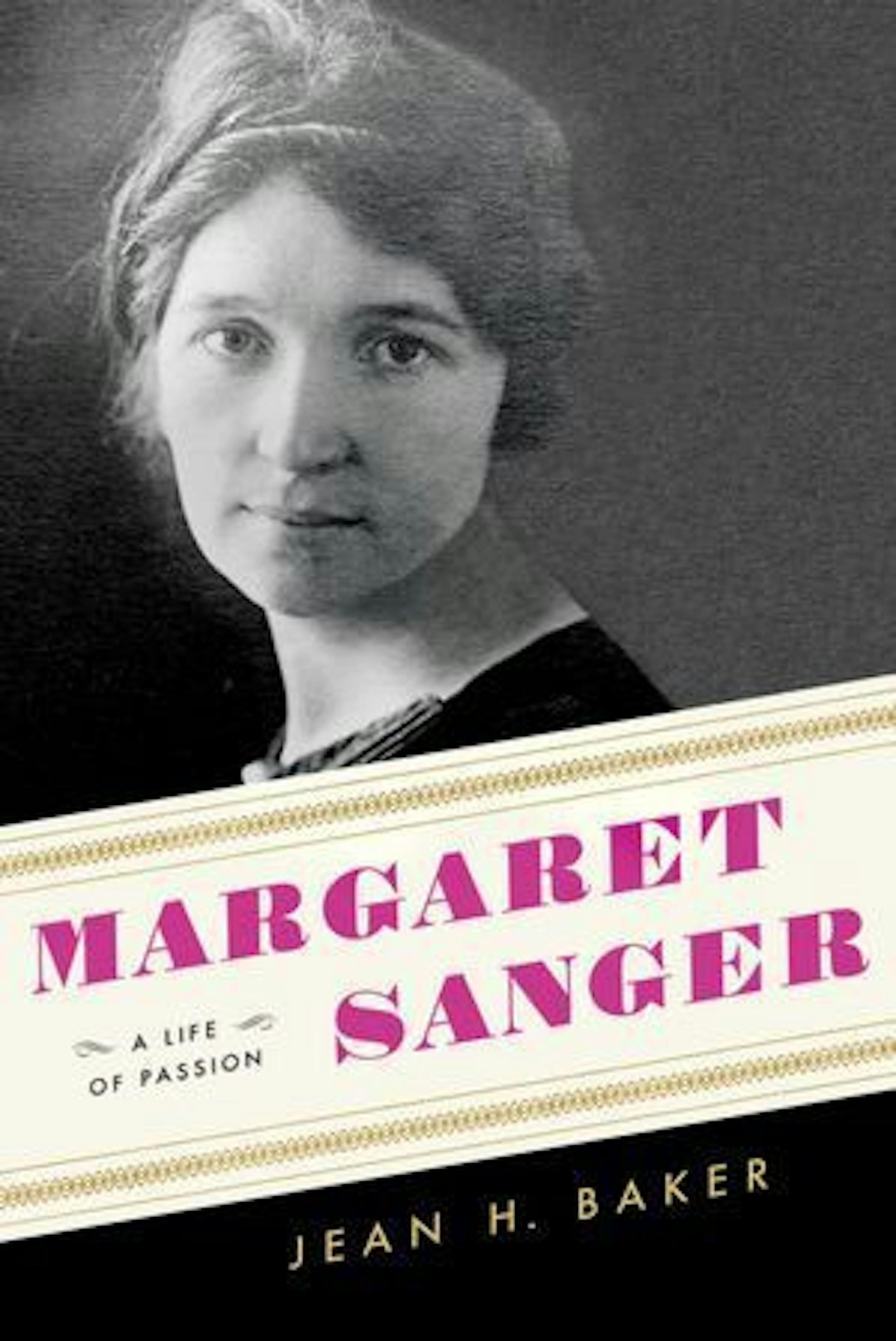
Margaret Sanger (1879-1966), founder of the American Birth Control League, which became Planned Parenthood, has always been a controversial figure. She attacked the Catholic Church for its position on contraception, but she also alienated many progressives because of her unrelenting radicalism and flamboyance, which seemed more in the service of her own ambition than the causes she promoted.
As Jean Baker notes in her new biography, "Margaret Sanger: A Life of Passion" (Hill and Wang, 349 pages, $35), Sanger remains a target of groups opposing abortion, which accuse her of killing babies as part of a eugenics program that was Nazi-like in its effort to create a master race.
Lost in the attacks on Sanger, Baker notes, is the fact that she advocated the legalization of birth control so as to make unnecessary the crude back-room abortions that destroyed many women's lives.
What critics on the right and left forget, Sanger's latest biographer argues, is that eugenics was once a perfectly mainstream and even progressive movement supported by no less than Woodrow Wilson, Theodore Roosevelt and H.G. Wells. These public figures were concerned about the health of the human population and did not foresee how fascist governments would twist the desire to improve humankind into a monstrously inhumane killing machine.
Sanger could be her own worst enemy, in part because from a very early age she imbibed from her father a tendency to go it alone. She watched him attack the Catholic Church, challenge the authorities in a company town, and proclaim his socialism and atheism without worrying about what his outspoken opinions would cost him. Maggie, as Sanger was called, was her father's favorite, and Baker shows how the daughter made goodness out of her father's often counterproductive rebelliousness.
Indeed, Sanger realized that for all his forthright actions, her father also acted with considerable social irresponsibility. Drunk and often without a job, he nevertheless fathered a large family. Her many siblings, too, served as object lessons for Sanger, who later wrote, "Very early in my childhood I associated poverty, toil, unemployment, drunkenness, cruelty, quarreling, fighting, debts, and jails with large families."
Sanger grew up not only determined to improve society, but to enjoy herself along the way -- which meant having an affair with H.G. Wells, not only a progressive thinker but also a notorious womanizer. She held her own in his company, deserving -- and receiving -- his admiration. Baker accepts her subject, warts and all, and believes that by situating her in the context of her own times, Sanger emerges as a far more complex and sympathetic figure than her latter-day critics acknowledge.
Carl Rollyson is a biographer and professor of journalism at Baruch College, City University of New York.


