

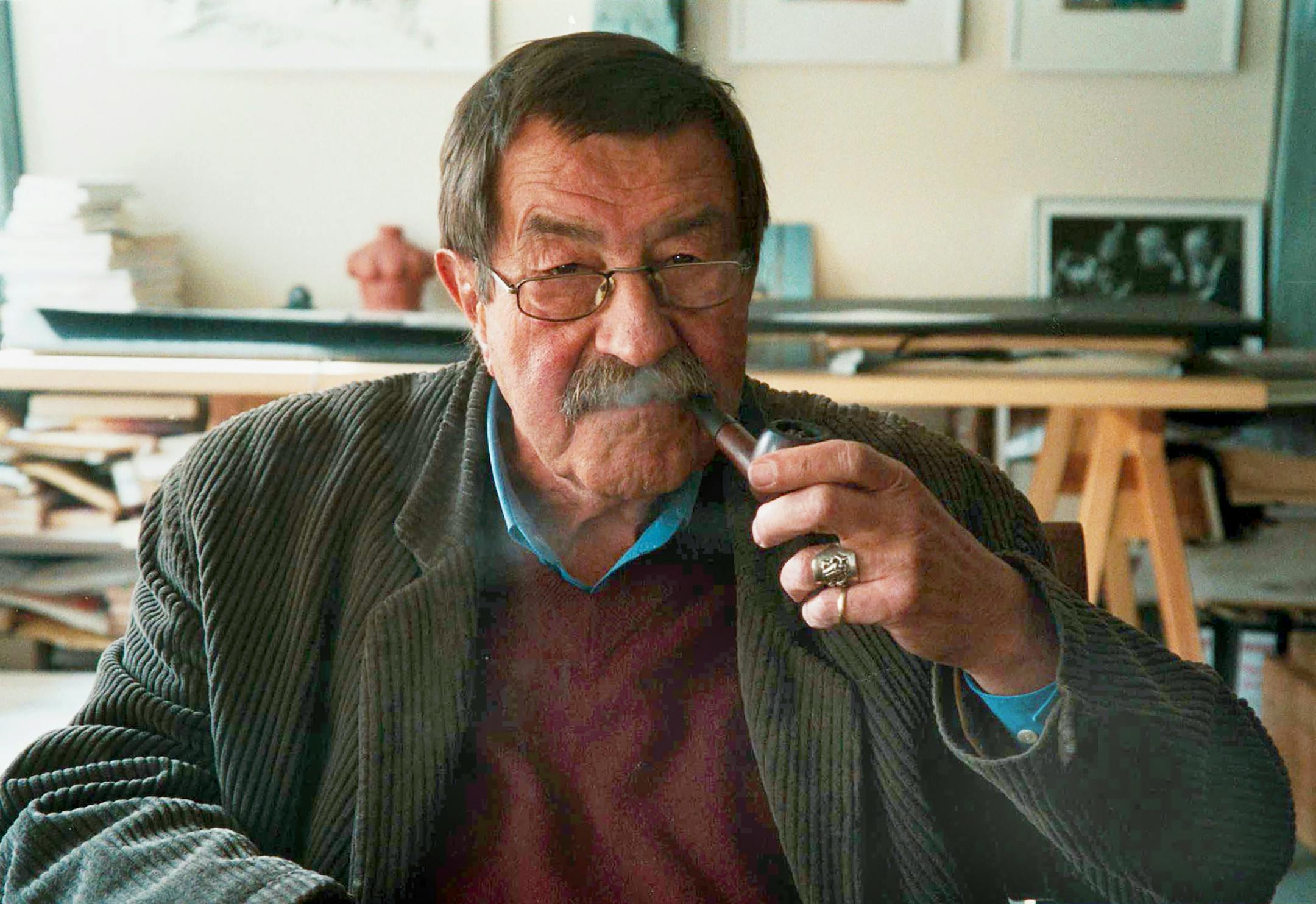
BERLIN — Guenter Grass was to Germany what William Faulkner was to the old American South: The bard, scourge and pathfinder of a society ruined by moral disgrace and humiliated by military defeat.
For much of his adult life, the Nobel-winning writer held the rare status in the literary world of both national historian and inventor. Grass, who died Monday at age 87, often angered his fellow citizens by reminding them of their shared Nazi past. But through language of renewed freedom and lyricism and stories that were surreal yet recognizable, he also assumed the even greater challenge of imagining what they might become.
"His literary legacy will stand next to that of Goethe," German Culture Minister Monika Gruetters said in a statement following the news of his death.
Grass' first and most famous novel, "The Tin Drum," came out in 1959 and ranks with Gabriel Garcia Marquez's "One Hundred Years of Solitude" and Salman Rushdie's "Midnight's Children" as a modern, international classic and as a mini-encyclopedia of a country's state of mind.
Combining naturalistic detail with fantastical images, Grass captured the German reaction to the rise of Nazism, the horrors of the war and the guilt that lingered after Adolf Hitler's fall. The book follows the life of Oskar Matzerath, the boy in Danzig who is caught up in the political whirlwind of the Nazi rise to power and, in response, decides not to grow up. His toy drum becomes a symbol of this refusal.
"There are books that open doors for their readers, doors in the head, doors whose existence they had not previously suspected," Rushdie once wrote, citing "The Tin Drum" as a youthful rite of passage.
"This is what Grass's great novel said to me in its drumbeats: Go for broke. Always try and do too much. Dispense with safety nets. Take a deep breath before you begin talking. Aim for the stars. Keep grinning. Be ruthless. Argue with the world."
Grass' novel, later adapted by Volker Schloendorff into an Academy Award-winning movie, became the first installment of his so-called Danzig Trilogy. The series also included "Cat and Mouse" and "Dog Years" and was named for the town of his birth, now the Polish city of Gdansk. The books return again and again to Danzig, where Grass was born on Oct. 16, 1927, the son of a grocer.


