

Opinion editor's note: Star Tribune Opinion publishes a mix of national and local commentaries online and in print each day. To contribute, click here.
•••
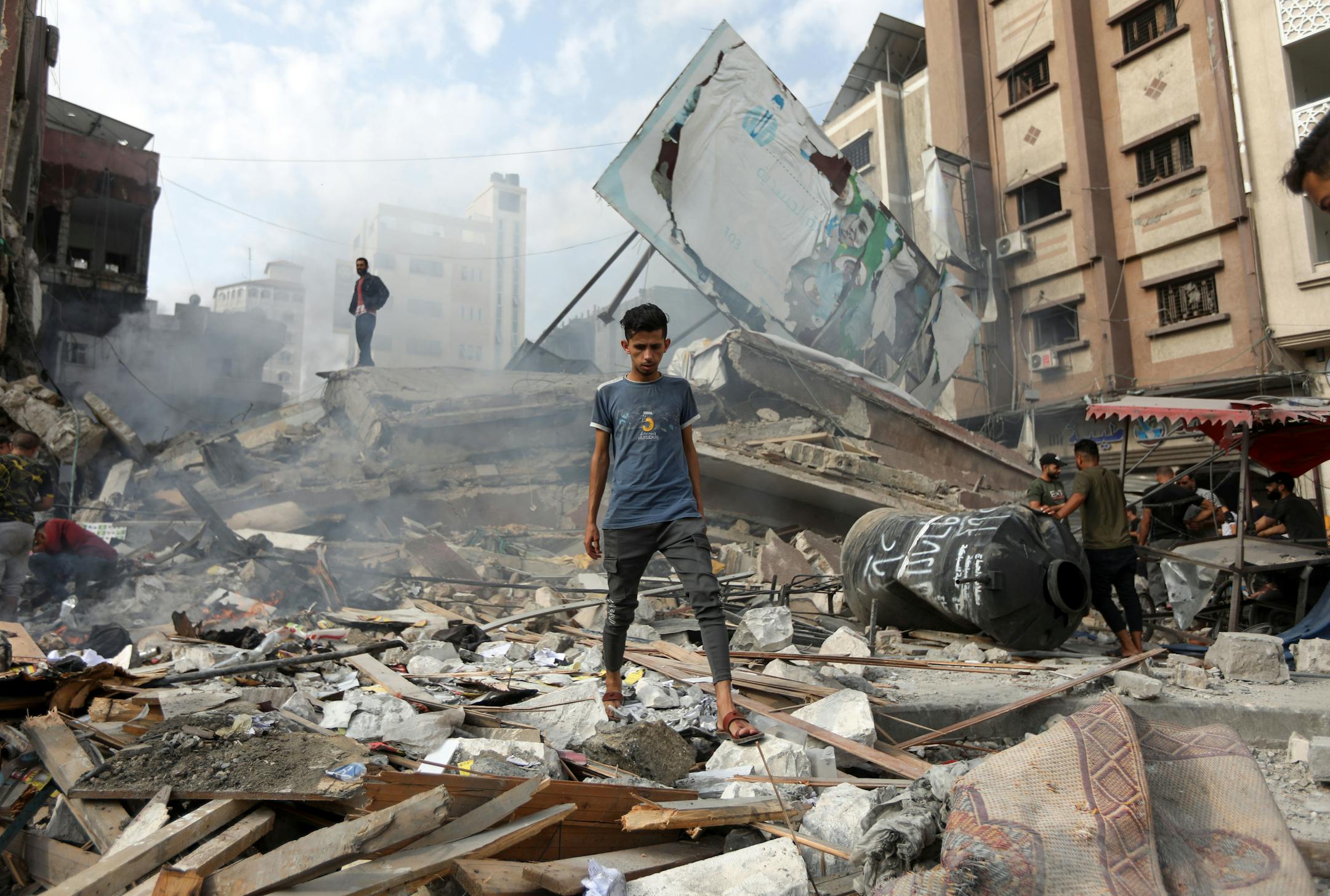
"They could have risen up, they could have fought against that evil regime which took over Gaza in a coup d'état." Israeli President Isaac Herzog ought to know better than to have said that. But those who don't — those who had no call to pay attention to Palestinian politics until a month ago — might be forgiven for asking why Hamas has never faced a serious uprising from within their Gazan redoubt in the 17 years it has ruled the strip.
That it has not allows some, in Israel and elsewhere, to suggest that the majority of the 2.3 million Palestinians who are confined to the 139 square miles of Gaza must approve of the terrorist group's actions, including the horrific attack on southern Israel on Oct. 7. To follow this line of reasoning is to conclude that all Gazans are complicit in terror. "It's an entire nation out there that is responsible," Herzog told reporters a few days after the attack. "This rhetoric about civilians not aware, not involved, it's absolutely not true."
And Herzog, remember, is from the liberal side of the Israeli political establishment: A former head of the Labor Party, he unsuccessfully ran against the right-wing Prime Minister Benjamin Netanyahu in the 2015 parliamentary elections. In 2021, he was elected to the largely ceremonial presidency, a role that requires him to act as Israel's moral north star.
Those unburdened by such responsibility and hewing to the opposite end of the political spectrum have gone much farther than Herzog in placing collective blame for Hamas's crimes on all Gazans — and proposing collective punishment. In the most extreme instance of this absurd syllogism, Heritage Minister Amichai Eliyahu implied that dropping an atom bomb on the strip was an option.
So, why haven't Gazans risen up against Hamas? Before I address that question, please permit a short detour to explain how Hamas came to rule the strip.
The group won the last election to be held in Gaza and the West Bank, in 2006. Back then, Hamas was identified mainly as a radical offshoot of the Islamist, pan-Arab Muslim Brotherhood political movement, but its main attraction to voters was as an alternative to Fatah, the faction running the Palestinian Authority — the deeply corrupt and inept government responsible for the West Bank and Gaza. Hamas's election campaign leaned heavily on the corruption issue, which resonated with voters.


