

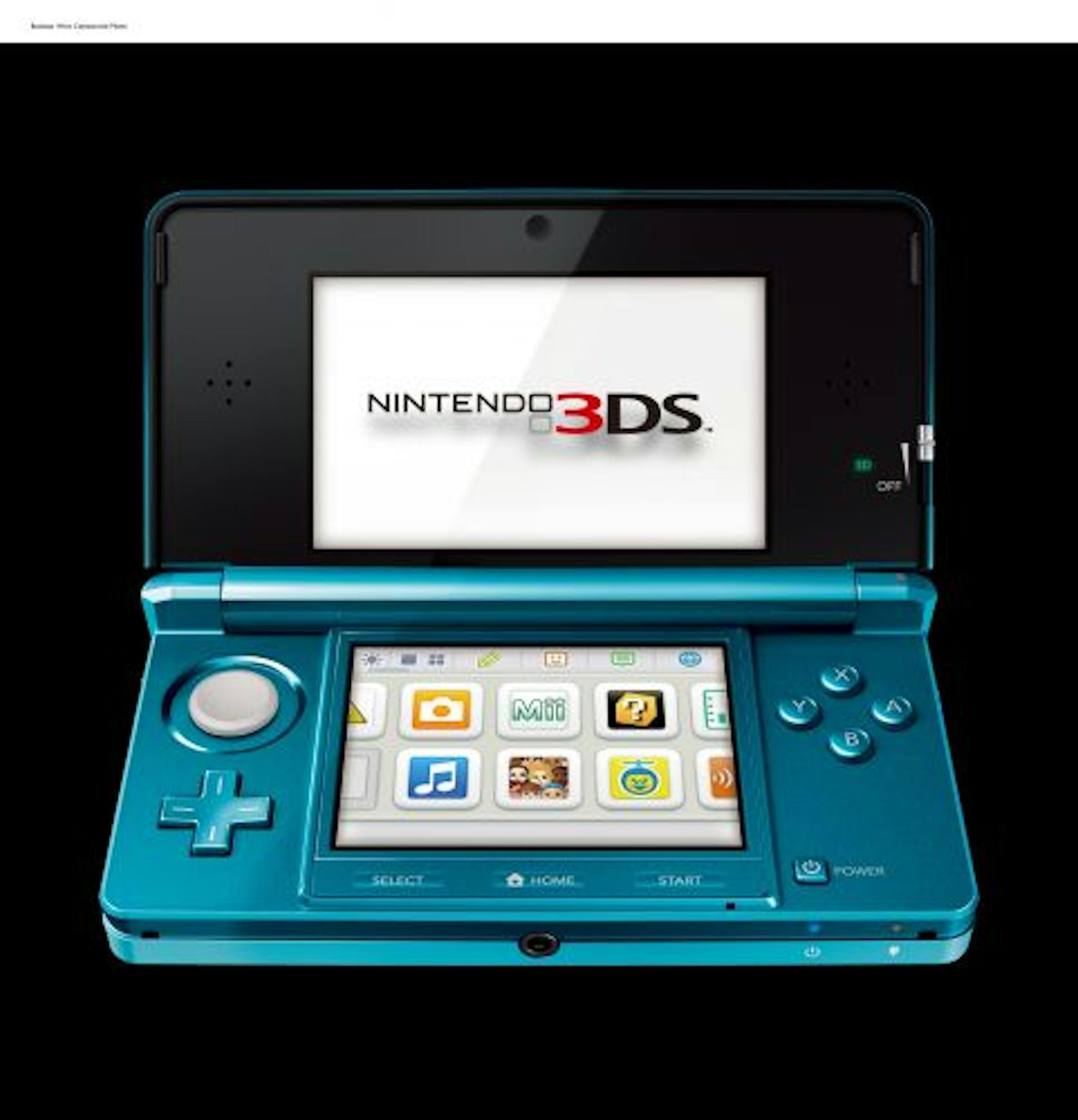
Nintendo's 3DS promises 3-D gaming with no glasses required. But does the handheld video-game device, which came out Sunday, deliver?
It does -- with a slight catch.
Players must hold the 3DS directly in front of their eyes in a sweet spot that's about 10 to 14 inches away. The system should also be kept on its brightest setting. When everything is just so, the 3-D effect can be convincing.
Onscreen action rarely feels as if it's coming at you, save for fleeting moments in a game such as "Bust-a-Move Universe," when bubbles appear to burst in the air. But there's a palpable depth of field. The pups in "Nintendogs + Cats," for example, look as if they're really running to and from you in a room. Some games, such as the built-in "AR Games," use the 3DS' cameras to project the action to the world around you -- making a coffee table look as if it's erupting with shooting targets, for instance.
Players can change the intensity of the 3-D effect, all the way to a flat image. But then what's the point of getting a 3DS if you're not going all the way?
The real question is whether the 3DS is worth its price. The answer isn't as three-dimensional.
At $250, the handheld device costs $50 more than the Nintendo Wii and Xbox 360, the two most popular consoles for home gaming. For $300, home gamers could get the zippy PlayStation 3, which also offers 3-D gaming -- albeit only on 3-D TVs, plus those annoying glasses.
Like the consoles, the 3DS has Wi-Fi-enabled features. It will be able to stream Netflix content by the summer.


