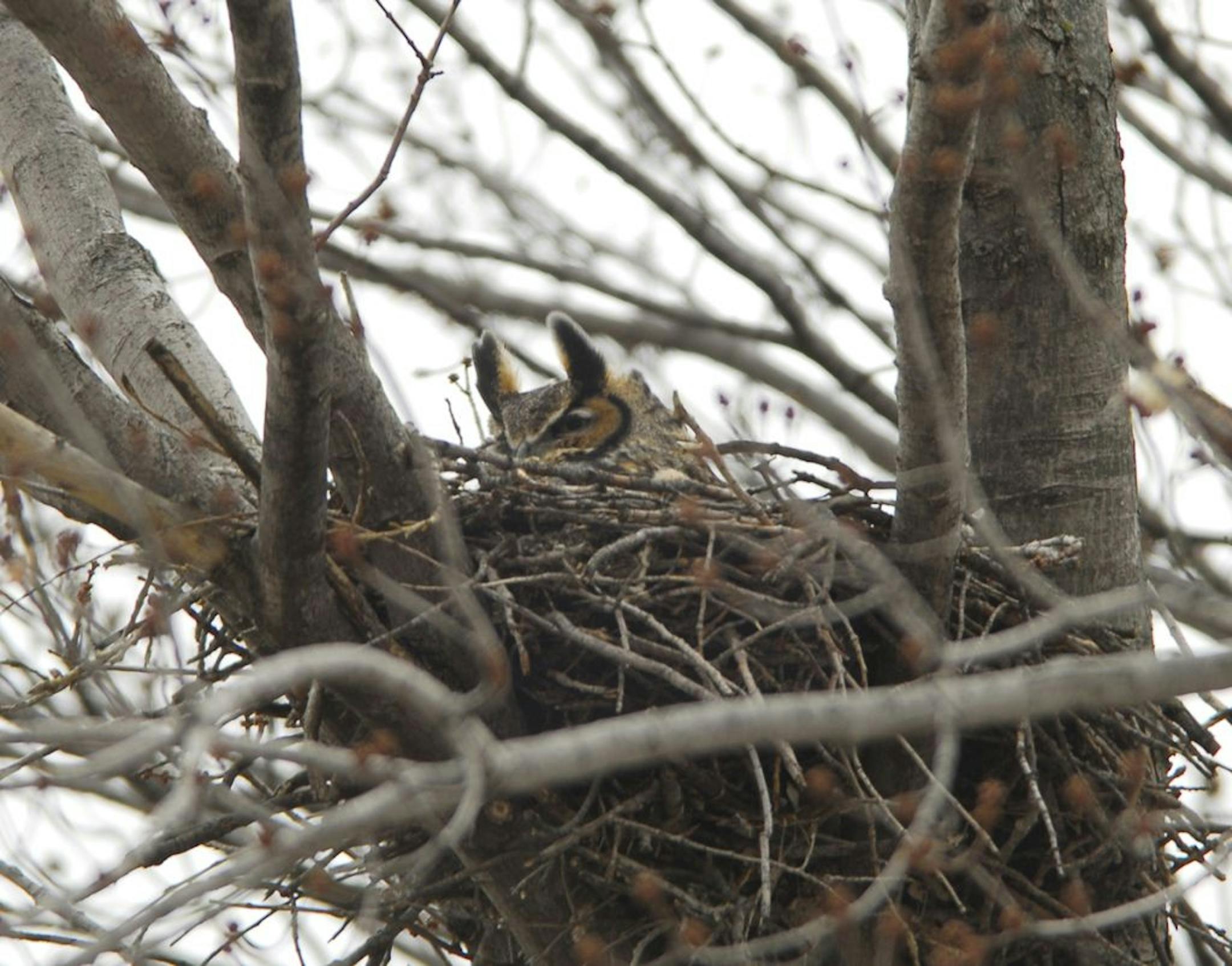
A barrel shape, a big round head and a heavy mass of sticks: These are the only details you have time to absorb as you drive by a field with a big oak tree.
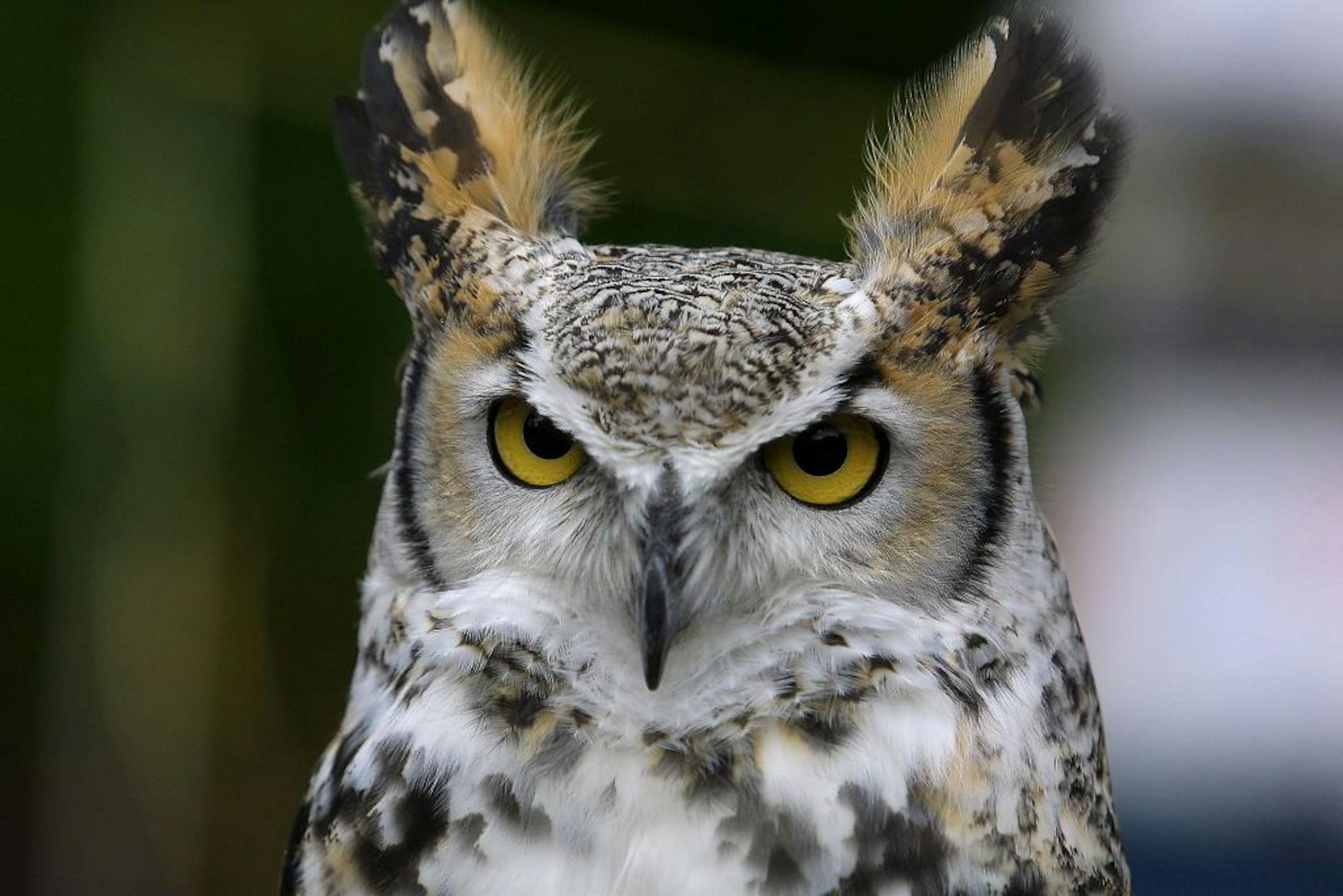
That shape is a great horned owl, and the mass of sticks is its nest for the year. A pair of red-tailed hawks built the nest and raised their young in it last summer. This year it belongs to a pair of the big owls, which have had their big yellow eyes on it since early in the winter. (A quick aside: Those feather tufts on top of the owl's head are neither horns nor ears. These protrusions help the owls look like a tree snag and possibly escape notice as they doze during the day.)
Because great horned owls aren't builders, they're eager to find an abandoned nest built the year before by a hawk, bald eagle, crow or even great blue heron. The most powerful owl in North America, they are the first owls to engage in courtship and breeding each year, starting the process in late winter with hoots and calls in the night. A female lays her eggs in late February or early March in our region, then starts the monthlong process of egg-sitting, even as late winter rages around her.
Snow hat
In fact, it's not unusual to see a female great horned owl wearing a "hat" of snow as she hunkers down during a storm. Unable to leave the nest for more than a few minutes at a time, she must keep her eggs from freezing. Even after her two or three chicks hatch, she will keep brooding them for several weeks until they're feathered enough to stay warm.
Why do great horned owls nest so early, people wonder? The answer has to do with how long it takes their offspring to develop adequate hunting skills so they are mature enough to survive on their own. And since they hunt at night -- the night could be said to belong to great horned owls -- there's more to learning to locate and catch prey than there is for other raptors like hawks, which hunt by sight in daylight.
Owls have extraordinarily well-developed senses and young owls must learn to use the information gathered by their keen eyes and ears to become successful hunters. Owl ears can hear the tiniest squeak from a mouse hundreds of feet away, and their huge eyes can see in very low light. But it takes dozens of misses before they successfully pounce on their first mouse or vole with those sharp talons.
Gross out