
Nick Coleman: He lost a cell phone, then found a new friendship

December 16, 2007 at 3:25AM
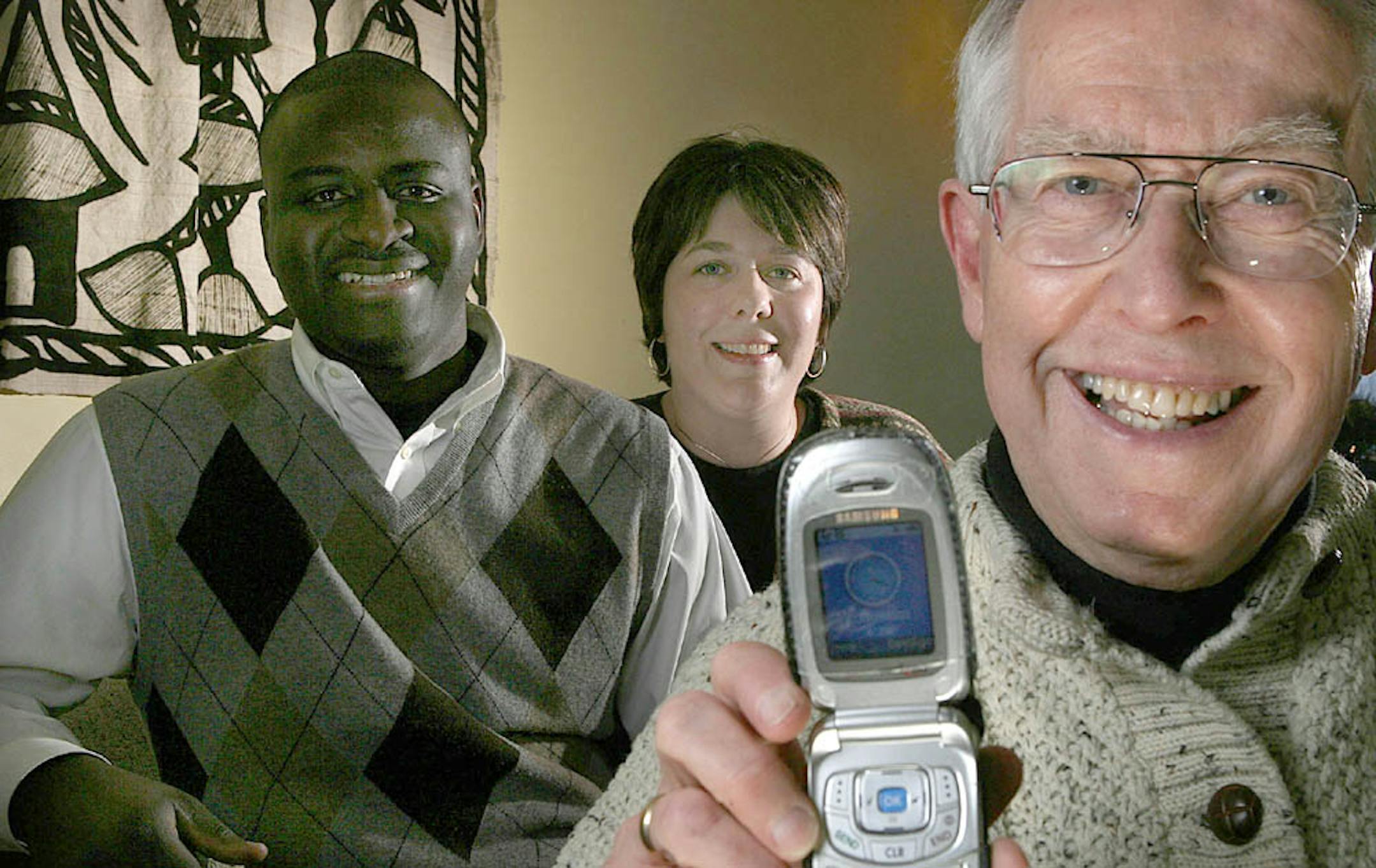
Retired psychiatrist Dick Anderson, 73, displayed the cell phone he lost that was later returned to him by good Samaritan Bocar Kane, left, and his wife, Alison.
Retired psychiatrist Dick Anderson, 73, displayed the cell phone he lost that was later returned to him by good Samaritan Bocar Kane, left, and his wife, Alison. (Stan Schmidt — Star Tribune/The Minnesota Star Tribune)

Not many friendships start with a cell phone thrown from a car. This one does.

It was last Saturday, and Dick Anderson had lost his cell phone somewhere between a bakery and a camera store while doing errands.

Anderson, 73, is a retired psychiatrist who lost his wife of 46 years, Mary, to cancer last year. It is possible that he was too distracted to notice when his cell phone fell from its holster.

Anderson's own "Christmas miracle" was about to begin.

If you are hoping for something momentous, you might be disappointed. But perhaps miracles come in small acts of kindness that lead to new friendships -- the kind of opportunity we long for in our daily lives. And usually miss.

A native of the Iron Range, Anderson is an example of old-fashioned Minnesota exotic ethnicity. He's Swedish and Norwegian. But he was about to be surprised, and delighted, by Muslim hospitality.

I don't know what the word for this situation might be in Pulaar, one of the languages of Mauritania, which is an Egypt-sized Muslim nation in northwest Africa. But in Minnesota, what was about to happen might come under "uff da."

Anderson's cell phone was picked up by someone. That someone, whoever it was, was driving down York Avenue in Edina when Anderson, hoping he had merely misplaced his phone, used his land line to call his cell phone, hoping he might hear it ring.

Instead, the cell phone rang in that someone's car, flashing "HOME" on the message screen.

Whoever was driving must have been startled to see the phone's owner was calling. He threw the phone out of the car.

This is how Bocar Kane came to meet Dick Anderson.

Kane is an engineer at 3M who is married to a native of Duluth named Alison, who also works at 3M and is the mother of their 15-month old baby, Hawa. Kane saw the phone come flying out of the car ahead and hit the pavement, surviving as cars drove over it.

Kane stopped and got the phone. He saw "HOME" on the message screen, and called the number. Dick Anderson answered and a man speaking in an accent asked how it was possible that Anderson could already be home since he had just thrown the phone.

It took a while for them to understand what had happened.

After Anderson explained that he had lost his phone and someone else had thrown it out of a car, Kane invited Anderson to come to his apartment building and get it.

A stranger with an accent asks you to come get your phone. This is not a thing many Minnesotans -- even those who are Swedish and Norwegian -- know how to handle.

"He said he was from Mauritania, and I ask, 'Where's that?' He tells me it's in Africa, and asks me to come to his building. I don't know who this man is. He grew up in Africa, he's Muslim, and I don't know what's going on. I get to his lobby and buzz him and down the steps comes this very tall fellow, I think about 6-foot-4.

"I was a bit apprehensive."

Alison Kane, Bocar's wife from Duluth (they met in Washington, D.C., and have been married six years), had her own reasons to be anxious. She wasn't eager to have a stranger come into her home to get his phone. She asked her husband to meet the man in the lobby. But she knew he might be up in her apartment soon. That's the way her husband is.

He's from Mauritania.

"Our first reaction in Minnesota, when we meet a stranger, is to get our guard up. But not my husband," Alison Kane said. "Where he is from, if you meet someone, you invite them for coffee or a meal. Generosity is a huge part of their faith. Decades ago, my grandmother would have done the same. I can remember her sitting at a kitchen table, having coffee with a new friend. But we are so busy running around these days, so busy with our schedules, we have forgotten how to be kind."

The door to her apartment opened and an elderly white man walked in. Kane had turned down Anderson's offer of a $20 reward for finding the phone. Instead, he invited the retired doctor to lunch, and to meet his family.

They drank tea and had omelets, with lots of cheese.

"Minnesota people love cheese," Kane said.

As Bogey said in "Casablanca," "This is the beginning of a beautiful friendship."

"Possibly, I'm receptive to anything especially nice that happens around Christmas," Anderson said. "But this was one of the nicest things that has happened to me in a long time. There's so much bad news going on all the time. But these people treated me so graciously. Bocar kept thanking me for sharing lunch with his family and I kept thinking, 'No, this is backward. I should be thanking you.'"

Anderson returned two days later to bring the Kanes a poinsettia and some of his homemade candy -- caramels and peanut brittle and toffee.

Now, Kane has invited Anderson to join them for Id al-Adha, a Muslim feast that begins at sundown on Wednesday.

"I know it's kind of corny, Alison Kane said. "It feels like we're in 'It's a Wonderful Life.' But Dick told us about his life, and his wife he lost, and we shared our story with him and it was sweet. It feels good to see how much it touched him. Life is not all about your schedule and your work.

"It's about making friends."

This Christmas, there are some new ones in Minnesota.

Nick Coleman • ncoleman@startribune.com

about the writer

about the writer

Nick Coleman, Star Tribune

More from Minnesota Star Tribune

See More
card image
J. SCOTT APPLEWHITE, ASSOCIATED PRESS/The Minnesota Star Tribune

The "winners" have all been Turkeys, no matter the honor's name.

In this photo taken Monday, March 6, 2017, in San Francisco, released confidential files by The University of California of a sexual misconduct case, like this one against UC Santa Cruz Latin Studies professor Hector Perla is shown. Perla was accused of raping a student during a wine-tasting outing in June 2015. Some of the files are so heavily redacted that on many pages no words are visible. Perla is one of 113 UC employees found to have violated the system's sexual misconduct policies in rece