

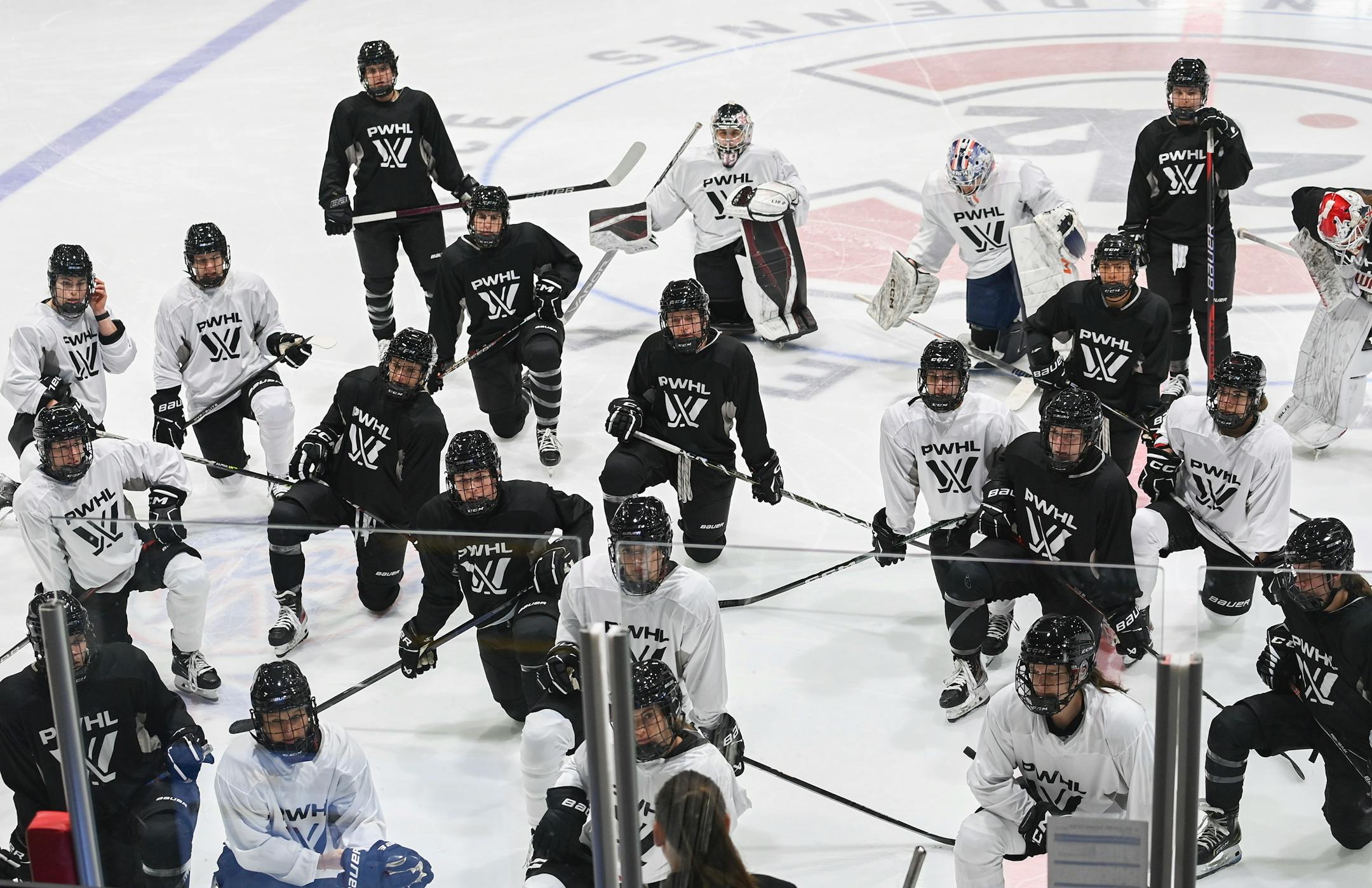
No longer a far-fetched notion, the Professional Women's Hockey League is approaching reality and Sarah Nurse can't help but pinch herself.
On Monday, the 28-year-old Canadian national team forward will be on the ice in Toronto when her yet-to-be nicknamed team faces off against New York to open the new year and the PWHL's inaugural 72-game season.
"It means so much to me. It's something that I had dreamed of and envisioned all those years ago, but I didn't know it would actually come to fruition," Nurse said. "It's hard when you think of all the places that we've been over the last four years. And to be able to get here, with my Toronto team, has blown my expectations out of the water."
It wasn't easy. It took time and patience for the moment to arrive after past start-up leagues lurched from one crisis to another before ultimately folding because they lacked money, vision and foundational support.
Finally, the world's best players have one place to showcase their talents outside the four-year Olympic cycle and enjoying what it's like to have their voices heard.
"Seen and heard," Minnesota general manager and former U.S. national team captain Natalie Darwitz said.
"So often, it would be could we just get a seat at the table, right? And then, can we speak up at the table?" she said. "And now, you feel good about the table, and how do we grow that table, is kind of the path we're down."
Not lost on this generation of players is crediting those who preceded them, such as Darwitz and PWHL executive Jayna Hefford, never mind the help of one of women's sports most influential gender-breakers in former tennis star Billie Jean King, a PWHL board member.


