
New treatment for heavy drinkers on tap

With aid of a replica bar, NIH scientists test medication to help heavy drinkers

January 9, 2015 at 5:27AM
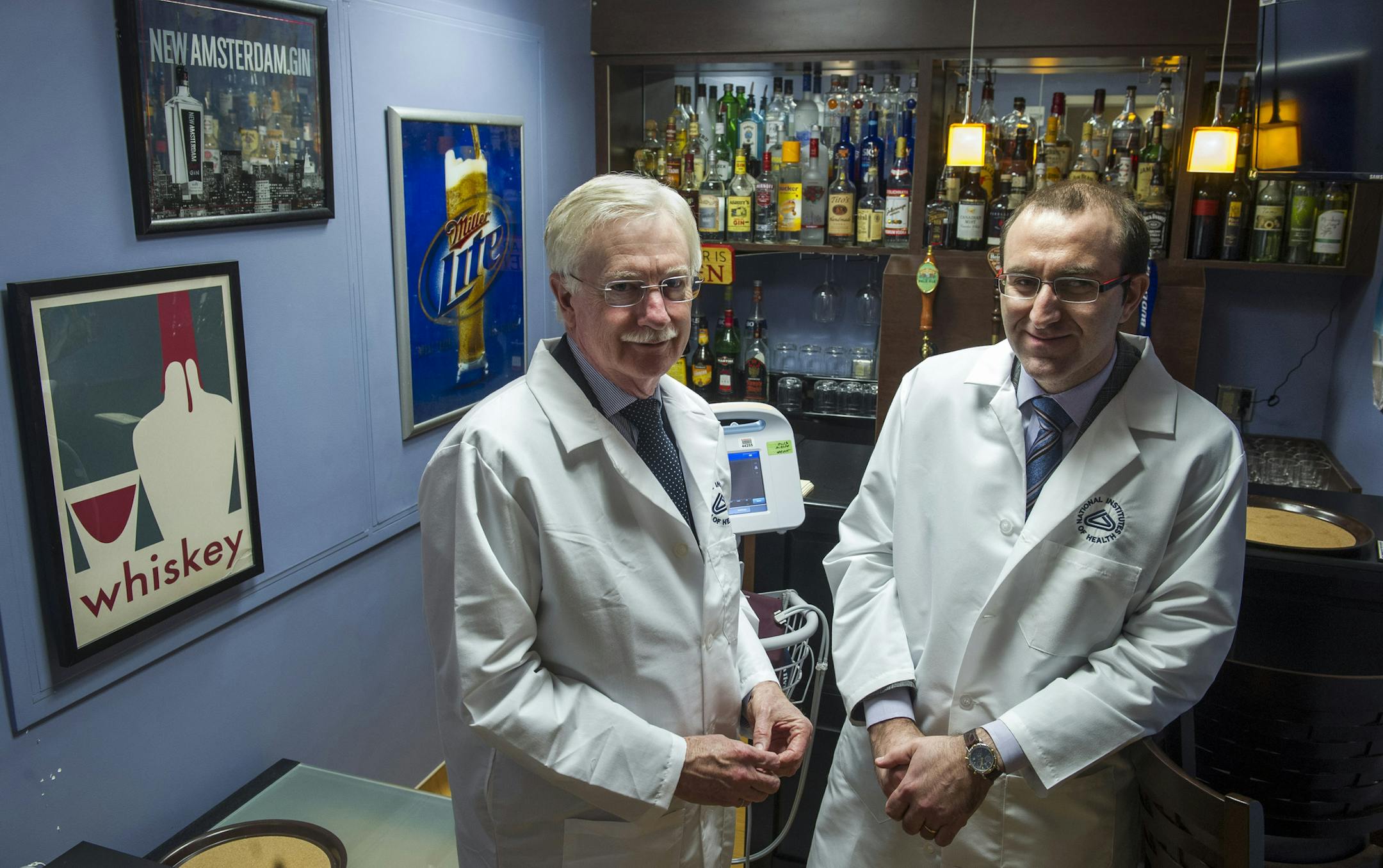
In this Dec. 19, 2014 photo, Dr. George Koob, director of the National Institute on Alcohol Abuse and Alcoholism, left, and NIAAA scientist Dr. Lorenzo Leggio pose for a photograph in a research laboratory designed as a bar inside the National Institutes of Health’s hospital in Bethesda, Md. Leggio uses the lab to test how research volunteers react to a possible new way to curb heavy drinking, part of a broader hunt for more medications to help fight alcohol abuse. (AP Photo/Cliff Owen)
Dr. George Koob, director of the National Institute on Alcohol Abuse and Alcoholism, left, and scientist Dr. Lorenzo Leggio in a lab designed as a bar. (The Minnesota Star Tribune)

By LAURAN NEERGAARD • Associated Press

WASHINGTON – The tequila sure looks real, so do the beer taps. Inside the hospital at the National Institutes of Health, researchers are testing a possible new treatment to help heavy drinkers cut back — using a replica of a fully stocked bar.

The idea: Sitting in the dimly lit bar-laboratory should cue the volunteers' brains to crave a drink, and help determine if the experimental pill counters that urge.

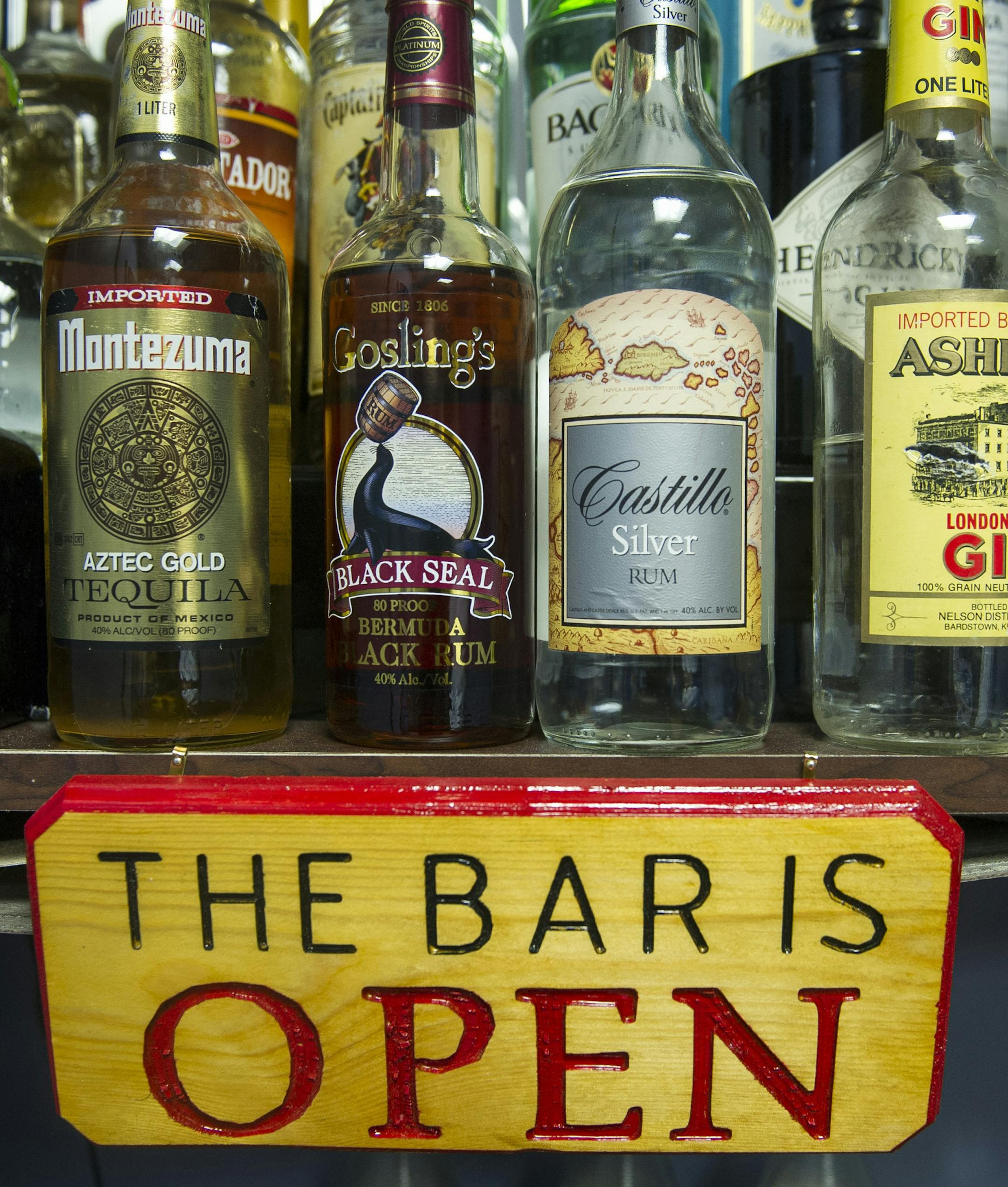
These bottles are filled with colored water. The real alcohol is locked in the hospital pharmacy, ready to send over for the extra temptation of smell — and to test how safe the drug is if people drink anyway.

"The goal is to create almost a real-world environment, but to control it very strictly," said lead researcher Dr. Lorenzo Leggio, who is testing how a hormone named ghrelin that sparks people's appetite for food also affects their desire for alcohol, and if blocking it helps. Initial safety results are expected this spring.

Amid all the yearly resolutions to quit, alcohol use disorders affect about 17 million Americans, and only a small fraction receives treatment. There's no one-size-fits-all therapy, and the NIH is spurring a hunt for new medications that target the brain's addiction cycle in different ways — and to find out which options work best in which drinkers.

"Alcoholics come in many forms," explained Dr. George Koob, director of NIH's National Institute of Alcohol Abuse and Alcoholism, which has published new online guides, at www.niaaa.nih.gov.

What's the limit? NIAAA says "low-risk" drinking means no more than four drinks in any single day and no more than 14 in a week for men, and no more than three drinks a day and seven a week for women.
Treatment can range from inpatient rehab and 12-step programs to behavioral therapy and medications. Yet a recent review for the Agency for Healthcare Research and Quality estimated that less than a third of people who need treatment get it, and of those, less than 10 percent receive medications.

Three drugs are approved to treat alcohol abuse. One, naltrexone, blocks alcohol's feel-good sensation by targeting receptors in the brain's reward system — if people harbor a particular gene. The anti-craving pill acamprosate appears to calm stress-related brain chemicals in certain people. The older Antabuse triggers nausea and other aversive symptoms if people drink while taking it.

"Our hope is that down the line, we might be able to do a simple blood test that tells if you will be a naltrexone person, an acamprosate person, a ghrelin person," Koob said.


In this Dec. 19, 2014 photo, alcohol bottles, their contents replaced with colored water, sit on a shelf in the National Institute on Alcohol Abuse and Alcoholism's research alcohol bar at National Institutes of Heath in Bethesda, Md. Inside the hospital at the National Institutes of Health, researchers are testing a possible new treatment to help heavy drinkers cut back, by using a replica of a fully stocked bar. (AP Photo/Cliff Owen)
Visual cue: The goal is to find new medications by prompting volunteers’ brains to crave a drink. (The Minnesota Star Tribune)
about the writer

about the writer

More from Minnesota Star Tribune

See More
card image
Provided/Sahan Journal

Family members and a lawyer say they have been blocked from access to the bedside of Bonfilia Sanchez Dominguez, while her husband was detained and shipped to Texas within 24 hours.

card image