

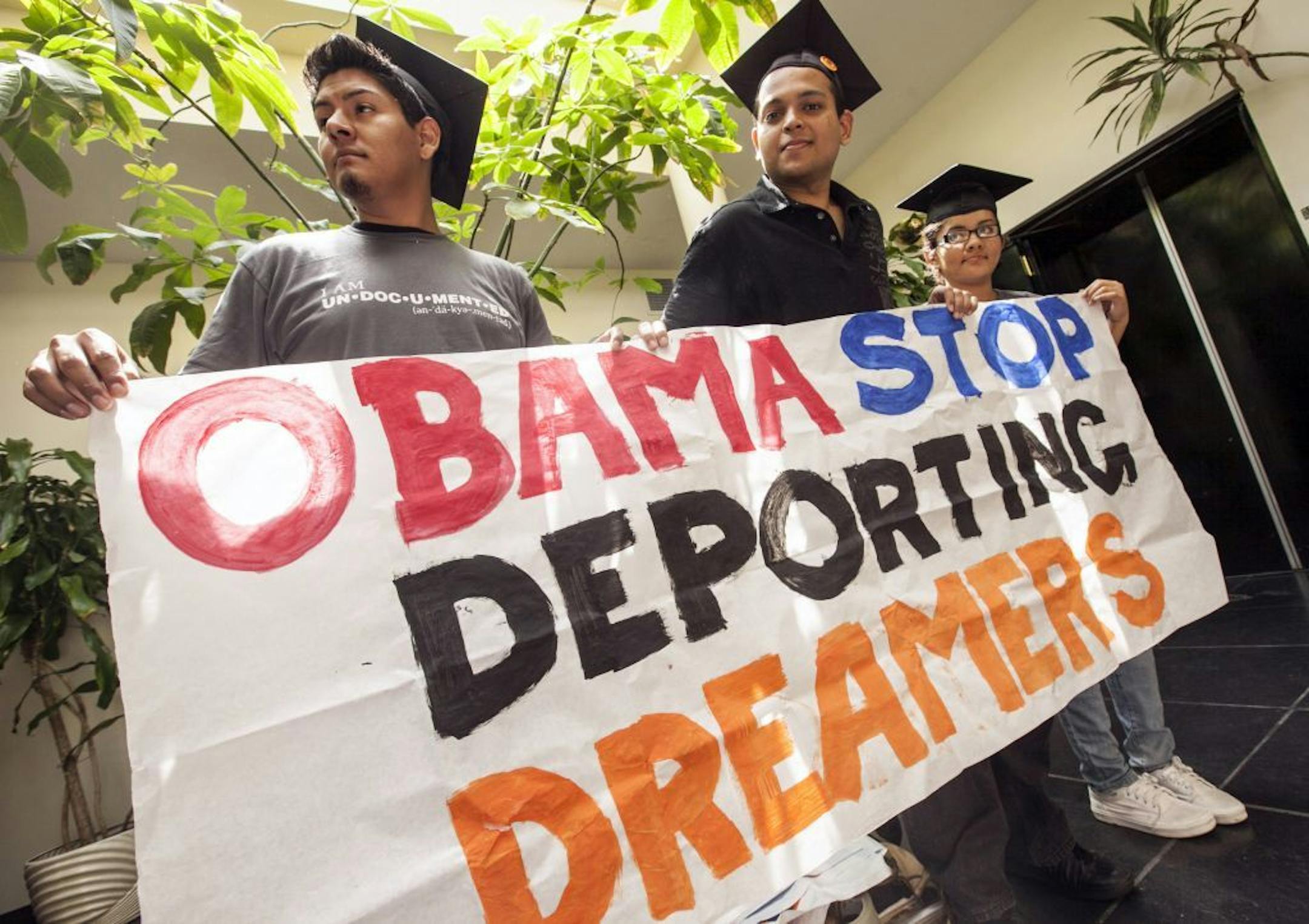
WASHINGTON - President Barack Obama suddenly eased enforcement of the nation's immigration laws Friday, an extraordinary step offering a chance for hundreds of thousands of illegal immigrants to stay in the country and work. Embraced by Hispanics, his action touched off an election-year confrontation with many Republicans.
Mitt Romney, Obama's GOP election foe, criticized the step but did not say he would try to overturn it if elected.
Obama said the change would become effective immediately to "lift the shadow of deportation from these young people."
"Let's be clear, this is not amnesty, this is not immunity, this is not a path to citizenship, this is not a permanent fix," Obama said from the White House Rose Garden. "This is the right thing to do."
The administration said the change will affect as many as 800,000 immigrants who have lived in fear of deportation. It bypasses Congress and partially achieves the goals of the "DREAM Act," legislation that would have provided a pathway to citizenship for young illegal immigrants who went to college or served in the military.
Under the administration plan, illegal immigrants will be able to avoid deportation if they can prove they were brought to the United States before they turned 16 and are younger than 30, have been in the country for at least five continuous years, have no criminal history, graduated from a U.S. high school or earned a GED or served in the military. They also can apply for a work permit that will be good for two years with no limits on how many times it can be renewed.
The move comes in an election year in which the Hispanic vote could be critical in swing states like Colorado, Nevada and Florida. While Obama enjoys support from a majority of Hispanic voters over Republican challenger Romney, Latino enthusiasm for the president has been tempered by the slow economic recovery, his inability to win congressional support for a broad overhaul of immigration laws and by his administration's aggressive deportation policy.
Some Republicans in Congress — and the governor of Arizona, whose state has been at the center of enforcement controversy — strongly criticized the Obama action. But the response from Romney was more muted.


