
New museum illuminates early city life

New York's Tenement Museum tours are an unforgettable trip into the past.

August 14, 2010 at 7:11PM
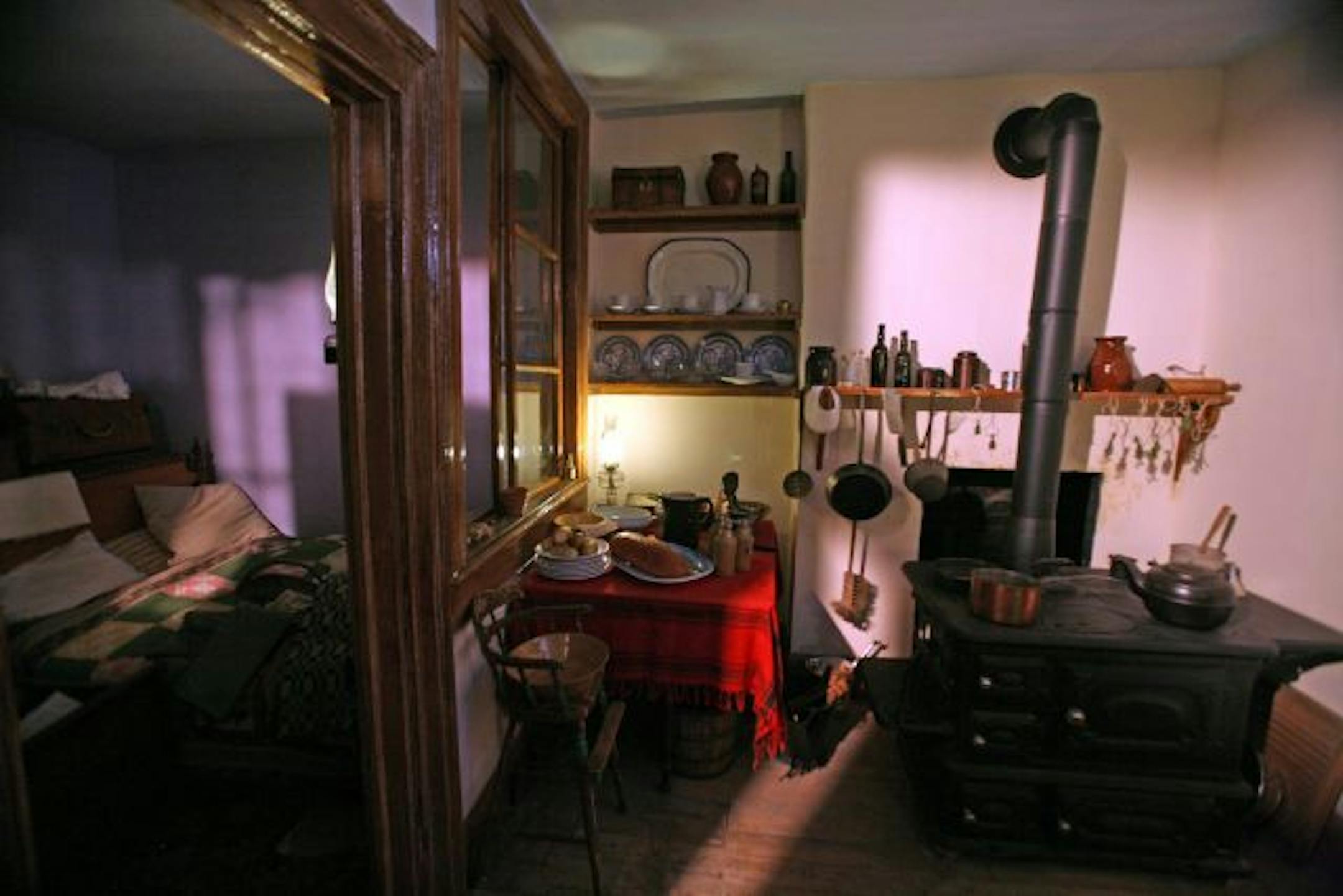
An 1869 tenement home, where a family of five lived, on display at the Tenement Museum.
An 1869 tenement home, where a family of five lived, on display at the Tenement Museum. (New York Times/The Minnesota Star Tribune)

I'd heard of keening, the high-pitched and haunting vocal lament associated with mourning. But I had never experienced it until earlier this year, and it will be hard to get the sound out of my head.

The deceased, Agnes Moore, was 5 months old. She died of complications related to malnutrition -- in 1869.

Agnes was the real daughter of Joseph and Bridget Moore, who emigrated from Ireland to New York City in 1863. Joseph was a bartender and waiter, Bridget, a homemaker who scrubbed clothes on a washboard and cooked on a coal stove in these very rooms in which I stood.

I've done Manhattan's usual suspects -- the Museum of Modern Art, Broadway, cheesecake. On a recent trip, I found a lesser-known gem, the Tenement Museum on the Lower East Side.

The Tenement Museum's name is a misnomer because it's actually several buildings located on Orchard Street, just south of Delancey Street. At 108 Orchard, you pick up your tickets, view a short film and try not to buy everything in the gift shop.

The tours, inside a five-story walk-up at 97 Orchard, are the show-stoppers. The museum offers four one-hour building tours, each detailing a different floor and immigrant experience, as well as two, two-hour neighborhood walking tours. You might meet Victoria Confino, a teenaged Greek Sephardic girl circa 1916, or learn more about life as a Jewish family running a garment shop. Other tours tackle the Panic of 1873 and the Great Depression.

This fascinating step into history almost wasn't. A New York social justice worker named Ruth Abrams stumbled across the tenement building in the 1980s when seeking office space. The structure had been uninhabited as living quarters since 1935, said spokeswoman and tour guide Kate Stober. "It was an amazing find."

The museum was established in 1988 to raise money to refurbish and stabilize the structure. Architects and preservationists worked hand-in-hand to ensure that the building was safe, but also that it maintained much of its original historic fabric, down to layer upon layer of wallpaper.

Tours prompt discussions

The Moores' tour took place on the fourth floor, so our group of about 12 carefully navigated 61 narrow steps to get there. (Unfortunately, most tours are not wheelchair accessible, but there are other options, so check their website.) The apartment, home to toddlers Jane and Mary, and baby Agnes, featured a tiny bedroom with a double bed and crib, a kitchen and living room. Boxes, trunks and suitcases were piled high. A basin and washing pitcher sat nearby.

Ushered into a small side room first, we were treated to several recorded Irish tunes, including a war song recounting the 1798 Irish uprising against the British, then "Thousands Are Sailing," about immigration circa 1865, and "No Irish Need Apply," which needs no explanation.

Then, thank goodness, we were sitting down for the tragic "Swill Milk" song. The song was written as a public service announcement to warn working-class families of the dangers of buying tainted milk. "Tainted" is too kind. The milk often took days to get into the city and it came largely from cows being fed distillery waste. I'll spare you the part about open sores. To hide the fact that the milk had been traveling uncovered by wagon for days, sellers added ammonia, salt, even chalk to whiten it up.

That's what poor new immigrants Joseph and Bridget fed little Agnes. Born on Oct. 31, 1868, she died on April 22, 1869, of "marasmus," or malnutrition, and "scrofula," a form of tuberculosis. A three-day wake followed, with understandable keening, as first the women, then men, church leaders, co-workers and friends crowded into the family's tiny living room to offer condolences.

Records show that, by 1870, the Moores had moved several blocks away. "Paying for the funeral might have put them out," Stober said, "or maybe it was the psychological toll."

Bridget, who eventually had eight children, losing four of them before they reached age 5, died in her 30s. Records show that Mary grew up and took care of her father. Jane married and had children, eventually moving to Queens. Two other daughters, Josephine and Elizabeth, also are believed to have done well, although information about them ended when they were teens.

I won't spoil how the tour concludes. I'll just say it's a happy ending that has a lot to do with vastly improved public health.

Stober said people come from across the world to visit this rich living-history museum. Some even descend from those who lived here. "Really great discussions about health care come up," Stober said.

"We use history as a window into what's going on today."

Gail Rosenblum • 612-673-7350

about the writer

about the writer

Gail Rosenblum

Inspired Editor

See Moreicon

More from Minnesota Star Tribune

See More
card image
J. SCOTT APPLEWHITE, ASSOCIATED PRESS/The Minnesota Star Tribune

The "winners" have all been Turkeys, no matter the honor's name.

In this photo taken Monday, March 6, 2017, in San Francisco, released confidential files by The University of California of a sexual misconduct case, like this one against UC Santa Cruz Latin Studies professor Hector Perla is shown. Perla was accused of raping a student during a wine-tasting outing in June 2015. Some of the files are so heavily redacted that on many pages no words are visible. Perla is one of 113 UC employees found to have violated the system's sexual misconduct policies in rece