

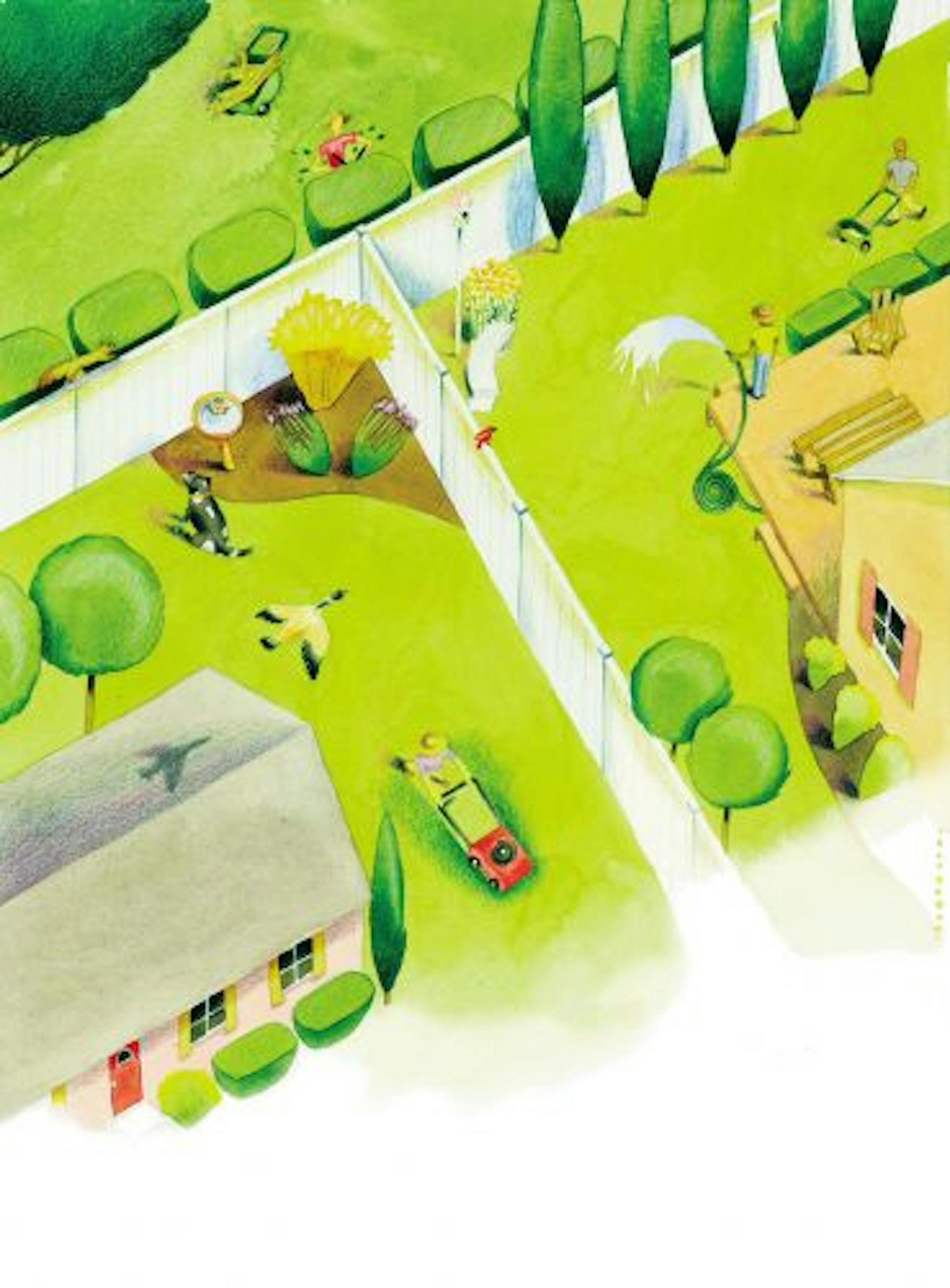
Whether you lavish care on your lawn or ignore it, there's no escaping this fact: To look good, grass needs to be fertilized.
Fertilizing not only makes grass green, it's also a green thing to do. Healthy, well-fed grass develops dense roots that hold the soil, preventing it from running off your yard and polluting the water.
But for fertilizer to benefit the grass and the environment, it needs to be applied correctly.
You've probably heard that it's important to keep fertilizer off sidewalks, driveways and streets, where it can run off and pollute streams, rivers and lakes. But you may not know that timing plays a key role in keeping fertilizer on our lawns and out of our lakes.
Fertilize in early fall
Without a doubt, early fall is the best time to fertilize. That's because most of the fertilizer applied on or around Labor Day goes straight into the grass. In the past, a second, later application -- in early November -- also was recommended. It was thought that this second application helped grass to green up earlier in the spring. But new research from the University of Minnesota casts doubt on that practice.
Brian Horgan, an associate professor of horticultural science, has been studying how much nitrogen is taken up by grass when fertilizer is applied at different times of the year. His research has shown that when fertilizer is applied in November, most of the nitrogen never gets to the grass. Instead, it runs off the surface of the soil or leaches into groundwater.
Revised recommendations


