

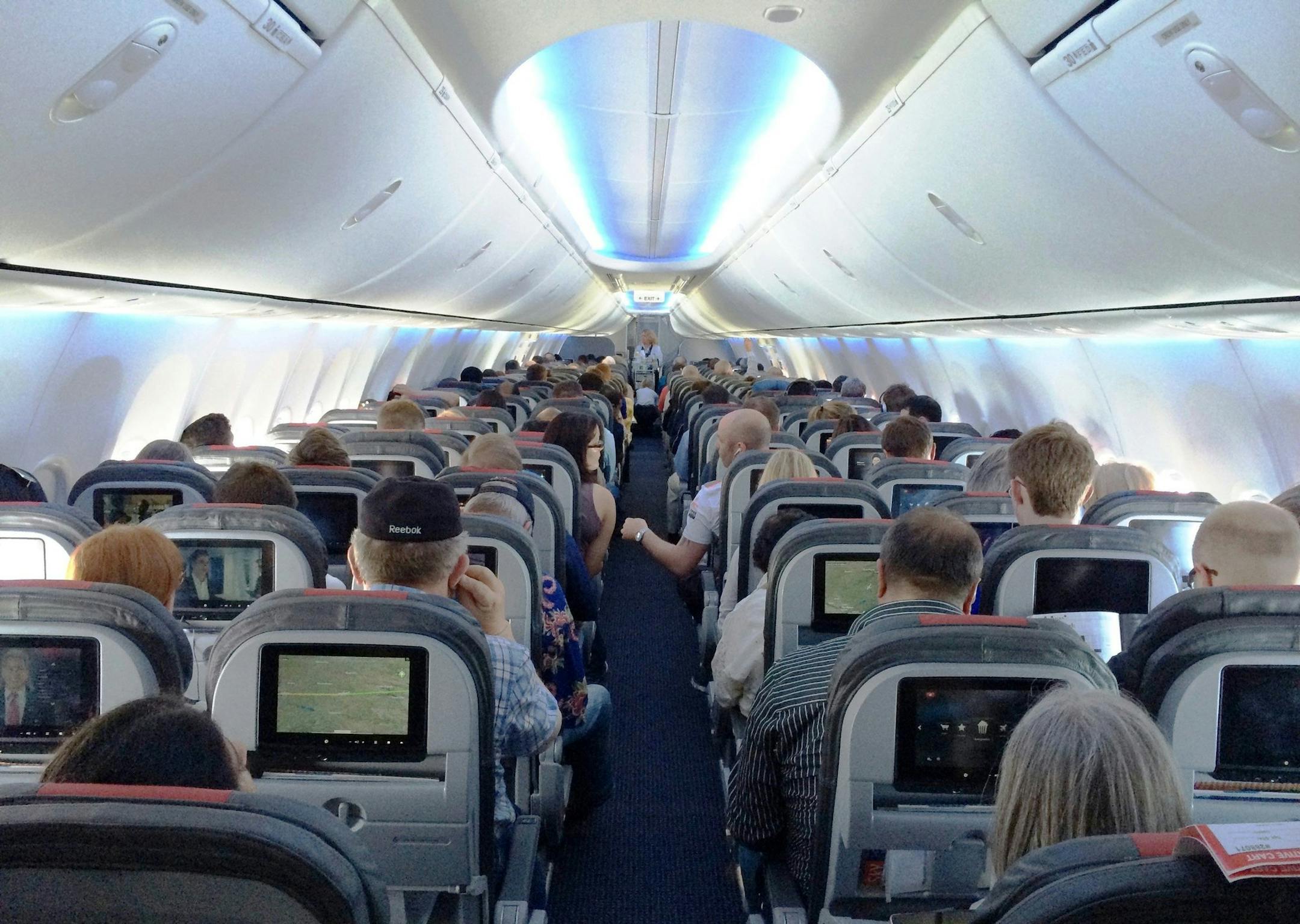
The new generation of commercial airplanes are so radically different from how we have flown for the past 20-plus years that stepping onto one can feel like flying for the first time.
The most obvious change is the thinness of the seats; the old-time bulk has been lightened and streamlined. But the differences continue to unfold. Lighting has been recessed into the ceiling and is often colored for a calming effect. (It was light blue as I boarded a recent American Airlines flight from Chicago to San Francisco.) Overhead bins have grown and now swing down from the ceiling, rather than simply opening forward into the aisle.
Some planes include a monitor in every seat back, featuring an entertainment lineup of books, movies, television shows and a touch-screen map to chart the flight's progress. Most essentially, these new airplanes can feature power outlets and USB ports at every seat (as that American flight did).
While there's plenty to like, there also is reason for consternation: namely, dwindling space and comfort. Most everything has become smaller, including seat width, seat pitch (the distance between the seats, which results in decreased legroom), tray tables, aisles and even the little pouch in the seat ahead. Where once we could store a water bottle, laptop and book ahead of us, we're now lucky to fit a couple of magazines.
Add it up, and we have entered a marked new world of airplane interiors.
"The industry is evolving faster than it ever has in the past, without a doubt," said Mary Kirby, founder of aviation news website Runway Girl Network.
"Airlines are tightening up the pitch in economy-class cabins and distracting people from that discomfort — or at least trying to distract — with the latest generation of entertainment systems and connectivity."
Trade-offs
There it is in the proverbial nutshell: the good (Wi-Fi! Touch screens! Power outlets!) and the bad (so very uncomfortable). My Chicago-San Francisco flight had even less legroom than it otherwise would because of metal boxes beneath every seat that an airline spokesman said were necessary to power the touch screens.


