

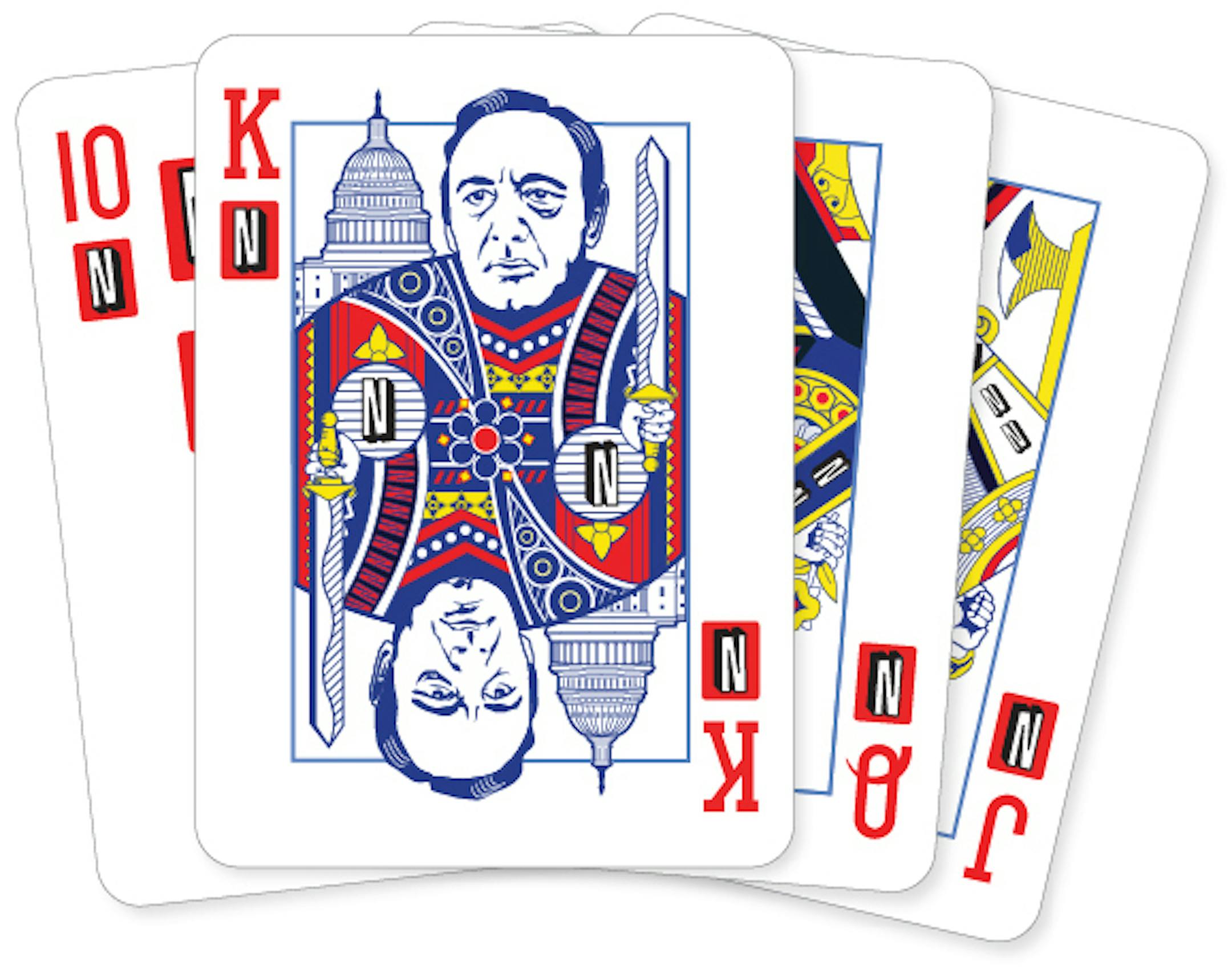
"House of Cards," a super-smart new series about a Richard III-type politician methodically tearing down his enemies, will almost certainly appeal to viewers who enjoy meaty drama served with a generous portion of relish. It marks a triumphant TV debut for director David Fincher and offers star Kevin Spacey the juiciest role he's had since "American Beauty."
But decades from now, "House of Cards" may best be remembered as the show that changed the way we watch television.
That's because "Cards" is being dealt by Netflix, the subscriber-based service that will make available 13 episodes of the first season on Friday, a strategy that will be mimicked later this year with additional highly anticipated projects, including a new round of "Arrested Development" and the latest mockumentary series from Ricky Gervais.
"In my mind, this is pretty game-changing," said Carlos Cordero, the director of service provider practices for Cisco Systems, a San Jose-based networking technology company. "I think broadcast and cable TV should be very nervous."
Wall Street agrees. Netflix stock shot up 42 percent on Jan. 23, its biggest one-day gain since going public in 2002. The company is doubling down on creating its own content, revealing earlier this week that it's looking to raise $400 million for more shows that can compete with the best that pay channels have to offer.
"These shows don't need to spike initially with new subscribers, but with positive press and word-of-mouth, it could really take off over a multi-year period," said Michael Olson, a senior research analyst for the Minneapolis-based investment bank Piper Jaffray.
Even if "Cards" doesn't become the sensation it deserves to be, the show's all-star team is getting something almost as valuable as eyeballs: Total artistic freedom.
Media Rights Capital, which produced "Ted" and "Babel," met with Netflix a few years ago in hopes that executives would consider airing the show first on a traditional platform such as HBO or Showtime and then making it available two months later. Instead, Netflix brass campaigned to be the home for the U.S. version of a BBC series that was a smash hit in England during the 1990s. In exchange for the gamble, Netflix would guarantee two full seasons on a total budget of $100 million, and absolutely no creative interference. That was music to the ears of Fincher ("The Social Network"), who directed the first two episodes, and showrunner Beau Willimon.


