

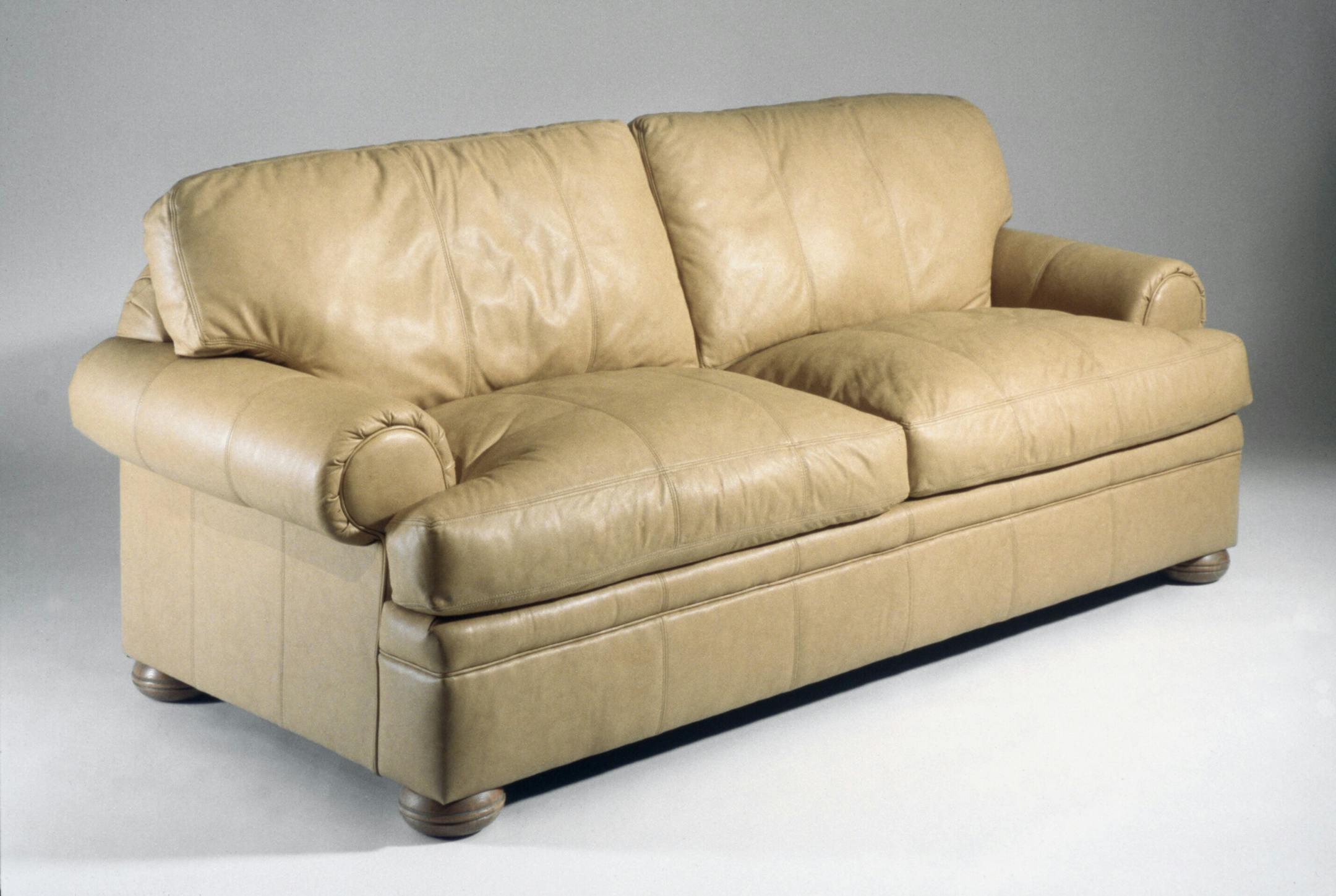
ACCEPT NO SUBSTITUTES
"100 percent leather" could mean anything; the United States does not prohibit manufacturers from advertising imitation leather as the real deal.
READ THE LABEL
"Split," "bi-cast" or "tri-cast" leather started out as inferior leather and has been reconstituted to disguise poor quality.
GO WITH FULL GRAIN
Full grain is natural grain that hasn't been adulterated, said John Edelman, president of Edelman Leather in New Milford, Conn. Full-grain pieces, also called "aniline" or "natural grain," retain the original characteristics and markings of a quality hide.
TOP-GRAIN MISNOMERS
Top-grain leather is actually "bad leather that's been sanded down and then embossed with artificial grain," Edelman said. Top-grain pieces, also called "corrected" or "processed leather," are often coated with a layer of paint and urethane, which dries out and cracks if not routinely maintained.
KNOW YOUR MATERIALS
Upholstery fabrics such as microfiber, microsuede, pleather and pleatherette sometimes masquerade as leather. Nubuck is a suedelike type of aniline leather, with a velvety texture and lush look. But Lonnie McDonald, president of Leather Pro in Grandview, Mo., warned that it is extra-sensitive to body oils.
DETERMINE HIDE'S ORIGIN
European hides have no marks from branding or barbed wire.
South American hides are exposed to arid climates and extensive branding.
North American hides are often blemished with barbed-wire scars.


