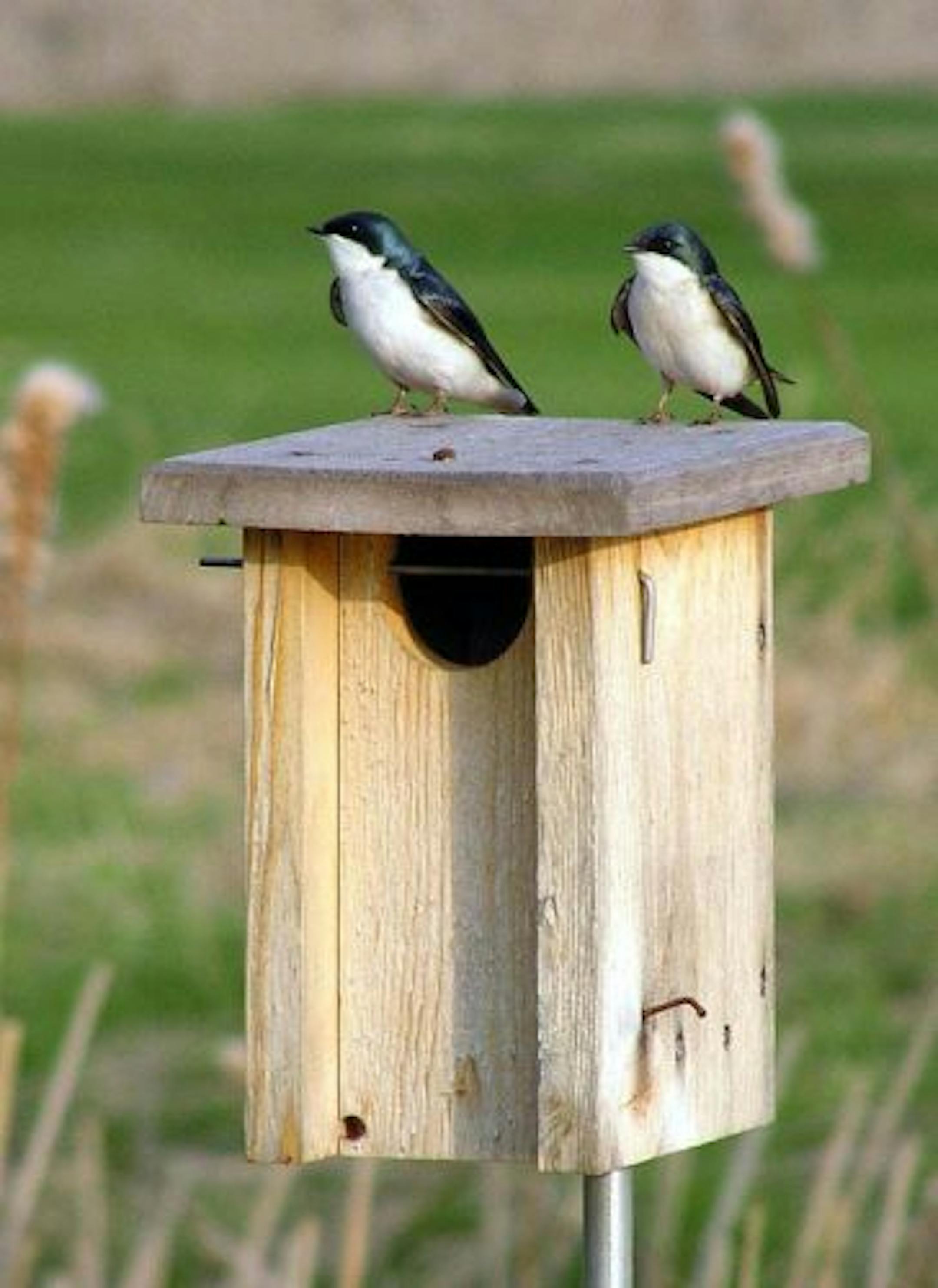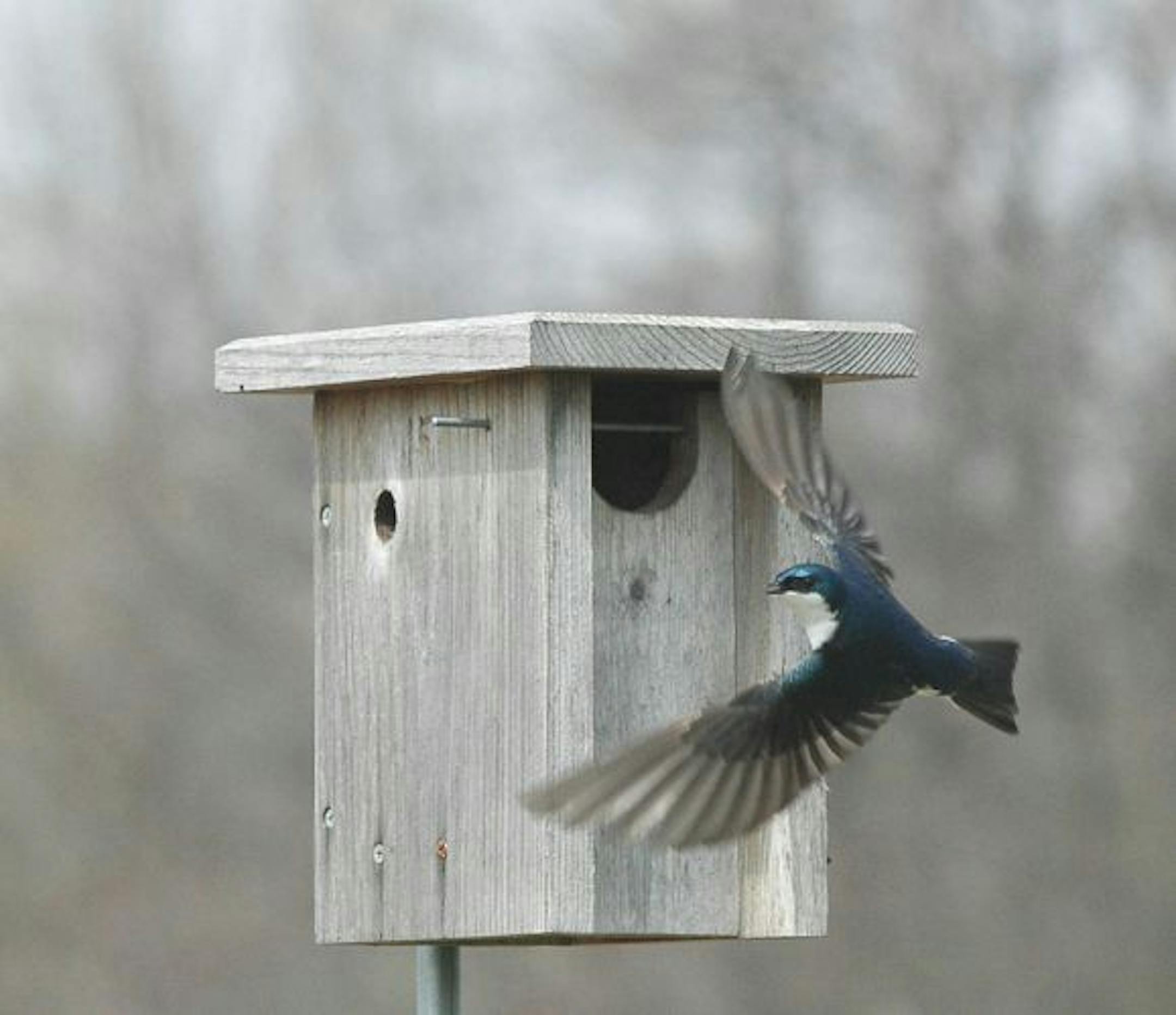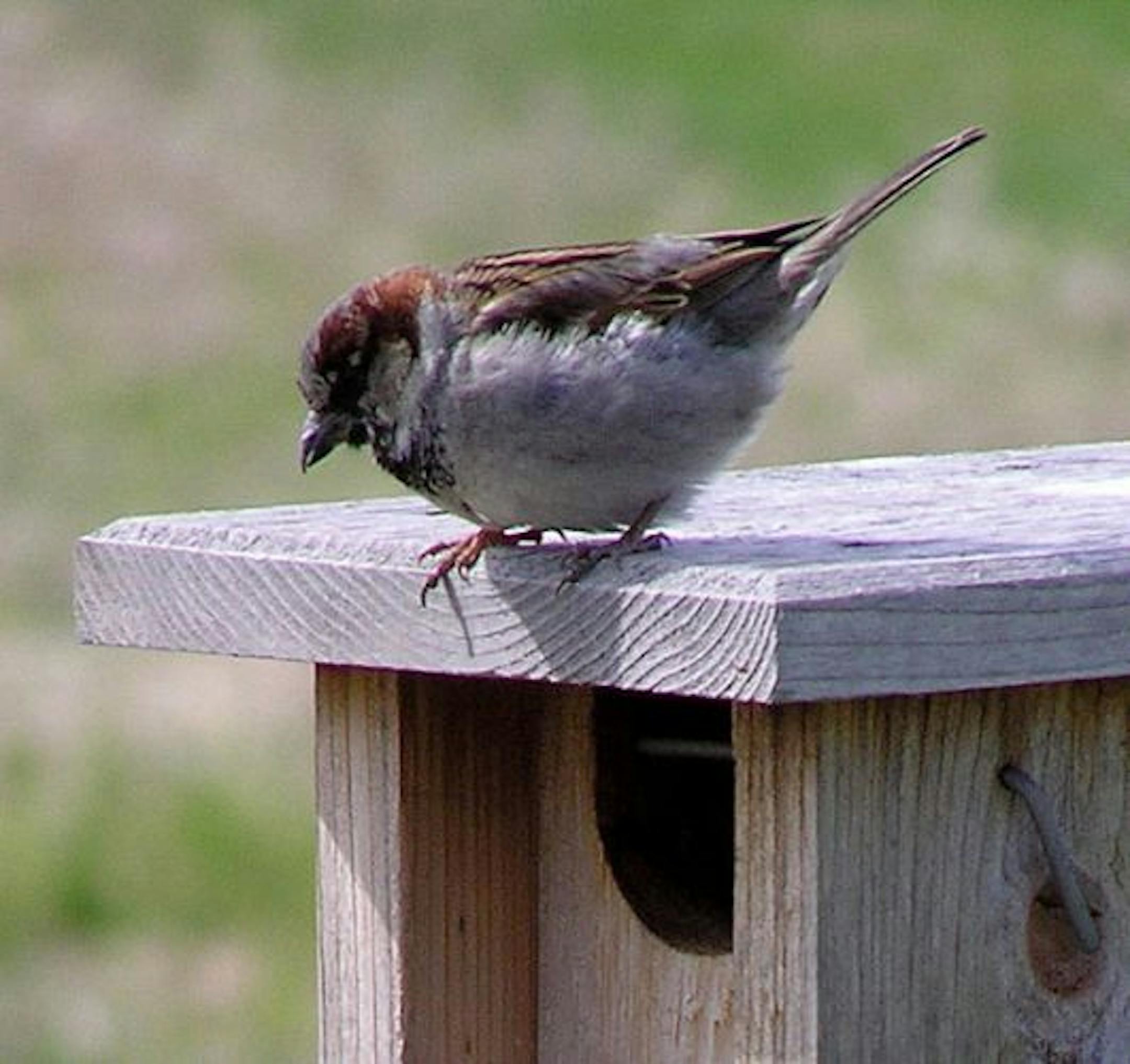
Q How many nest boxes can I place in my yard? A Birds often want choice in selecting a nest site, so more boxes could be better than fewer. However, birds of the same species establish breeding territories and will actively exclude competitors from that area. So, if you put up multiple nest boxes, you most likely won't have several pairs of house wrens, for example. But you could have a pair of house wrens, a pair of bluebirds and/or a pair of tree swallows.
If you want to attract robins, try a nesting platform and attach it beneath the eaves of your house or garage. Eastern phoebes also will use nesting platforms.
Attracting birds also depends on habitat. But it's fairly unlikely that all of your nest boxes will be filled, no matter what habitat your back yard can offer. On our swampy, wooded acre we have 12 nest boxes, including two designed specifically for wood ducks. We'll be happy if four of those 12 are used this spring.
Eggs for the birds Q How do birds get the calcium they need to produce eggshells?
A Birds find calcium in nature. But you also can provide calcium by offering the shells of chicken eggs from your kitchen.
Rinse the shells, then bake them at 250 degrees for 20 minutes to kill possible salmonella bacteria. Once they've cooled, crush the shells and place near your feeders in a shallow pan or on the ground. Don't mix eggshells with your birdseed.
If you don't want to bother baking egg shells, you can simply buy oyster shells. I buy a bag at a nearby feed store (it's an old-fashioned, farm-style feed store) and put a couple of small piles in the yard once the snow has melted.
Get ready for hummers Q I can't wait for the hummingbirds to come back to Minnesota. Is there a website that tracks their migration?