

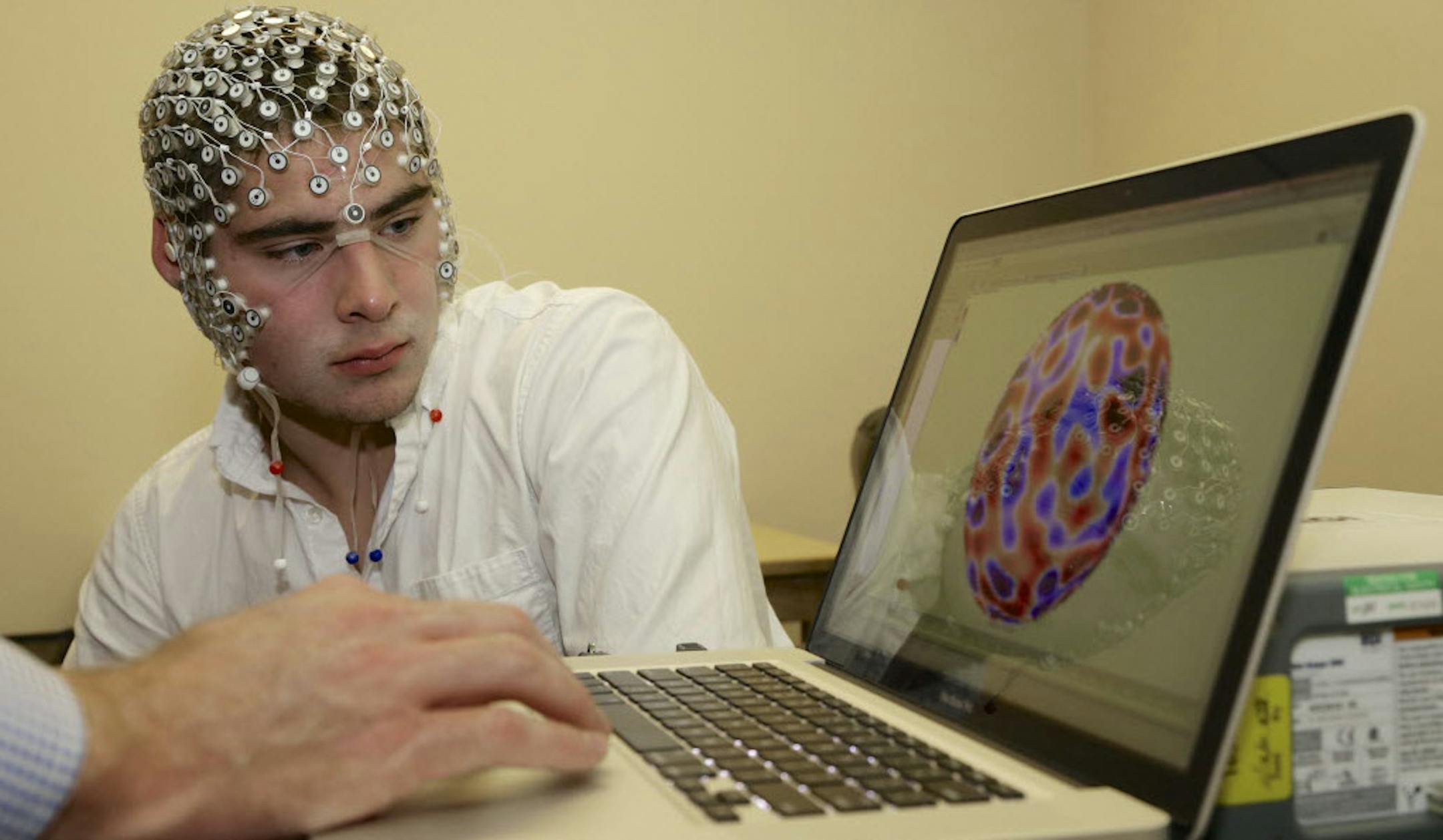
LINCOLN, Neb. — If all goes according to Dennis Molfese's plan, the day is coming when a football player who takes a hit to the head will come to the sideline, take off his helmet and slip on an electrode-covered mesh cap.
The team's medical staff will analyze the player's brain waves on the spot and determine within minutes whether he can safely return to the game or whether he has sustained a concussion and, if so, how severe.
Putting the finishing touches on that device is among the projects planned in the University of Nebraska's Center for Brain, Biology and Behavior, which opens this month in Memorial Stadium's newly expanded east side.
CB3, as it's called, is housed in the same $55 million structure that holds 38 luxury suites and an additional 6,000 seats for the football stadium. The center is one of a number of university-affiliated research centers across the nation looking for better ways to diagnose and treat traumatic head injuries and make football and other sports safer.
"There has been great concussion research that's been going on for decades," said Molfese, the CB3 director. "It's disconcerting to realize just how little we really know."
Tom Osborne, Nebraska's retired football coach and athletic director, said CB3 and the adjoining Athletic Performance Lab fit his vision for what he wanted to include in the stadium expansion.
The project was one of Osborne's major initiatives in his five years as athletic director. Osborne envisioned a collaboration of the athletic and academic sides of the university. So while athletes participate in concussion studies, political science researchers might use CB3's brain-scanning technology to see if they can figure out why some people lean conservative and others liberal.
Concussions have become one of the top concerns in sports in recent years after prominent brain injuries and disease in former NFL players, driven in part by some high-profile suicides. Thousands of former players are suing the league, saying that for years the NFL did not do enough to protect players from concussions. The NCAA also is addressing the issue.


