

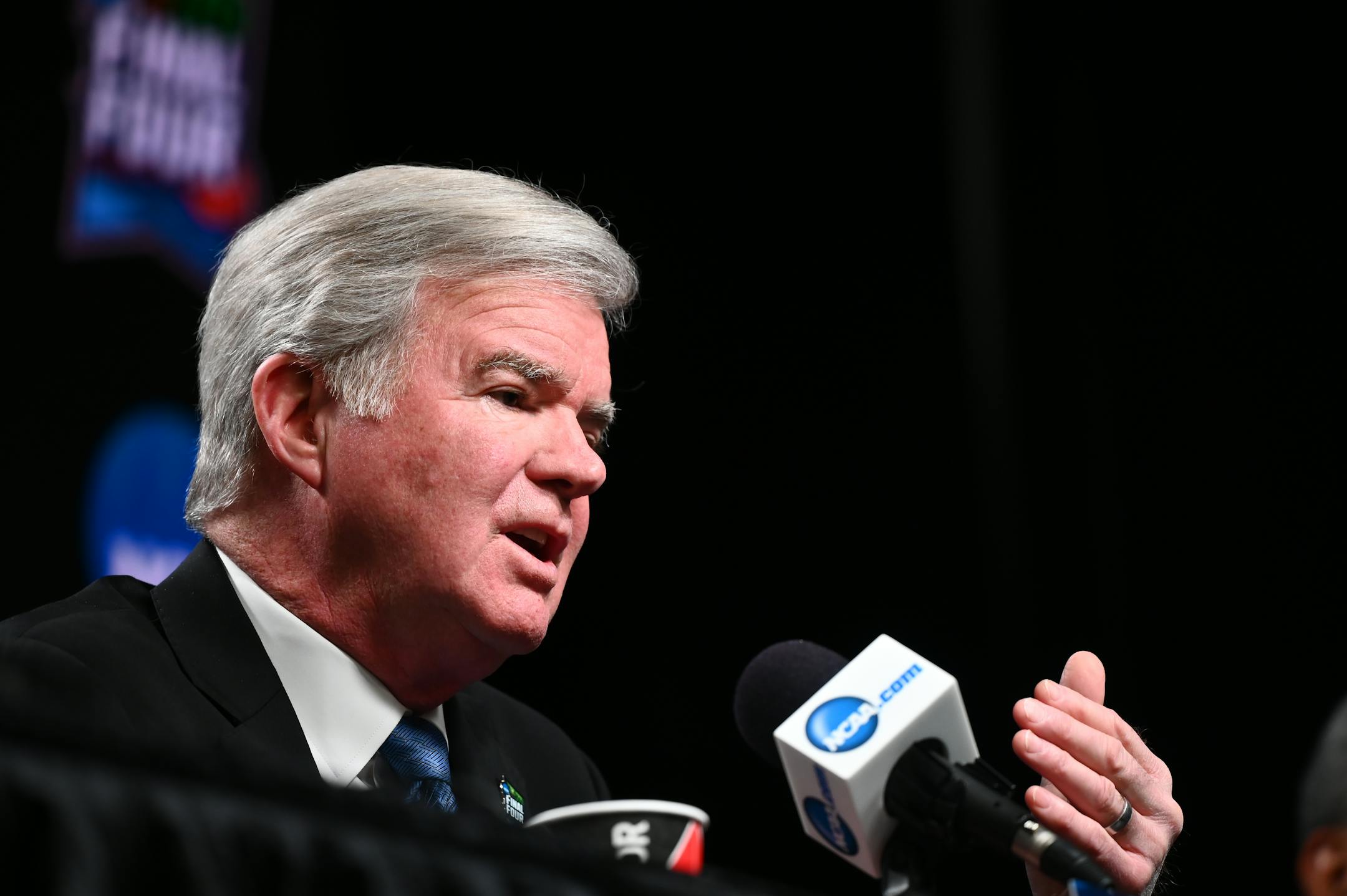
NCAA President Mark Emmert was more vague than revealing at the Final Four Thursday when pressed on college basketball issues. He fielded questions ranging from what will happen with the federal investigation findings on recruiting scandals to the game's future after a recent antitrust ruling that could challenge the current college sports amateurism model.
The topics weren't as focused as a year ago on the game's biggest stage in San Antonio, where Emmert mostly addressed how his organization would use the Rice Commission's recommendations to tackle the dark cloud hanging over college hoops after the FBI uncovered widespread recruiting fraud.
There was no timetable given Thursday for when guilty programs, coaches or players could face punishment for being in violation of NCAA rules.
"They should provide that information so we can get to the facts, since there's so much interest, not just on our part but across the country and knowing what really transpired," Emmert said.
The turmoil led to rules changes last fall, most notably to have the NCAA, NBA and USA Basketball move to take over the problematic summer basketball scene.
Agents, college assistants and shoe company executives from Adidas were implicated previously in the FBI probe. Just last month, lawyer Michael Avenatti claimed he had information to expose other programs involved with Nike in recruiting improprieties. But Avenatti was charged with trying to extort more than $20 million from Nike.
"Some of [the cases] are wrapping up because they had pleadings now and people have pled guilty," Emmert said about the federal case. "We still don't have all the information that we would like to have from those trials. … [Information] is not automatically given to us."
Profits on likenesses?
Headlines were made last month when U.S. District Judge Claudia Wilken declared that the NCAA and the major conferences were violating antitrust law by putting a cap on the value of athletic scholarships.


