Mankato – As a child growing up in the small rural community of Milks Camp, near the Rosebud Reservation in South Dakota, Megan Schnitker's parents provided a wealth of knowledge about traditional Lakota culture.
As a maker of natural medicines and a teacher of the natural history of the Lakota people, she frequently attended family and community events led by her father, a hereditary chief originally from nearby Pine Ridge.
"I grew up traditionally in Lakota culture," Schnitker told the Mankato Free Press. "My mom and dad grew up in it."
Her mother ran a cultural-based recovery program ever since she can remember, integrating Lakota culture with drug, alcohol and violence prevention. When Schnitker found herself in recovery after overcoming an addiction as a young adult, she began working there, helping design curricula for after-school programs teaching kids about coming-of-age ceremonies. They brought in elders who were well-educated in the traditions and history of the Lakota people.
The only thing missing from the curriculum at the recovery nonprofit was the incorporation of natural medicines found in the Upper Midwest that her ancestors had been using for centuries. So Schnitker took a class on native plants and their medicinal uses at Sinte Gleska University in Mission, S.D.
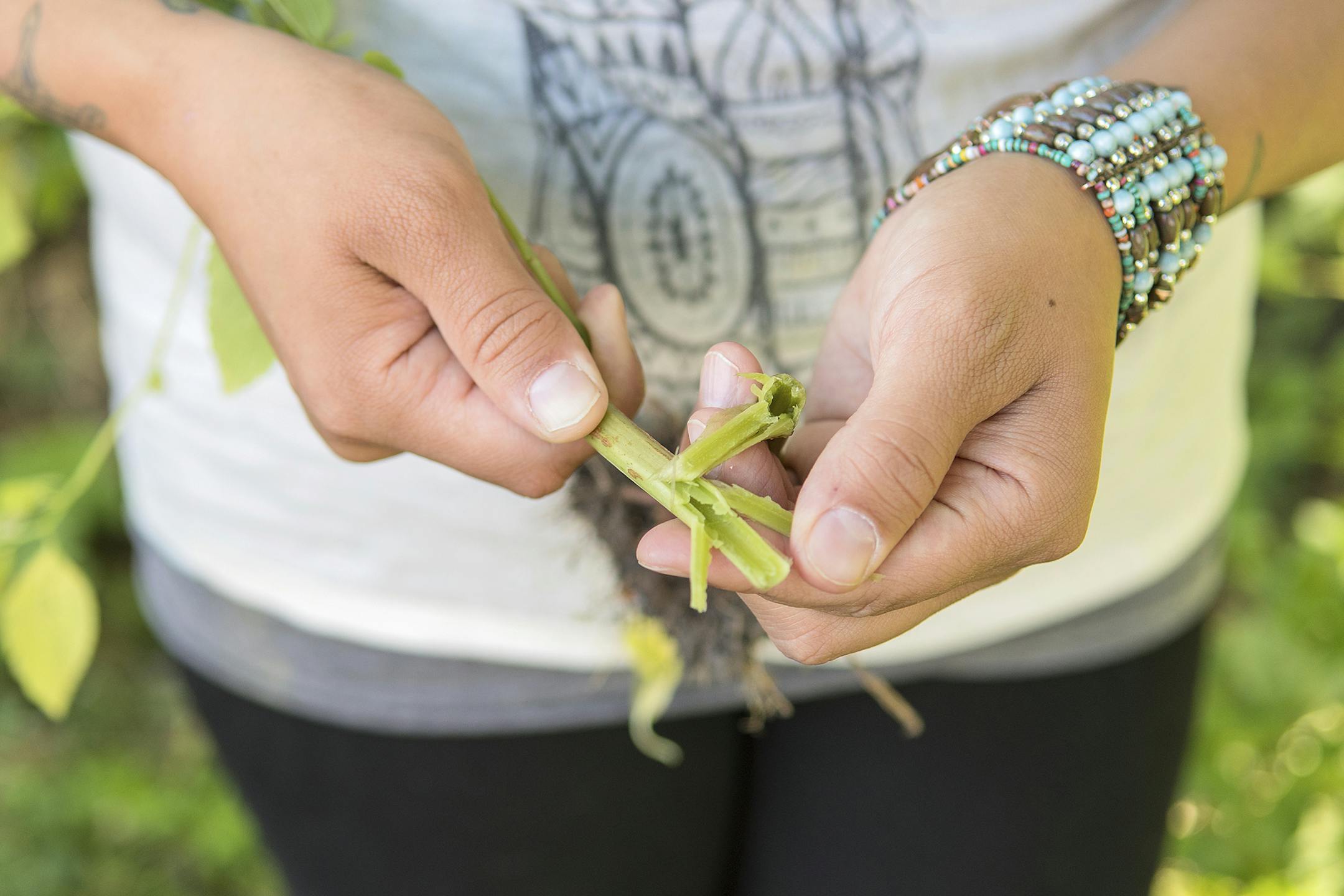
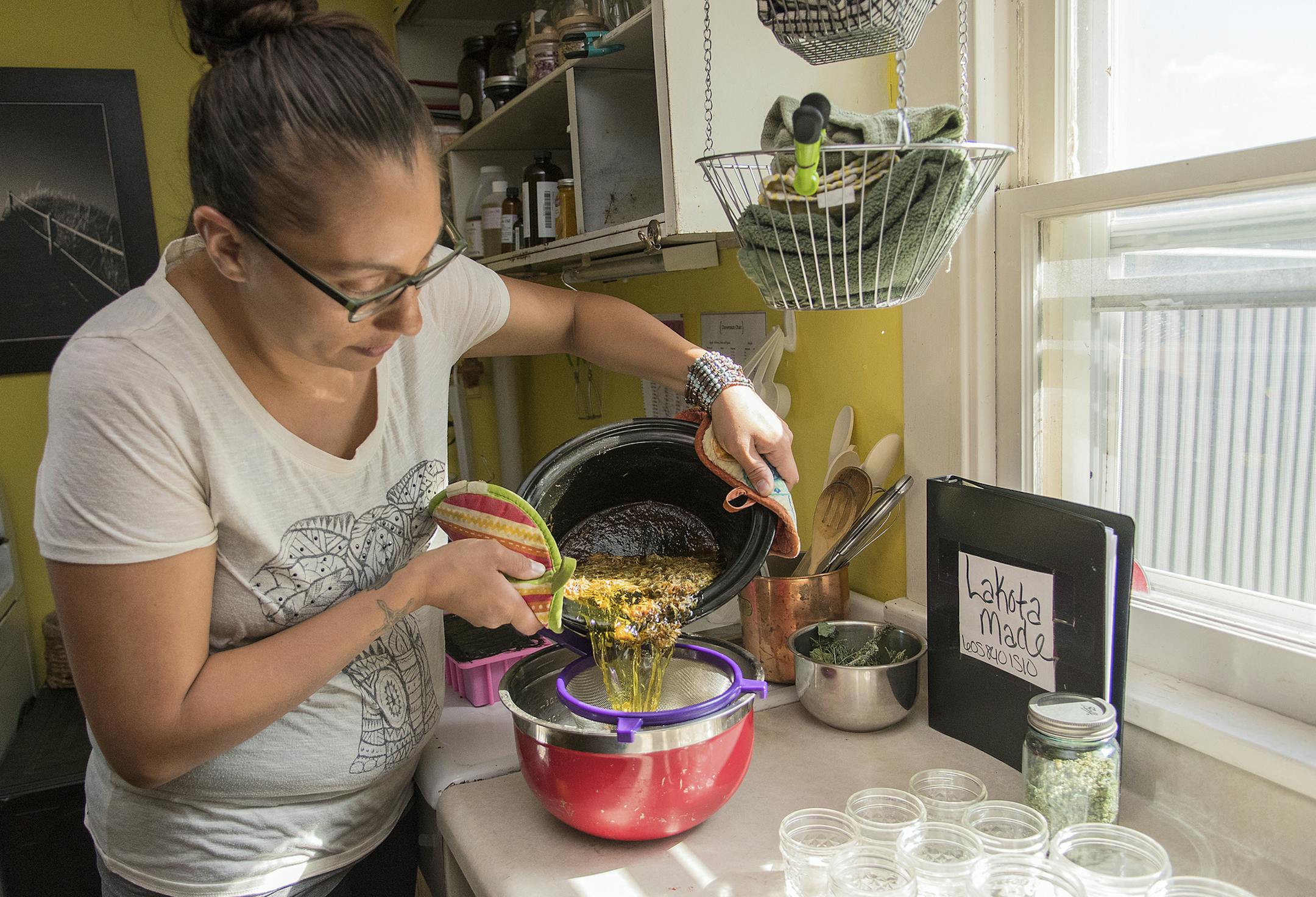
That was 13 years ago. Ever since she has been on a lifelong mission of research, accumulating knowledge from elders and sharing what she learned with people throughout the Midwest; making teas, soaps and salves from native plants with medicinal properties passed down generation after generation. Her mission has turned into both a nonprofit called Mahkato Revitalization Project and a business, Lakota Made.
"I love to teach and make things at the same time," Schnitker said. "All the classes I teach are basically hands-on."
Four years ago, Schnitker's uncle, Dave Brave Heart, an organizer for Mankato's annual Wacipi, held every year at Land of Memories Park in Mankato, invited her to come to Mankato to lead presentations on medicinal plants to fifth-, sixth- and seventh-graders.