

With the flashlight from her smartphone, Renee Iron Hawk peered into the dust-covered glass and wood cabinets inside a small, dark museum in Barre, Mass.
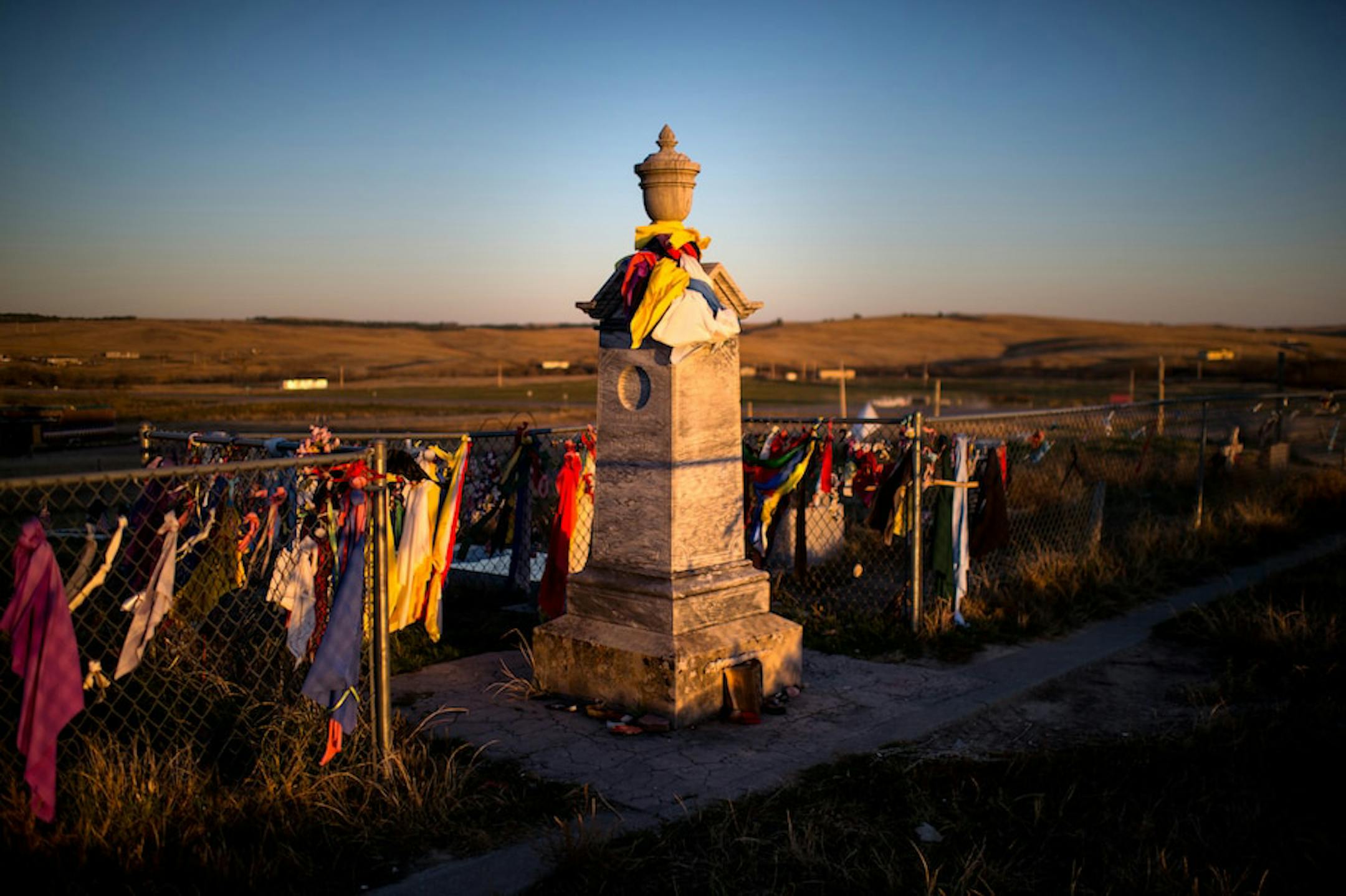
She and a handful of other American Indians looked at pairs of beaded moccasins, a dozen ceremonial pipes and a few cradleboards, used by women to carry infants on their backs. The items are among as many as 200 artifacts that were stolen from the bodies of the 250 Lakota men, women and children slaughtered by the U.S. Army in 1890 during the Wounded Knee massacre in South Dakota. They'd ended up in an obscure museum attached to a public library in a rural town 70 miles from Boston.
"Going through those cabinets, looking at these items of our people with the light from our phones, it was just something deep to me," Iron Hawk said. "It felt like the breath went out of me. I had to sit down and rest. I had to say a prayer."
How a collection from one of history's worst atrocities against American Indians ended up in Barre is almost as painful as the memory of the massacre.
Some of the items were sold by gravediggers to Frank Root, a traveling shoe salesman from Barre, who used them as part of his Wild West roadshow before he donated them in 1892 to the town's museum, where they've stayed for more than a century. They are among the more than 780,000 burial items and possessions of Native Americans held in museums or other institutions as of September 2021, according to a report to Congress.
"It's a stolen collection," Iron Hawk said of the Barre objects. "Just like they stole our lands; it's the same."
Now she, her husband, Manny, and their group, HAWK 1890 — which stands for Heartbeat at Wounded Knee and includes American Indians whose relatives were slain in or survived the massacre — have launched an effort to have the items returned to their tribes, the Oglala Lakota and Cheyenne River Sioux.
Earlier this year, they seemed to be on the verge of a breakthrough. But the deal they struck this spring with officials from the Barre Museum Association has stalled, leaving the Indians fearing a repeat of the country's long history of broken promises to Native Americans.


